
9 Mastiff training topics
Every common Mastiff challenge, with first steps and guides to read.
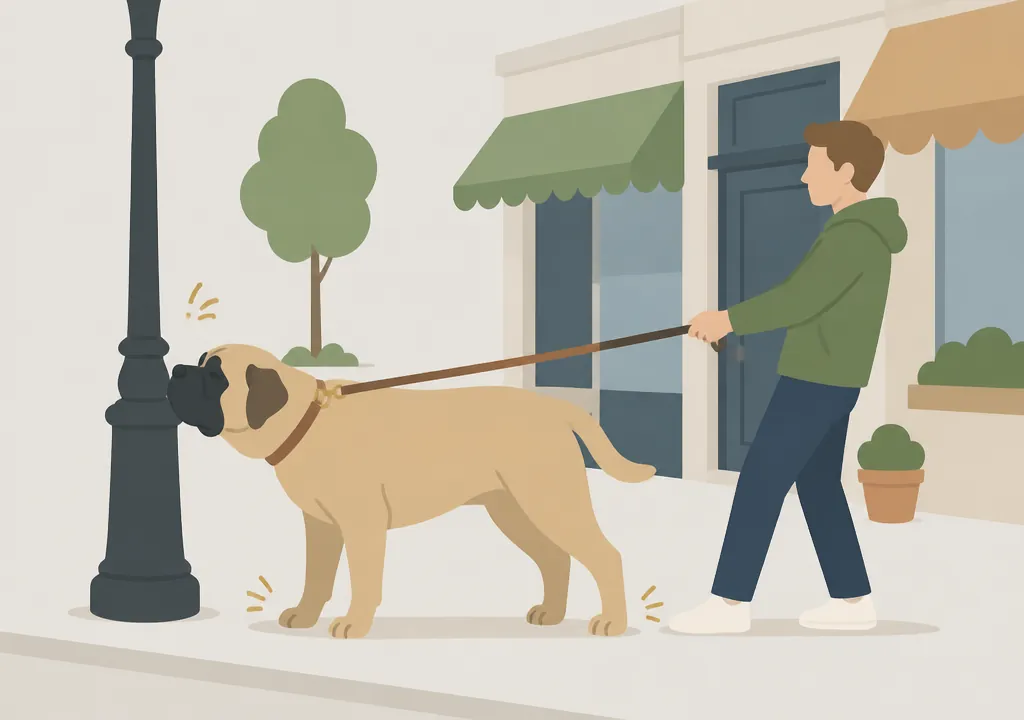
Pulling and stopping on walks
Keep a giant moving at your pace.
English Mastiff leash training is easiest before pulling begins, because a giant makes mistakes hard to recover from. Teach slack indoors and turn away early, since strength contests are unsafe at this size.
The full guide covers equipment, rewarded slack, routes and the signs before a lunge.
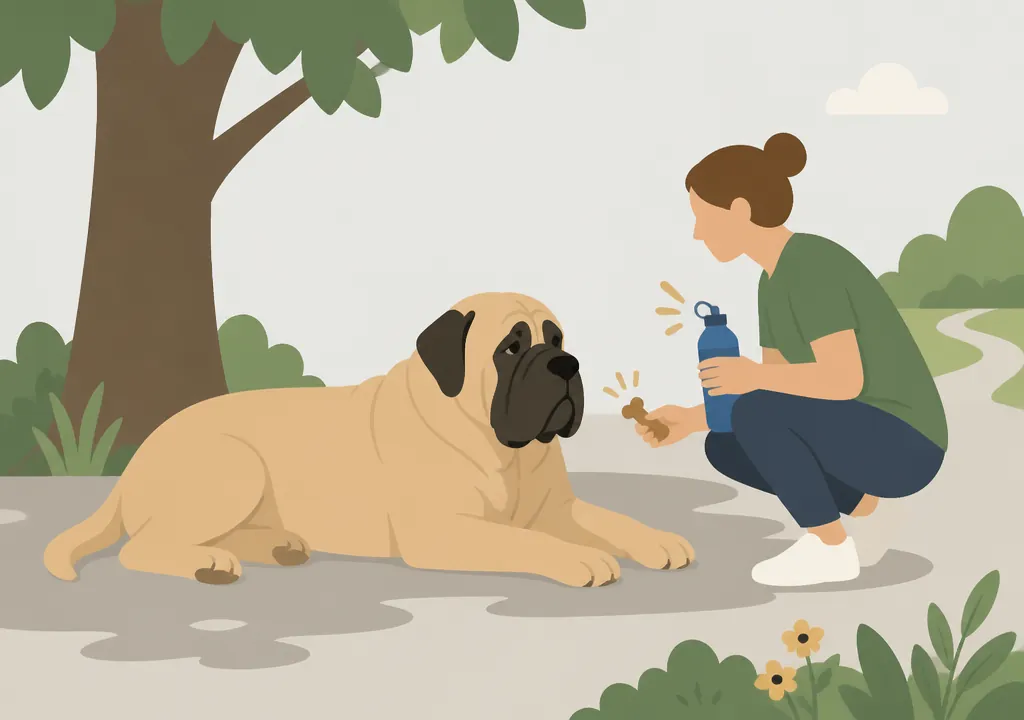
Lying down on walks
When a Mastiff decides to stop.
Mastiffs learn quickly and want to please, but class repetition bores them, and a bored Mastiff may lie down and snore. Harsh voices wound a sensitive giant.
The full guide shows how gentle, varied, rewarded work keeps a Mastiff moving.
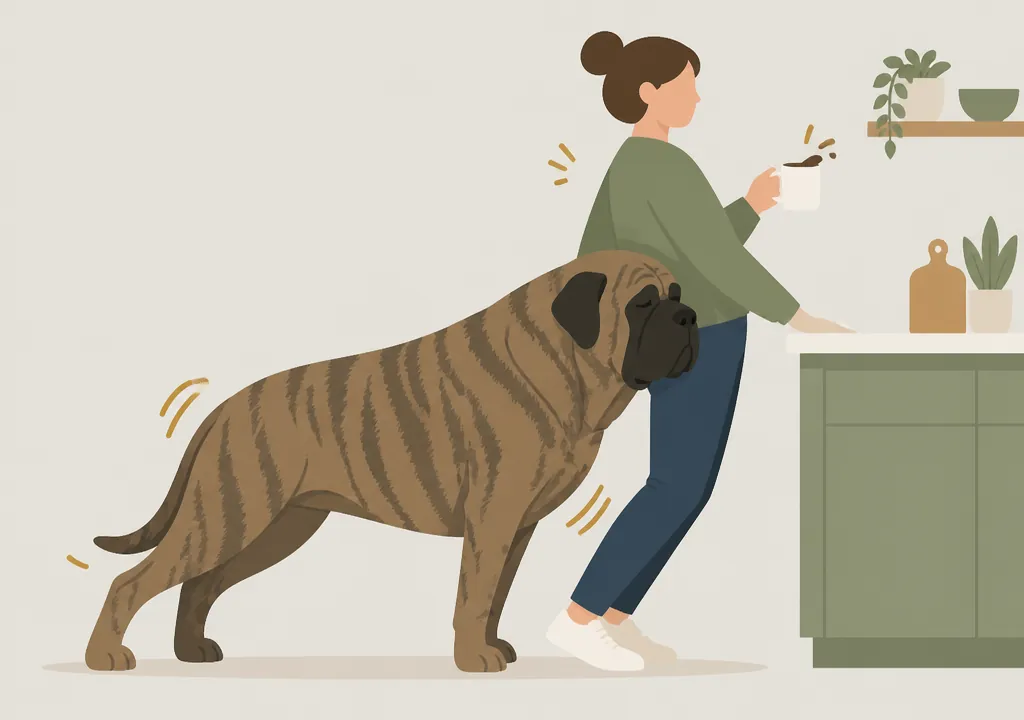
Leaning and jumping
Polite greetings from a giant.
Can a friendly English Mastiff greet visitors at the front door? Yes, but the answer depends less on a perfect sit than on what the room allows everyone to do. A huge dog, an opening door, bags and a person stepping inward can create unsafe traffic before the dog has made any clear choice.
In this guide, we will map that traffic, separate an arrival into three scenes, compare leaning with jumping and adapt the arrangement for different visitors. The household will finish with a weekly review that changes one condition at a time. The goal is a greeting that remains optional for the guest and the Mastiff.
Read the full guide: Manners for a Huge Dog: Greetings, Jumping and Door Etiquette
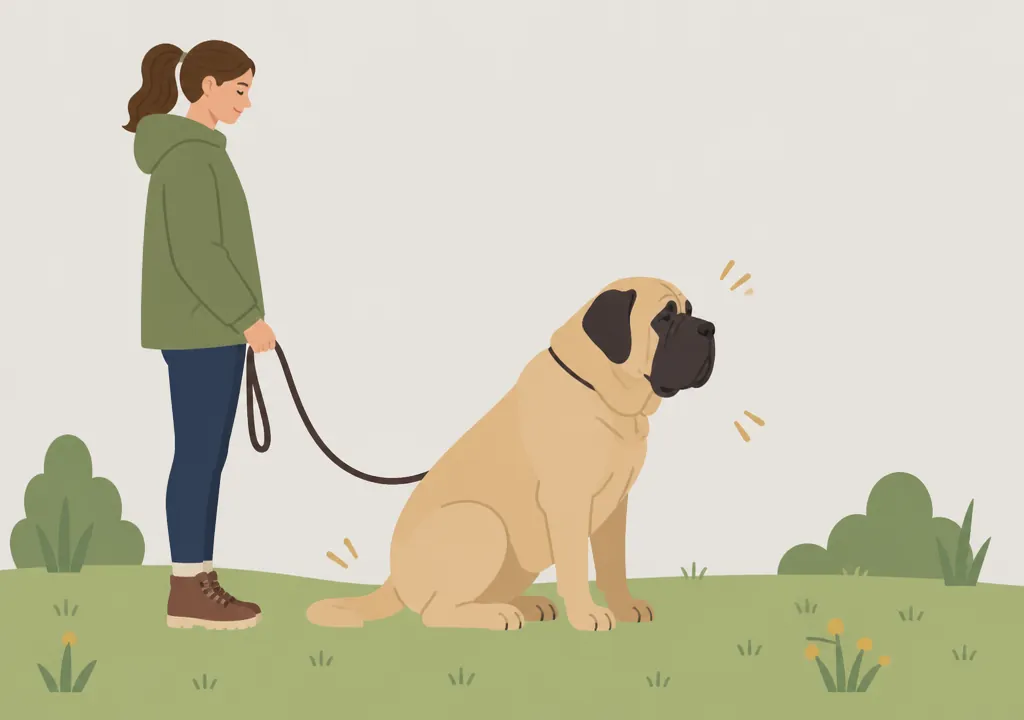
Exercise while growing
Protect joints during long growth.
Potty training an English Mastiff puppy works best as a visible household system, one route to one outdoor spot, chances around predictable transitions and accidents treated as information.
The full guide reads waking, eating, play and nighttime needs as signals for a household plan.
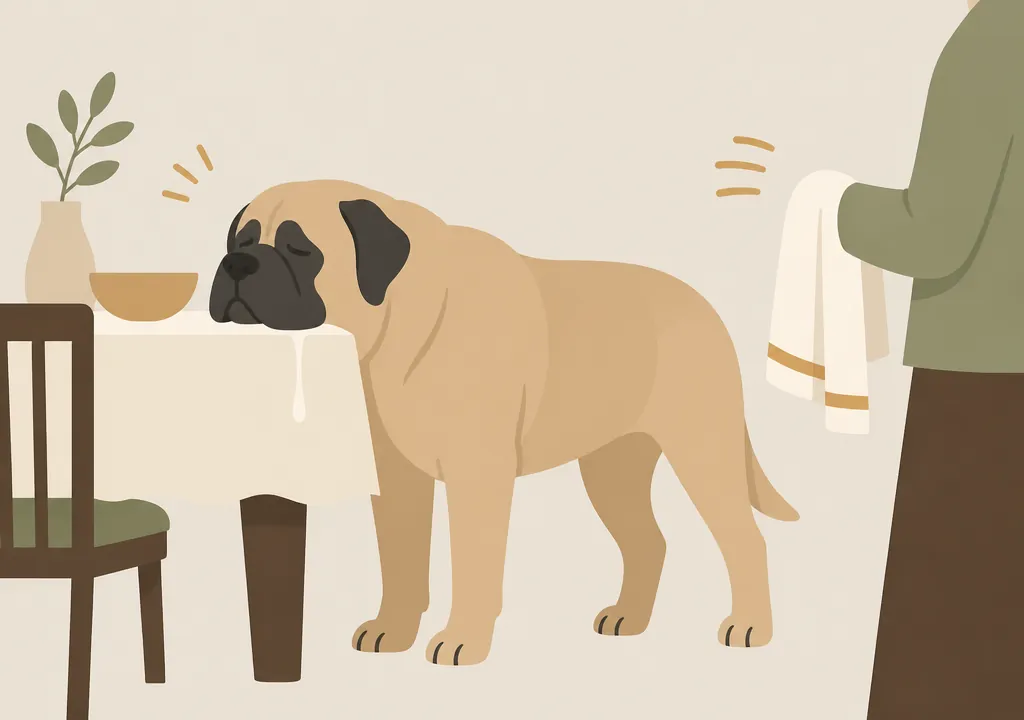
Drool and face care
Easy face wiping and handling.
Drool cleanup is easy to describe and harder to perform when a very large dog dislikes hands near the mouth. The household needs more than towels. It needs a repeatable way to notice what is normal, ask for access to the face and stop before wiping becomes a wrestling match.
In this guide, we will map the face into visible care zones, teach consent signals and build brief routines around the events that actually create drool. The dog can approach, pause or leave. The owner can clean ordinary moisture while noticing when skin or mouth changes belong with a veterinarian. Each care round stays narrow enough that the dog knows exactly what will happen.
Read the full guide: Wiping Faces and Wrinkles: Handling an English Mastiff Who Drools
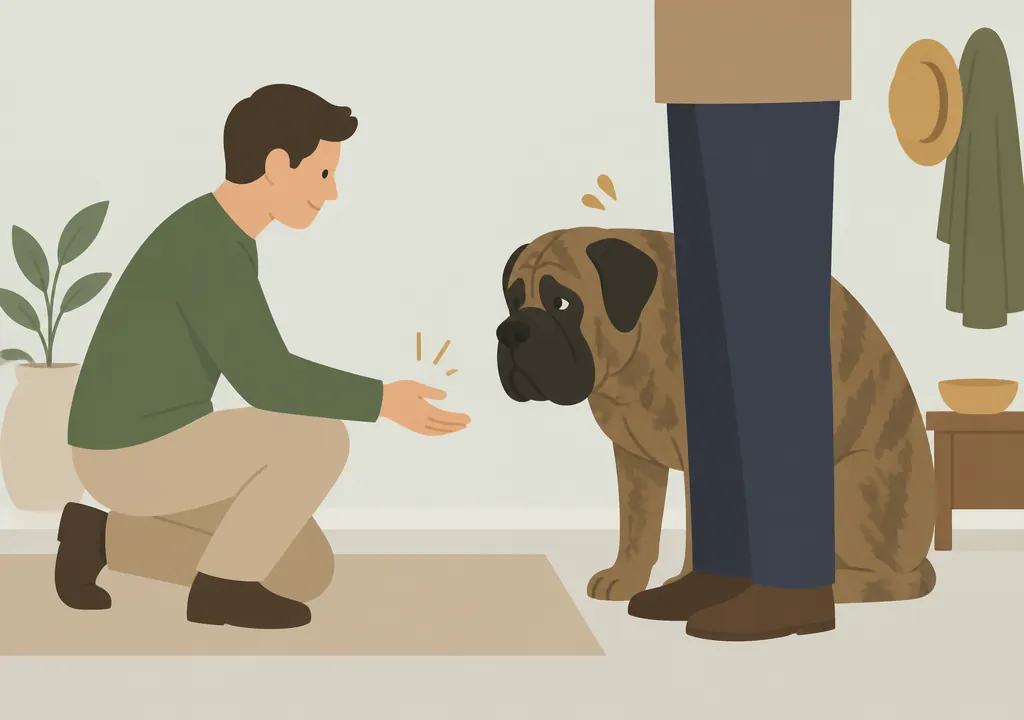
Shy with visitors
Calm, confident hellos.
Published ratings give the Mastiff top marks with family and children and middling marks with strangers and other dogs, so early socialization is essential. Rarely rough on purpose, a Mastiff's sweeping tail can still topple a small child.
The full guide is the socialization plan for kids, dogs and strangers.
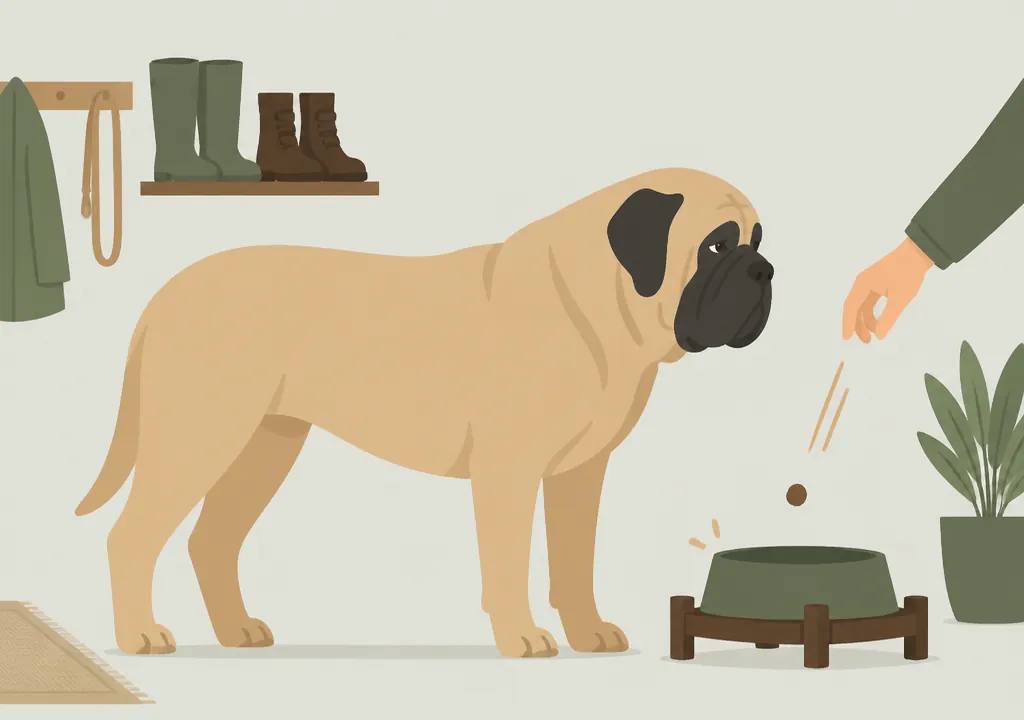
Guarding food
Calm around bowls.
A Mastiff's guarding instinct is real, but it rarely looks the way people expect. What matters is how it shows up in your home and keeping it calm around bowls, doors and guests.
The full guide covers the instinct's origins, how it changes with age and managing guests.
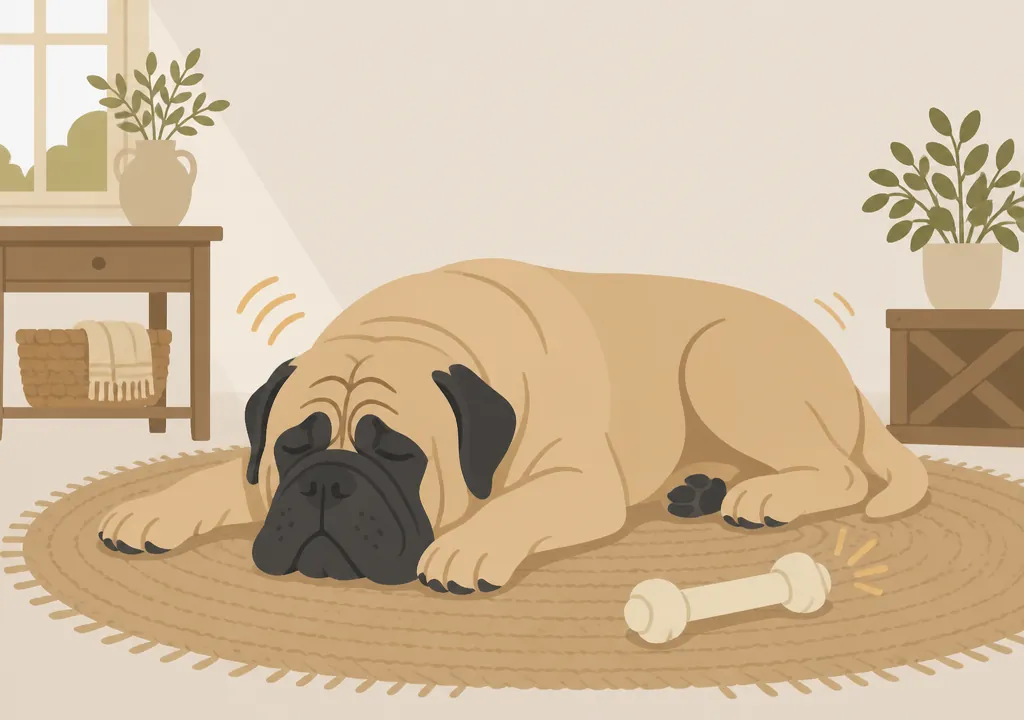
Time alone
Relaxed alone time.
Resting in an open crate, settling behind a closed door and coping alone are separate skills for a Mastiff puppy. Separate plans stay kind for a breed that cannot be forced into comfort.
The full guide separates physical fit, voluntary entry, door work and real distress.
The adolescent months
Patience through slow maturing.
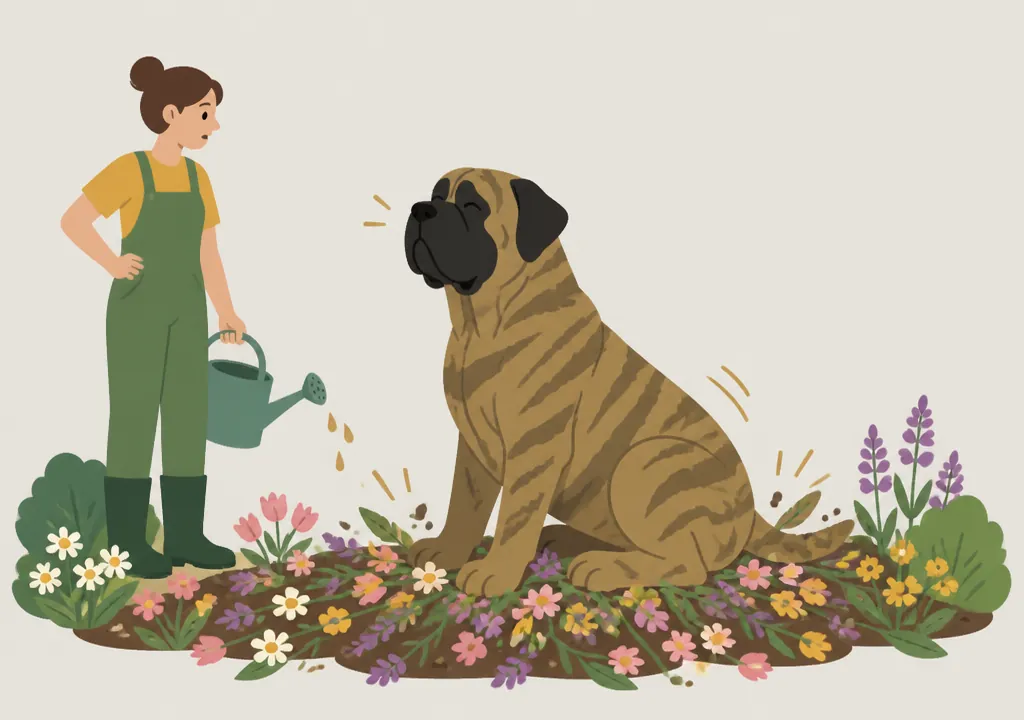
Some Mastiff owners spend adolescence beside a dog who learned polite walking at eight weeks. Others put training off and are now towed by a strong teenager. Same temperament, different timing of manners.
The full guide is the timeline from 8 weeks to 2 years, with gear and vet habits.