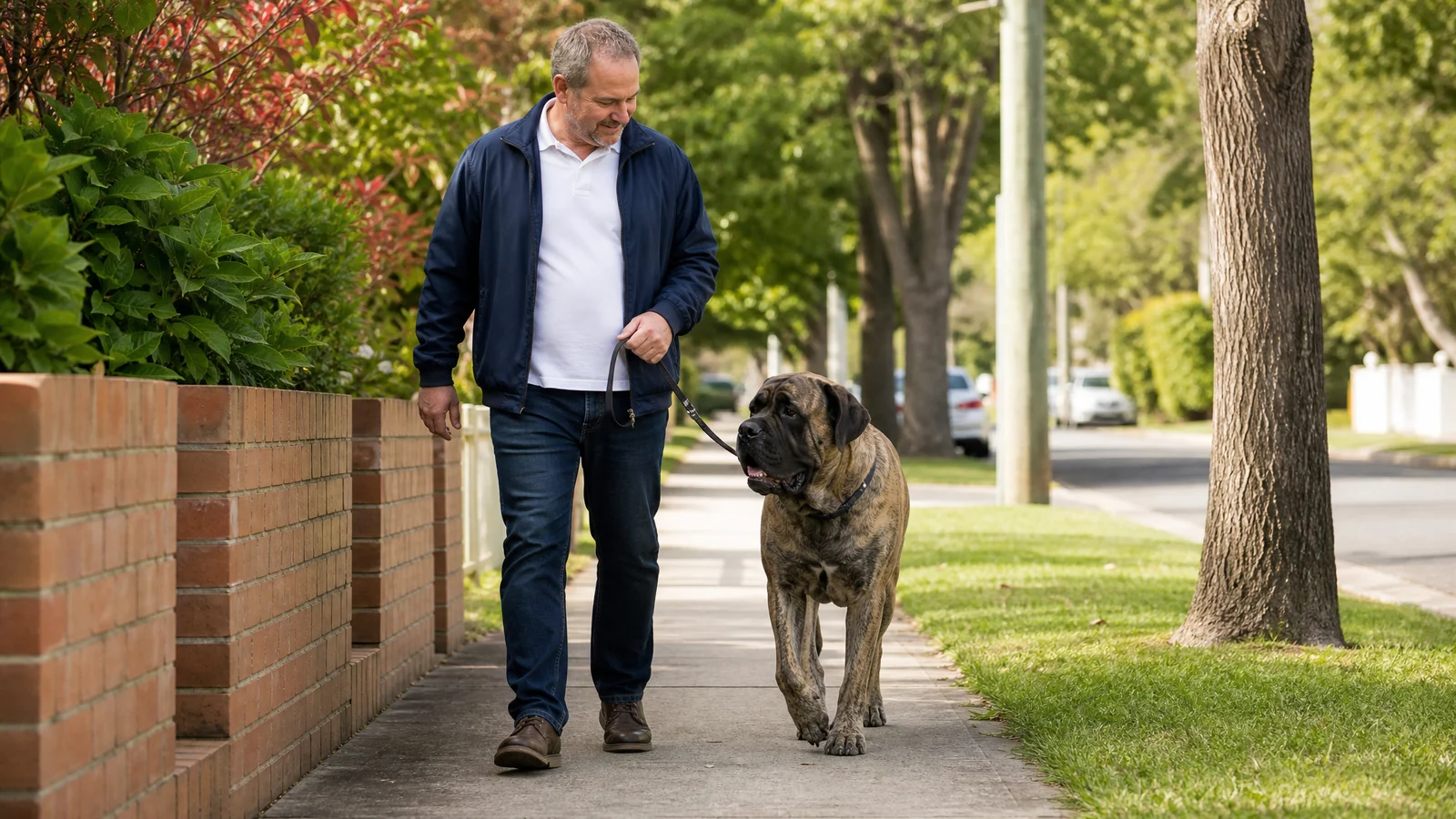
Some Mastiff owners spend adolescence walking beside a dog who learned to stroll politely and settle on a mat back at eight weeks. Others put training off until the puppy was already enormous, and now they are being towed toward every smell by a strong, untrained teenager. The temperament in both homes is the same. What differs is when the manners began.
This article looks at puppy training from eight weeks to two years, so you can tell which stage you are in, what to teach right now, and which gear and vet habits to sort out before your dog outgrows them. We have trained this breed for many years, and the pattern holds: a little calm effort early saves a great deal of heaving and hauling later.
Why Mastiff Puppy Training Starts With Size
A Mastiff puppy is clumsy and sweet now, but adults weigh somewhere between 120 and 230 pounds, with females at 120-170 and males at 160-230. A male stands at least 30 inches at the shoulder.
Whatever your puppy learns about jumping up, leaning on legs or towing you toward a smell comes back later with all that mass behind it. The AKC stresses that early training and socialization are what make a Mastiff puppy a happy family member, and the practical reason is that manners are much easier to teach to a dog you can still scoop up.
Size also limits what you can fix in the moment. Owners report that their Mastiff unintentionally knocks over small children with a tail or shoulder because they do not notice them, so they supervise every interaction closely. A polite wait at doors and four paws on the floor need to be habits your dog chose long before they were big.
Buy the Crate for the Adult Dog
Owners report that Mastiffs outgrow crates, sometimes before they reach full size. A 48-inch crate fits dogs of about 120 to 200 pounds with room to stand, turn, stretch and shift bedding, and some owners go straight to 52- to 54-inch models that look enormous around a puppy but save buying twice.
Build matters as well as size. Even a calm Mastiff can bend or break a thin crate by kicking and twitching in their sleep, or just from years of sleeping in one, so choose heavy-duty and check it regularly. Put regular veterinary checkups on the calendar from the first weeks too, since growth in a giant breed deserves a professional eye.
Puppy Training in Weeks Eight to Twelve at Home
Your first month is less about tricks than about a household your puppy can predict. Keep the first days quiet, set times for meals, naps, outings and play, and decide the house rules now, because a sofa that is off limits to a full-grown adult should be off limits to the puppy as well. Mastiffs read your face and body language closely, so a consistent home teaches faster than any cue.
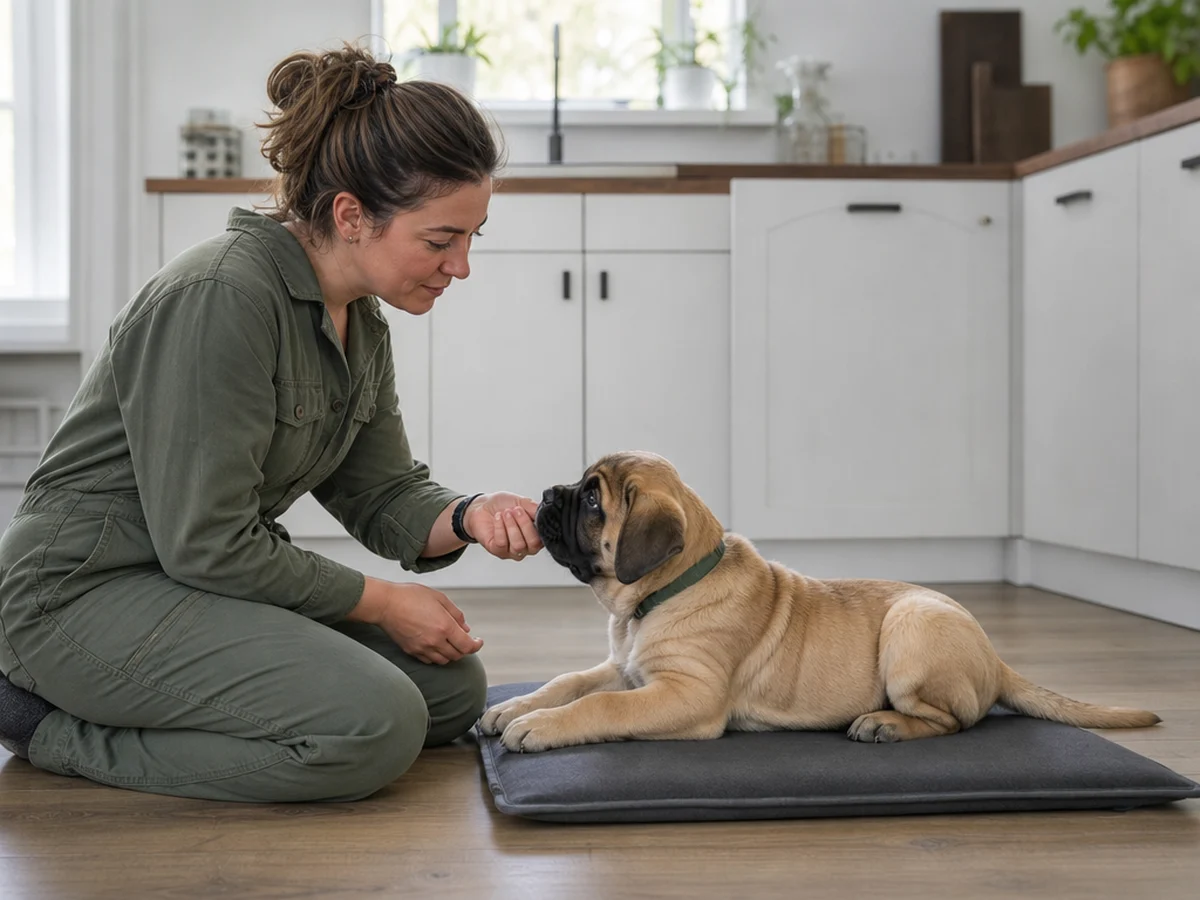
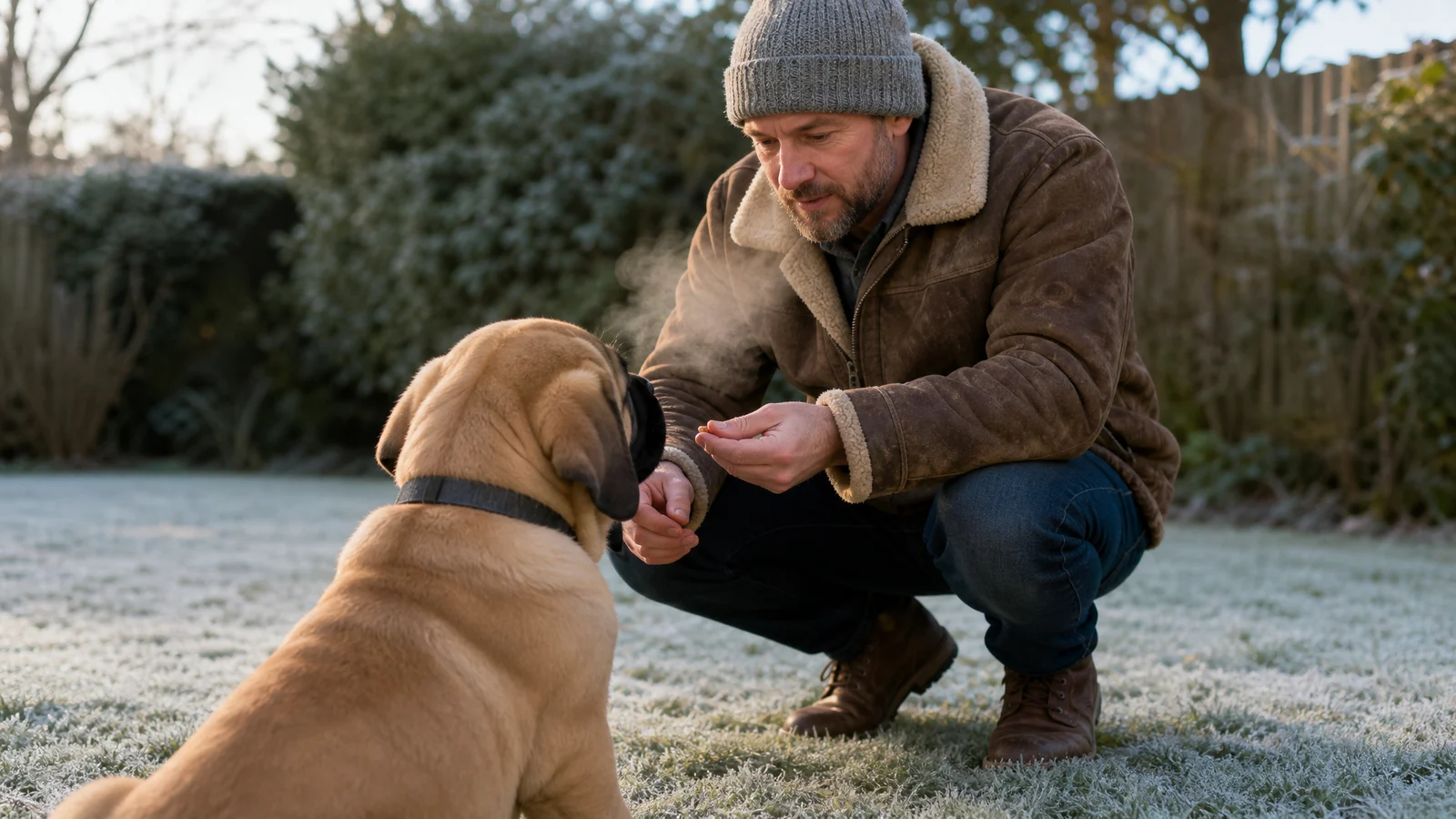
House training is mostly timing. Take your puppy out after waking, after meals, after play and before bed, always to the same spot, and reward the moment they finish. Accidents are normal for weeks, so clean up without fuss and supervise more closely rather than expecting more from a baby. The crate becomes the sleeping place when meals and chews happen there and the door starts out open.
These small lessons pay off fastest right now:
- Say the name and reward every glance your way, so attention becomes the default before distractions get big.
- Touch paws, ears, lips and tail for a moment at a time, then reward calm acceptance.
- Teach a polite wait at doors, using a marker word like yes the instant your puppy pauses, then follow it with a treat.
- Add a simple sit and down, lured with a treat, once the name game is solid.
Handling practice has a Mastiff-specific payoff. A vet visit is partly a handling-safety problem for this breed, because size, nervous head movements and a rush of adrenaline can make exams risky, and many owners need calming help from their vet. Some dogs become so frightened that a simple blood draw takes a crowd of people to hold them.
Fear of the clinic is not fixed, though. A Mastiff startled by staff can learn that the clinic means attention and treats, and walk in confidently after a few good visits. Short drop-in visits where nothing is done to the dog build that association, and rewarding calm in the waiting room and on the exam table gives the vet team a better starting point. For the cue-by-cue basics, our complete Mastiff training guide goes deeper.
Mastiff Puppy Socialization at Three to Four Months
The easiest learning window is wide, but it does close. Puppies are most open to their surroundings between 3 and 14 weeks, so the ideal moment to begin falls early, and by three or four months calm exposure should be a daily habit rather than a plan. Puppies can generally start classes at 7-8 weeks once they have had at least one set of vaccines a week earlier and a first deworming.
Socialization matters more for a Mastiff than it first seems. They are protective of family and naturally wary of strangers, and a worried dog this size is a far bigger management problem than a worried small one. Your goal is for ordinary things, such as visitors, bicycles, vacuum cleaners and car rides, to feel boring and pleasant before adolescence arrives.
Keep each outing short and give space whenever the puppy backs away, then try an easier version. Let different adults offer treats, let calm children meet your puppy with an adult beside them, and arrange meetings with friendly, vaccinated dogs.
Many Mastiffs are lovely with small dogs, but size creates risk, either through an accidental rough moment in play or because owners wisely keep the big dog away from a very tiny one. Our kids, dogs and strangers plan covers those meetings step by step.
Keep Lessons Short and Upbeat
Mastiffs learn quickly and want to please, but long drills bore them, and they may lie down and snore. Ask for a few repetitions, switch to a game or a sniff, and stop while your puppy is still keen.
This is general information, not veterinary advice. Your veterinarian can tell you when your puppy's vaccines and deworming allow classes and outings, and which places are safe until then.
Leash and Chew Rules for Puppy Training
This is the stretch when puppy teeth give way to adult ones, so chewing and mouthing can feel endless. A Mastiff mouth is big, so keep a rotation of sturdy chews sized for a large dog within reach, and trade for them cheerfully whenever your puppy picks up something else.
When teeth touch skin, pause the play, offer a toy and praise the moment it goes in the mouth. If your puppy is wound up, end the game and offer a rest in the crate or pen. That is a time-out, not a scolding, and your puppy learns that calm, gentle play is what keeps the game alive.
Teaching a Loose Leash
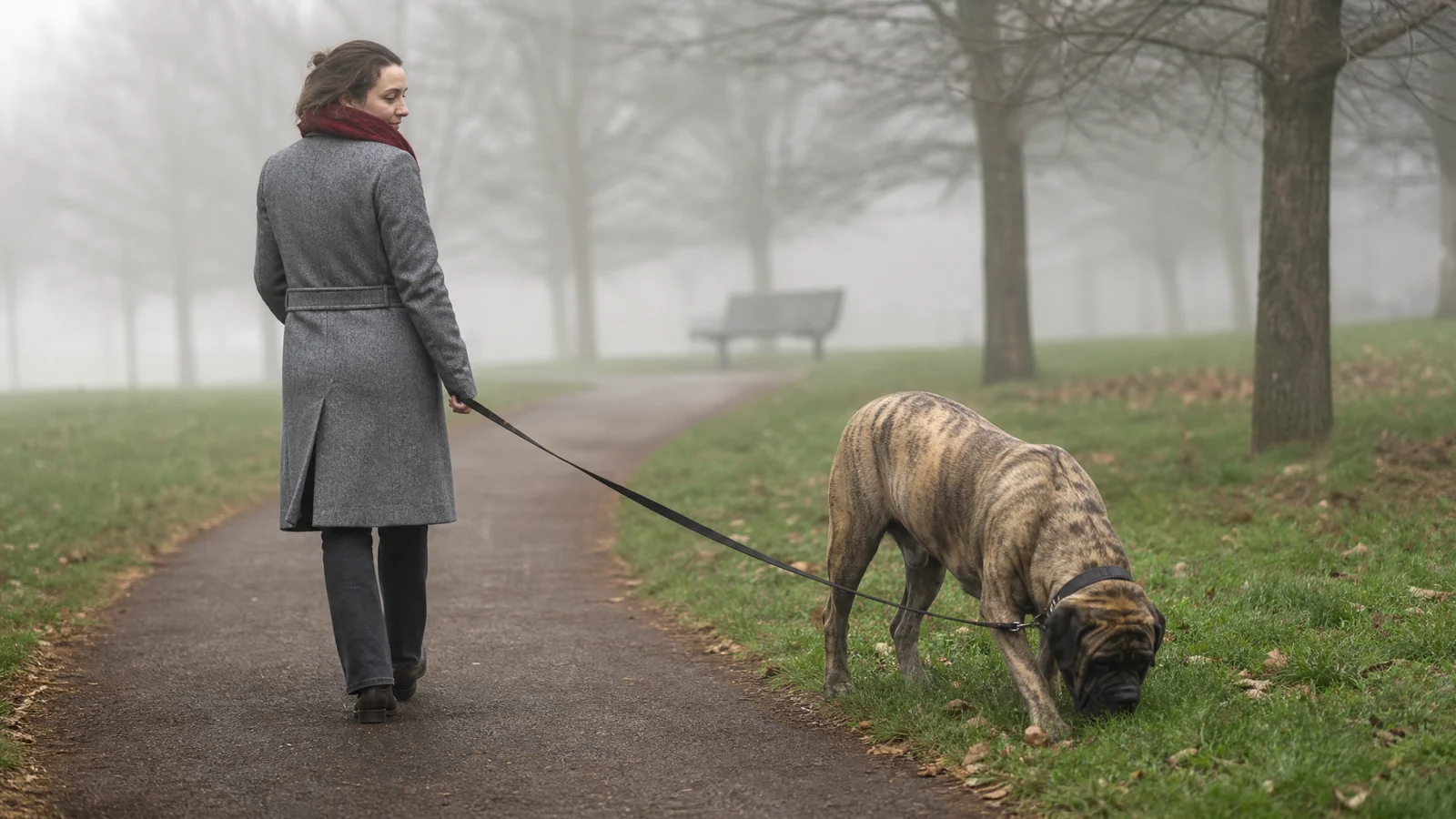
Your puppy is still small enough to guide easily, which makes now the best time for a reward-based method that works at any size. Stop whenever the leash tightens, call your puppy to your side, and praise them when they arrive, then walk on. Moving forward is the reward, so the puppy learns that staying close is how to get where they want to go.
Keep the walks short. Mastiffs are notorious for plopping down when tired or overheated, so a handy rule is never to walk them farther than you could carry them back, and growing joints do better with sniffing and play than with long trudges or repeated jumping.
Keep your voice calm as well, since raising it can easily hurt the feelings of a dog this sensitive. Science backs the gentle approach. In a 2020 PLOS ONE study, researchers compared 92 pet dogs and saw less stress behavior and smaller cortisol rises after training in dogs whose schools relied on rewards.
Adolescent Mastiff Training Between Six and Twelve Months
Around now many owners panic. The puppy who sat reliably last month now seems to have forgotten the cue entirely, and the natural conclusion is that the training failed. It did not. A body that is growing fast and a brain that is still developing make everything harder, including things your dog knows well, so the old skills are buried rather than lost.
Your job is to hold the rules steady and make the right choice easy and rewarding. Go back to quiet rooms, ask for easy cues, reward generously, and add distractions one step at a time, from living room to yard to calm street. If the sofa was off limits from the start, it still is, and every person in the house keeps giving the same answer, because a Mastiff who wins a rule once will test it again with far more weight.
You may find a dog who looks nearly grown but still thinks like a youngster. That mismatch is normal in a giant breed that takes its time maturing, and it is why patience beats pressure. Keep sessions short and varied, since repetition bores them, and keep practicing handling and vet visits with treats and a calm mood.
Keep exercise moderate, because Mastiffs have comparatively low needs and a growing body does not need hard running. If you see a sudden change in behavior, reluctance to move or signs of pain, call your veterinarian before assuming it is attitude.
Year Two Puppy Training for a Nearly Grown Mastiff
Many Mastiffs look nearly grown by this stage but are still filling out and maturing, which makes year two the time to turn good habits into reliable ones. The work now is generalizing. Ask for the same cues in other rooms, at a friend's house, in the car and near visitors, adding a little more distraction each time.
Polish the things that matter most at full size: calm greetings where a sit earns the attention, longer waits at doors, settling on a mat in public and easy loose-leash walking. Mastiffs communicate a great deal with their eyes, so a relaxed face and quiet voice go a long way. If you wonder how much of this comes from temperament, read are Mastiffs easy to train.
Exercise stays modest. Mastiffs can live happily in an apartment and do well with free play and daily walks of a mile or two as adults, and a dog who sits down in the heat is telling you to cool off and head home.
With a life expectancy of 6-10 years, the early years are precious, and the manners you build now are what let you enjoy a calm, trusted giant for all of them. Keep a short practice session going daily, keep vet visits positive and keep booking regular checkups.
One Puppy Training Step Tonight for a Giant Adult
You have seen the whole timeline now: routine and handling at the start, gentle socialization through the early window, chew and leash rules before the puppy gets heavy, steady rules through adolescence, and polish in year two. Every stage rests on the same idea, which is that a dog who can one day outweigh a grown man needs manners that were built while they were small.
So pick one small habit and start it tonight: a short, calm greeting practice. Stand a step back from your puppy, wait for all four paws on the floor or a sit, then say hello with a quiet voice, a treat and a gentle scratch. Do it for a few moments, stop while they are still keen, and repeat when you come home tomorrow.
That small ritual teaches the habit that matters most in a giant, which is greeting people politely even when excited. Practiced daily and widened to visitors, it grows with your puppy into the calm, devoted companion you hoped for.
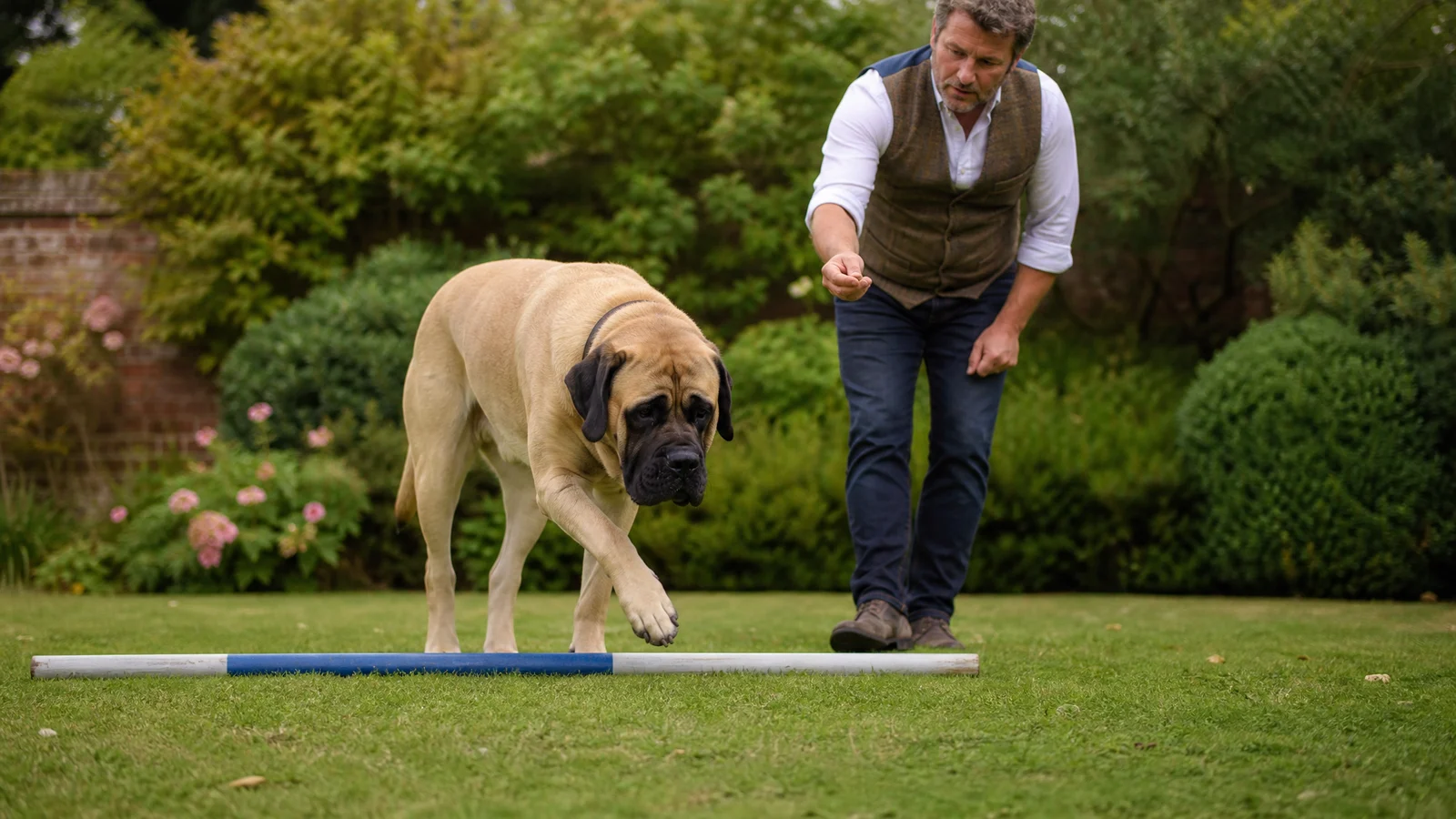 Exercise and jobsModern English Mastiff Sports and Enrichment Jobs
 Exercise and jobsEnglish Mastiff Exercise: Read Movement, Thinking and Recovery
 Training basicsHow to Potty Train an English Mastiff Puppy Calmly