

A Mastiff's guarding instinct is real, but it rarely looks the way people expect. Dogs vary, so your real question is not whether your Mastiff will guard. It is what the behavior looks like in your home and how you keep it calm.
Handled well, you get a calm, imposing housemate whose presence does the work. Handled badly, you get a wary dog who weighs as much as a person and does not take direction at the front door. We have spent many years focused on this breed's behavior and training, and the pattern is consistent. We'll walk you through where the guarding instinct comes from and how it changes with age, then how to manage doors, guests and vet visits, and when to call in a trainer.
Why Mastiffs Guard
The watchful temperament is not an accident or a training problem. It was selected for over centuries, and knowing the job behind it explains most of what you see in your living room.
Origin of the Guardian
The Mastiff is an ancient English breed, originally used as a warrior and protector. The dog we know came into focus in medieval England, where they served as big-game hunters, nighttime guardians of estates and war dogs. That history is background only. Today's Mastiff is described as more docile and friendly than their ancient forebears, but no less courageous.
Instinct and Wariness
Mastiffs are protective of family, and a natural wariness of strangers is part of the package. Their rating for watchdog and protective nature is 5 of 5, and their openness to strangers sits at 3 of 5, which means ambivalent. Expect a dog who watches newcomers before deciding about them.
Mastiffs also communicate a great deal with their eyes and read your expressions and body language well. A dog who studies you this closely notices when you tense up at the door, and they borrow your mood.
Temperament on Paper
The breed standard describes a combination of grandeur and good nature, courage and docility. It calls for an alert but kindly expression, names dignity rather than gaiety as the correct demeanor, and says judges should not condone shyness or viciousness. A guard instinct that comes with docility is the target. Aggression is not.
Guard Behavior by Age
Guarding is not a switch that flips at one date. It develops in stages, and each stage asks something different of you.
Puppyhood
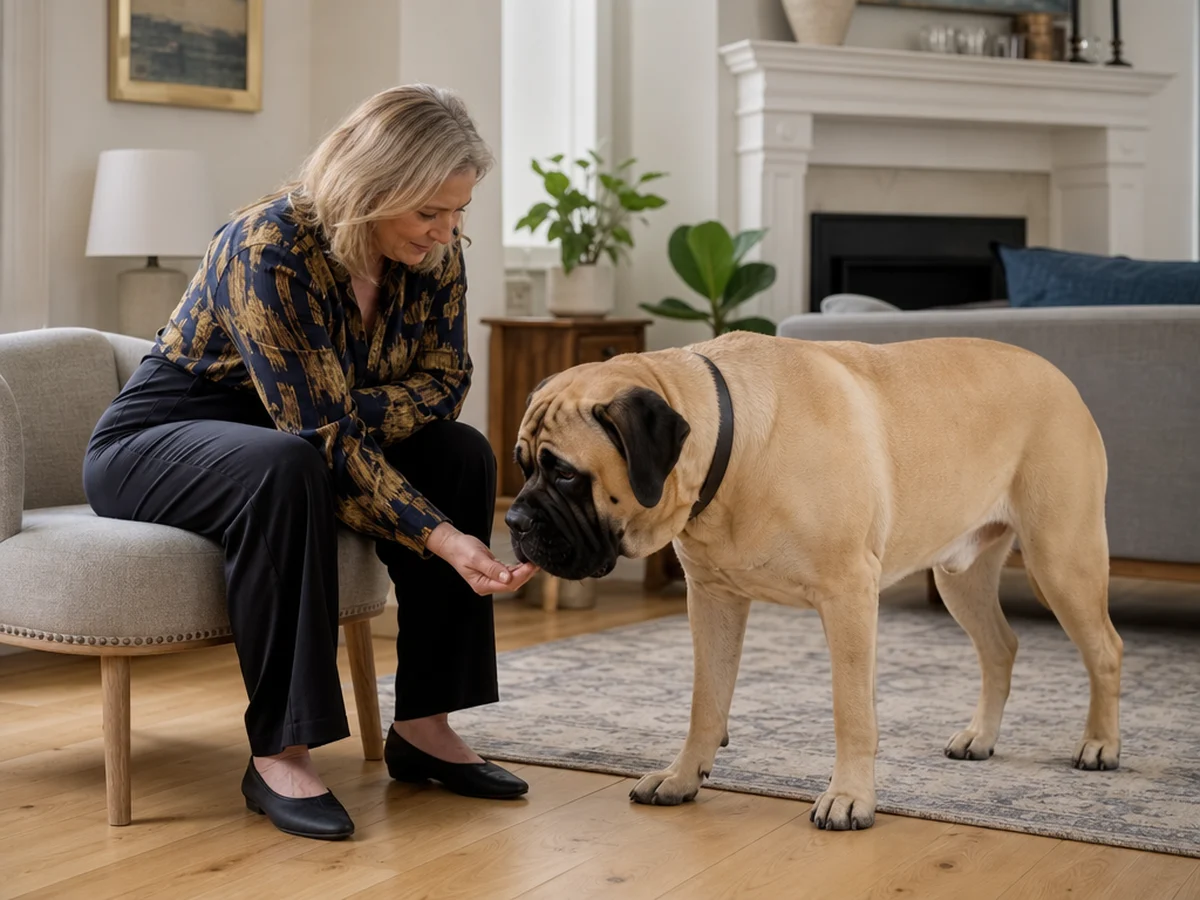
A Mastiff's natural wariness of strangers makes early training and socialization essential. Start building good associations with new people as soon as you can, because early training and socialization are what make a Mastiff puppy a happy family member.
Pair every new person, sound and place with treats and calm praise. Practice handling ears, face and paws now too, as part of grooming, so touch from strangers later feels familiar.
Adolescence
A Mastiff's size can outrun their manners, so lean on management as much as training. Because an adult is too strong for most owners to hold back by force, use leashes, barriers and a settled spot away from the door when visitors arrive, and rely on cues you have taught with rewards.
Keep sessions short and varied, because repetitive drills bore this breed quickly. Introduce new people gradually, at a distance where the dog stays relaxed, and move closer only as they stay comfortable. Reward every calm look at a stranger, and give them extra space whenever they seem uneasy.
Adult Dogs
Adults are steadier but more set in their habits. Many owners describe a dog who is always watchful and who steps between them and anything that spooks the dog. Some adults are leery of new people without ever showing aggression, and their owners simply stay cautious around strangers.
The habits you rewarded in earlier stages are the ones you now live with. An adult that has learned a visitor means treats and a mat is a very different housemate from one that has practiced standing at the door.
Mastiff Presence as Protection
A 5 of 5 protective rating and a barking score of 1 of 5 look like a contradiction. They are not. They describe a dog who is vigilant and quiet.
| Trait | Rating | What it means for you |
|---|---|---|
| Watchdog/protective nature | 5 of 5 | Vigilant, always aware of who comes and goes |
| Barking level | 1 of 5 | Barks only to alert |
| Openness to strangers | 3 of 5 | Ambivalent, needs time and space |
| Good with other dogs | 3 of 5 | Supervision needed |
| Trainability | 3 of 5 | Agreeable, bores easily |
The UKC notes that in America the breed is a devoted family pet that serves as a protector mainly through imposing size. That is the whole job description. A visitor sees a huge, dignified dog watching them, and most stop right there.
You do not need guard work, and we advise against it. Bite or protection exercises add risk to a dog who already outweighs most adults. The dog's size and calm are the deterrent.
Managing Guard Behavior
An adult Mastiff is too strong for most owners to hold back by force, even at a moderate weight. Many owners find that in a tense moment they cannot physically intervene fast enough. Safety comes from cues taught with rewards, plus management such as sturdy barriers and leashes. A lightweight gate will not stop a determined Mastiff who is worried about someone.
Doorbell and Visitor Routine
Build the same sequence every time, so the dog knows what happens when the bell rings.
- Teach a mat or bed cue away from the door, and reward the dog heavily for going there.
- Put the dog on leash or behind a barrier before the door opens.
- Let guests ignore the dog at first. Give the dog space and let them approach if they choose.
- Reward calm behavior with treats as the dog watches the visitor settle.
- Move the dog to another room if things get hectic, especially when children are present.
Where the Dog Sits
Pick a spot with a clear view of the room but not of the front door. A dog who guards the entrance practices guarding all day. A bed across the room lets them stay watchful without being on duty.
Voice and Handling
You can easily hurt a Mastiff's feelings by raising your voice. Use a calm tone and rewards. A relaxed owner makes a relaxed dog.
Separate dog and child when the household turns chaotic, such as during a toddler meltdown. The breed rates 5 of 5 with young children, but a dog this size still needs a barrier, not just good intentions.
Vet visits are a handling-safety problem too. Size, nervous head movements and adrenaline can make exams risky, and some owners need calming help from the vet. Make short drop-in visits where nothing is done and the staff hands out treats. Many startled Mastiffs learn that the clinic means attention and food, then walk in confidently. Keep regular vet checkups on your calendar.
Guarding Problems and Fixes
Most problems come from stress, not malice. The fix is management plus rewards, and it starts with finding out what the dog is reacting to.
Barking has many causes, so identify the motivation first before you try to change it. A Mastiff who barks at the door may be alerting, anxious or bored. Each needs a different answer.
If your dog plants themselves between you and a person who worried them, do not push past. Calmly add distance, then reward the moment they relax and look at you.
If the dog guards food, toys or a spot on the couch, treat growls as warnings. Never punish them. Calmly move away so the dog learns they do not need to escalate, then work on trading for treats at a distance.
Call a qualified positive-reinforcement trainer when you see any of these signs:
- The dog stiffens, freezes or growls at people they know, not only at strangers.
- Wariness is getting worse despite steady, rewarded exposure.
- You cannot safely get the dog away from a door, gate or person using your cues.
- The dog guards objects or spaces from family members, especially children.
- Fear at the vet or groomer leads to failed visits or needs several people to restrain the dog.
Mastiff Presence and Your Next Questions
A good Mastiff guard is calm. Their quiet vigilance, huge frame and kind expression do the protecting. Your job is to keep that calm intact with early socialization, steady routines, barriers when needed and rewards for relaxed behavior.
Owners usually ask three things next. How do you train the cues? Start with the mat, recall and a settle, and keep sessions short and fun. How do you socialize safely? Our guide to kids, dogs and strangers lays out a plan. What temperament is normal? Watchful, dignified and affectionate with family. Anything beyond that is worth a conversation with your vet and a reward-based trainer.
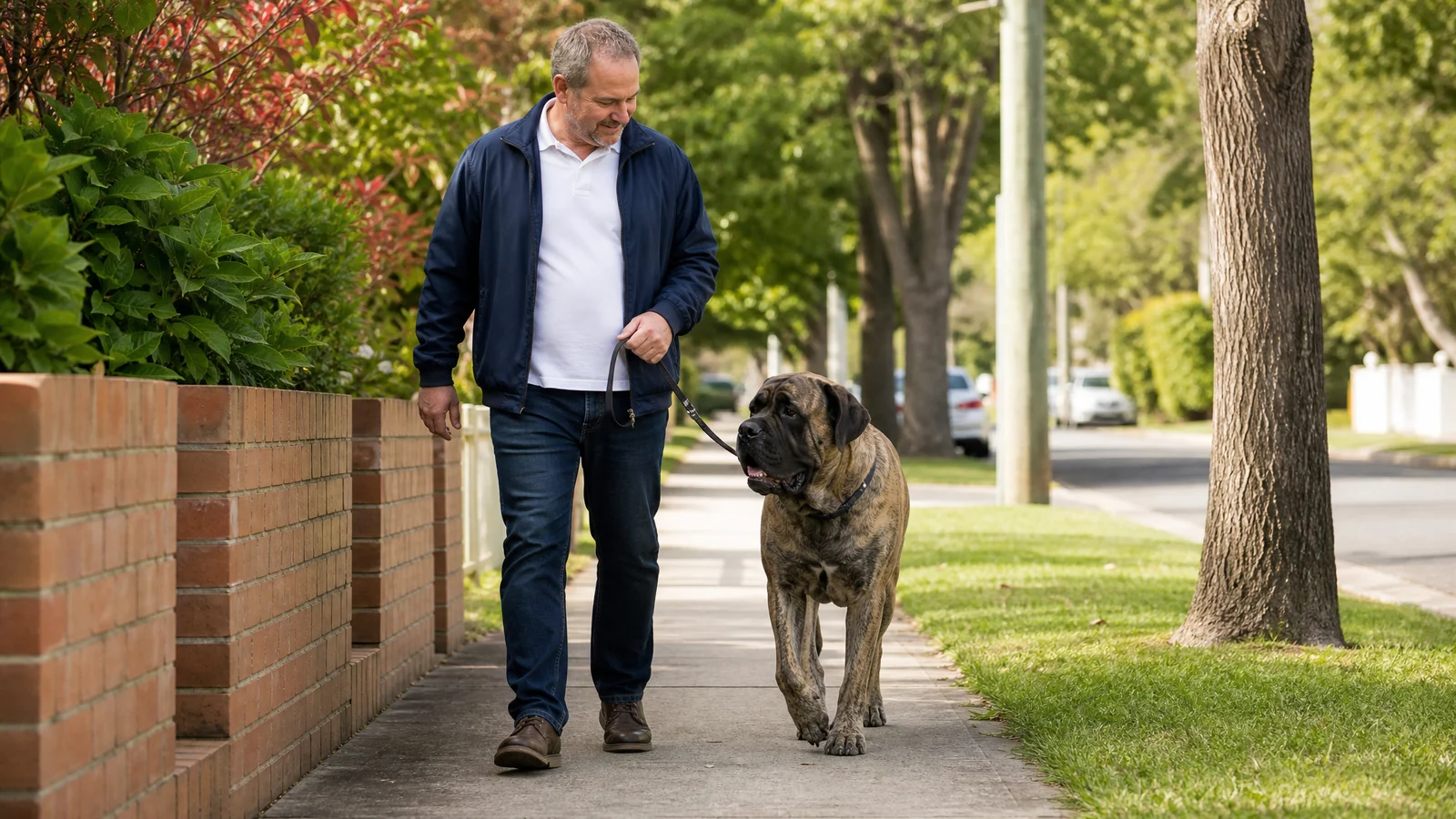 Puppy trainingEnglish Mastiff Puppy Training Timeline, 8 Weeks to 2 Years
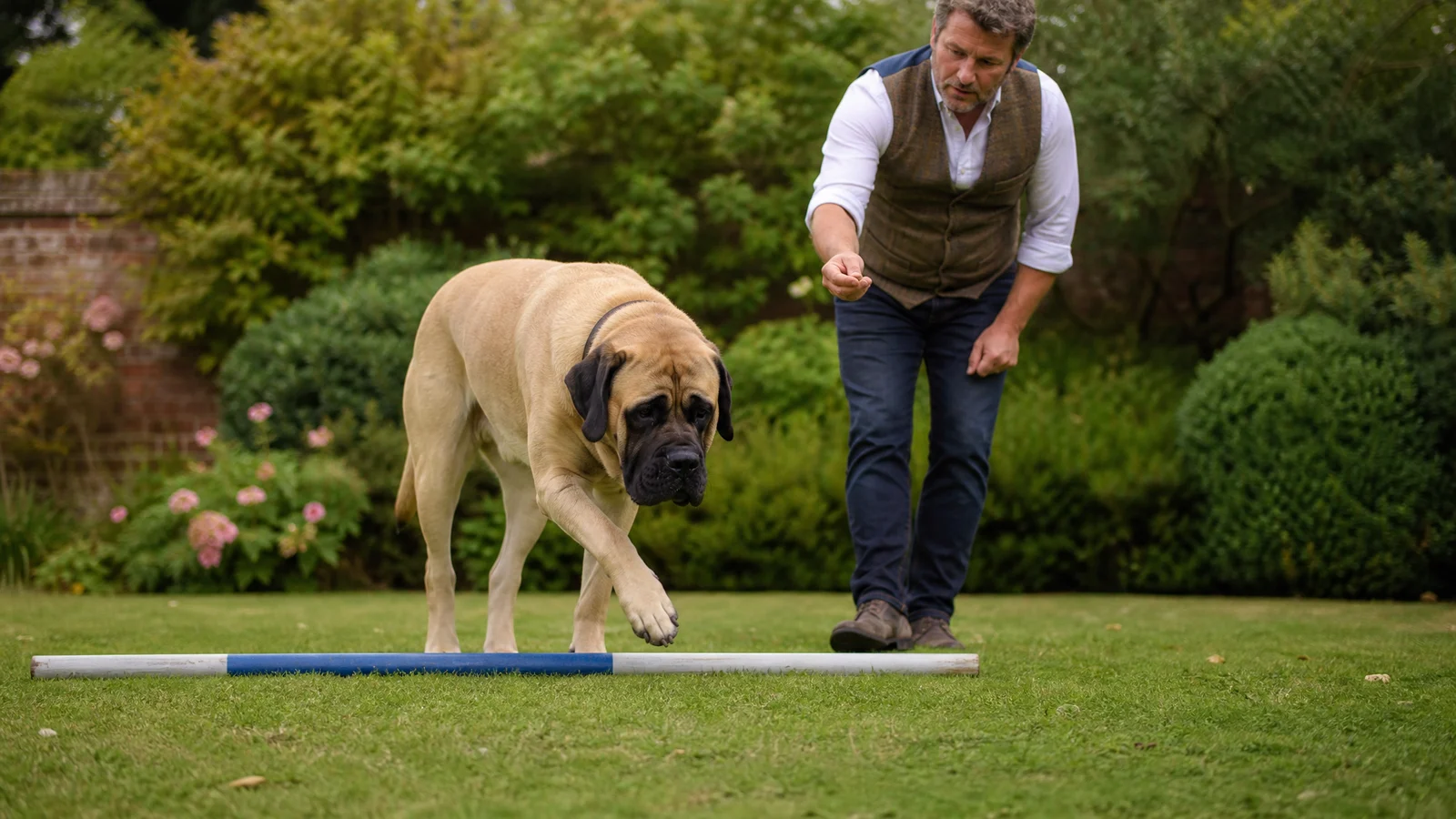 Exercise and jobsModern English Mastiff Sports and Enrichment Jobs
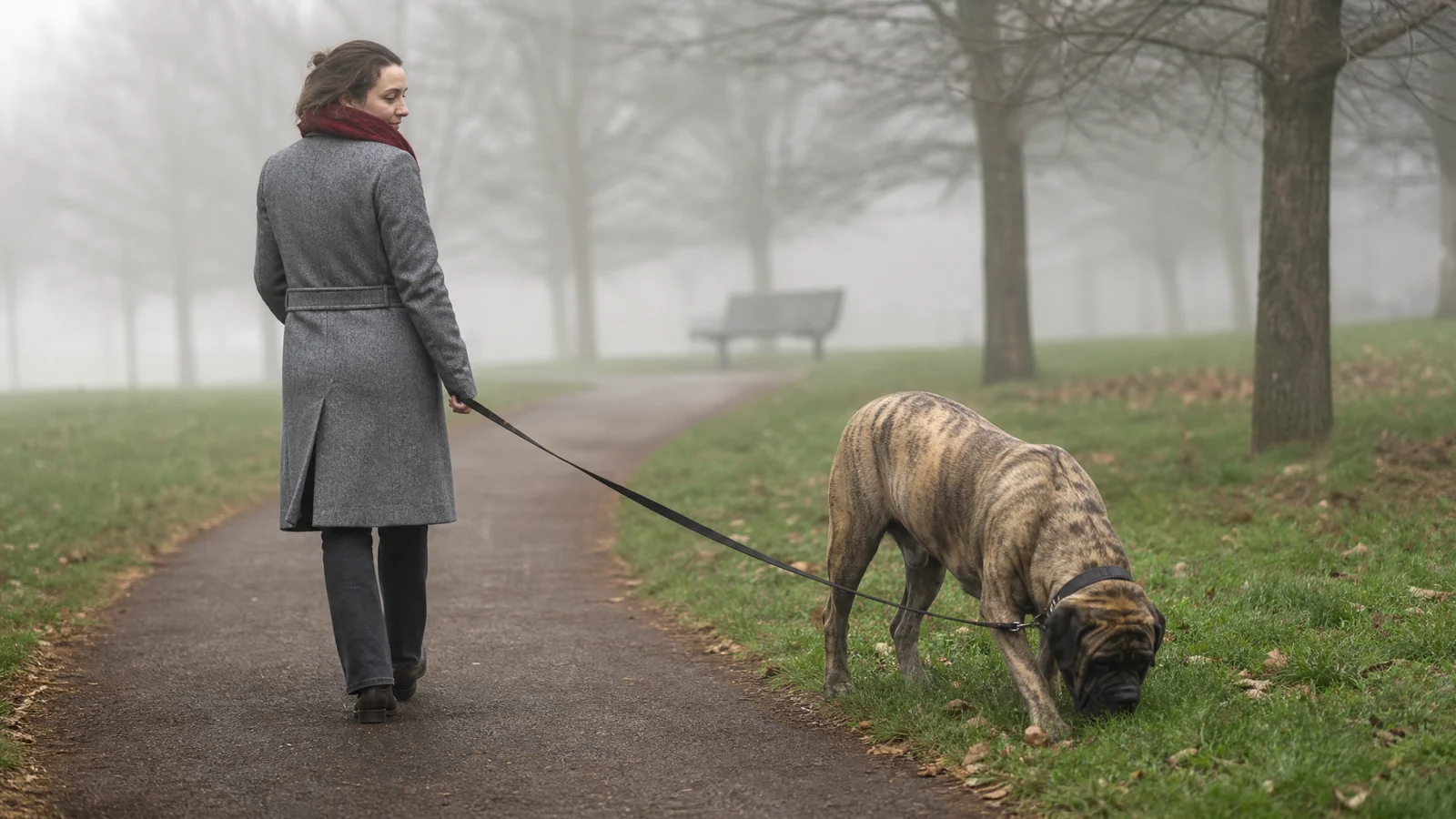 Exercise and jobsEnglish Mastiff Exercise: Read Movement, Thinking and Recovery