How much exercise should a growing English Mastiff puppy get? A single minutes-by-age formula cannot answer safely because surface, pace, play style, health and recovery all change the load. A puppy who still wants to follow may not be ready for another repetitive walk. Enthusiasm cannot tell us how the growing body will feel later that day.
In this guide, we will build a movement and recovery menu instead of chasing mileage. Your veterinarian sets individual limits. You will choose among exploration, gentle play, training movement and rest, then adjust one weekly variable by what the puppy shows during and after activity. The framework stays useful as the puppy's body and routine change.
English Mastiff Veterinary Limits for Exercise While Growing
Begin with the puppy's veterinarian. Describe the actual activities you are considering, including the surface, pace, play partners and what the puppy does afterward. Ask how current growth, gait, body condition and any health concern should change the plan.
The Mastiff breed profile describes modest adult exercise needs and regular walks, but adult guidance does not establish a puppy workload. A growing dog needs an individual plan that protects comfortable movement while still supporting exploration and learning.
Keep regular veterinary visits throughout growth. Seek prompt veterinary advice for pain, lameness, collapse, breathing trouble, marked fatigue or an abrupt change in movement. This article cannot set medical exercise limits for an individual puppy.
Bring a short video if an uneven movement appears only at home. Record the puppy walking naturally rather than repeatedly reproducing the concern. The clinic can interpret the observation in the context of the whole dog.
Write current limits in household language. Name the routes, surfaces and games that fit, plus activities the veterinarian wants restricted. Everyone caring for the puppy should follow one plan instead of interpreting “short walk” differently.
A Menu for English Mastiff Exercise While Growing
Build the day from activity categories rather than treating every active minute as equivalent. A slow sniff through a quiet yard does not create the same demands as repeated chasing on slippery ground. The category helps the household balance experiences without stacking the same kind of load.
Choose one primary activity for each awake period instead of sampling every category. Exploration can be the main event while two easy cues support communication. That keeps variety in the week without turning one morning into a crowded circuit.
Exploration at the Puppy's Pace
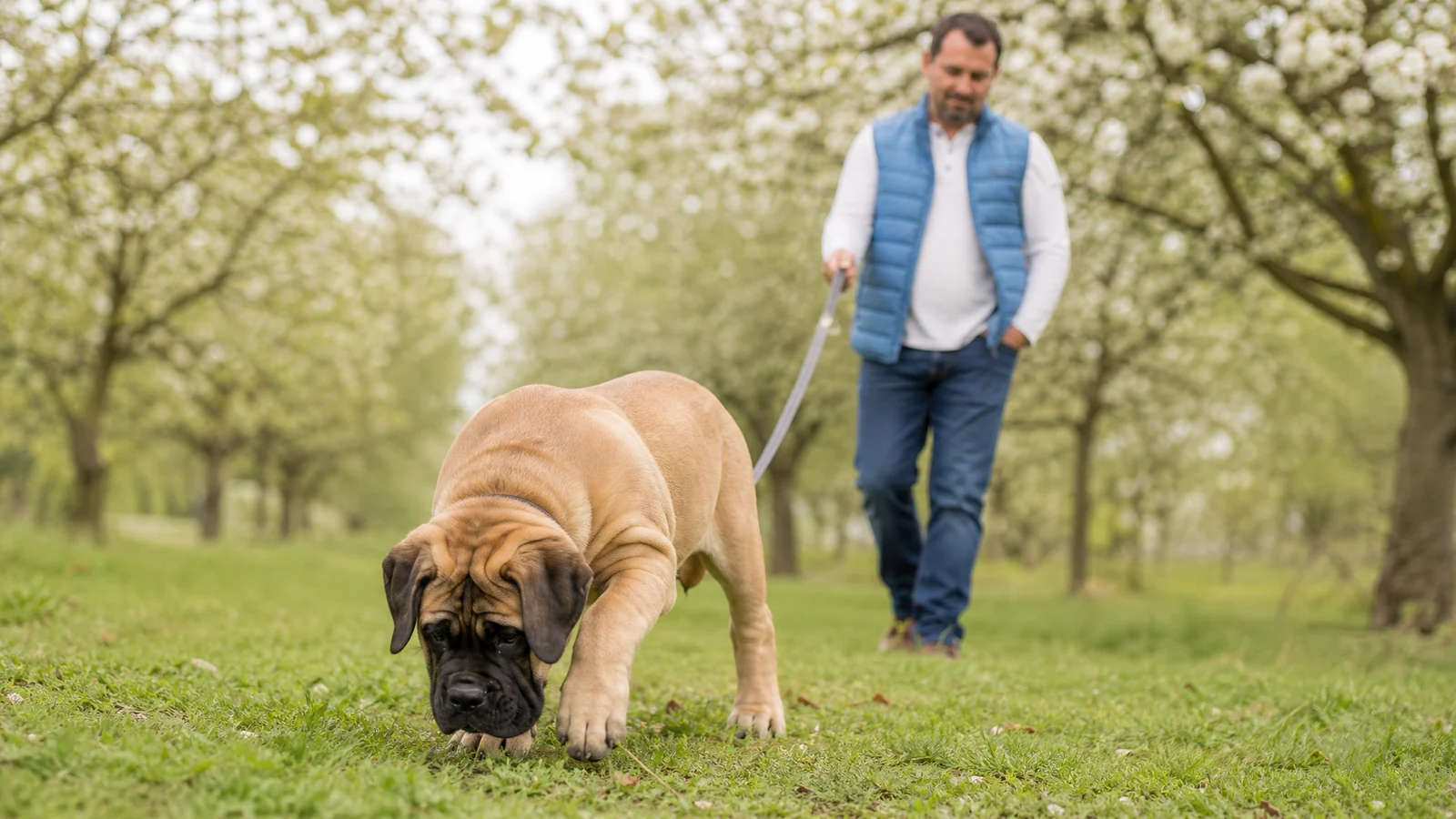
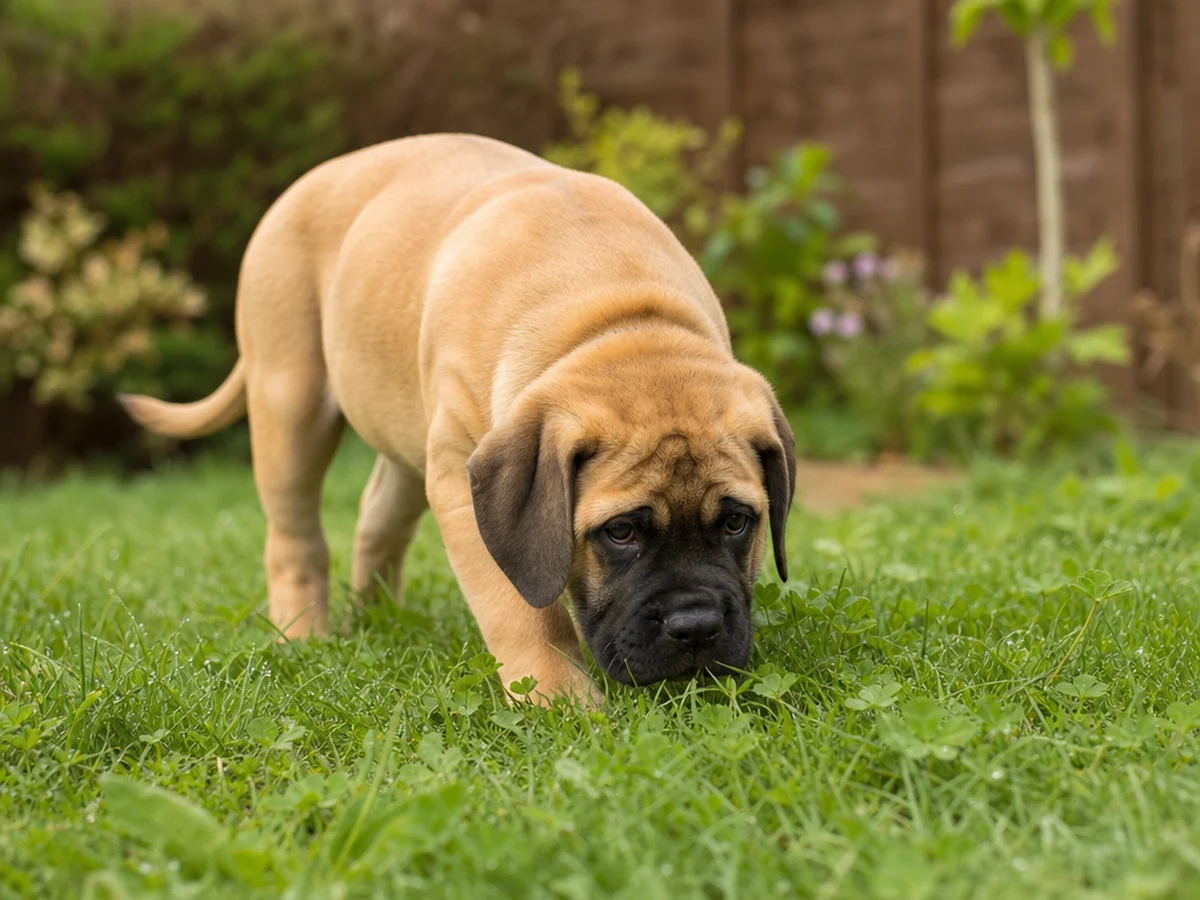
Use a secure yard, a quiet path or another suitable area where the puppy can sniff and choose an easy pace. Keep the route close enough to finish comfortably. Exploration should not become a long outward walk that leaves a giant puppy unable to manage the return.
Allow pauses and turning back. The handler can reward voluntary check-ins and follow a broad curve rather than pulling the puppy away from each smell. The goal is confident movement through the environment, not a distance record.
Gentle Social Play
Choose compatible partners and enough room to separate. Interrupt before the play becomes repeated body slams, cornering or frantic pursuit. A brief reset shows whether both dogs want to return with loose bodies.
Do not use a busy dog park as the default puppy exercise plan. Unknown play styles and limited control make it hard to protect a growing body or end at the first sign of fatigue. Planned interaction with a suitable dog gives clearer choices.
Training That Uses the Body Quietly
Food searches, hand targets, stepping onto a broad mat and calm leash skills combine thinking with ordinary movement. Keep turns broad and surfaces secure. Training should build coordination and communication without becoming an improvised obstacle course.
The site's Mastiff sports guide can inspire future skills, but sport foundations must suit the individual puppy. Ask the veterinarian and a qualified instructor which preparation is appropriate before adding impact or endurance.
Rest and Settling
Rest is part of the activity menu, not what remains after the puppy is exhausted. Prepare a quiet, comfortable place and reward the puppy for choosing it after a short outing. Lower household traffic so recovery is possible.
A puppy who becomes wild after activity may need help transitioning, not another round of exercise. Offer water, a calm routine and an appropriate supervised activity before the resting period. Watch whether the puppy can actually settle.
English Mastiff Surfaces Shape Exercise While Growing
Choose surfaces by traction, predictability and the puppy's comfort. Flat secure footing gives a growing Mastiff a better chance to organize a large changing body. Slippery turns, repeated stairs and unstable ground may require management or veterinary guidance.
Walk the area without the puppy first. Look for sharp debris, hot sidewalk, holes, steep drops and narrow places that make turning difficult. Weather can change a familiar route, so reassess after rain, ice, landscaping or construction.
- Use short, controllable routes with an easy way home.
- Keep fast turns and repeated chasing off slick flooring.
- Place secure mats where the puppy regularly turns indoors.
- Choose broad entries and exits instead of asking for awkward squeezing.
- End activity when footing or temperature no longer supports easy movement.
PDSA's growing-dog guidance recommends introducing exercise slowly to protect developing joints. Slow introduction means changing one feature at a time, not merely moving slowly during an activity that is already too demanding.
Practice a rewarded return before using more freedom. The RSPCA recall guide explains how coming when called supports safe exercise. For a puppy, the immediate goal is a happy return in a secure setup, not proof that open spaces are safe.
An English Mastiff Day of Exercise While Growing
A balanced day alternates small experiences with real recovery. It does not need a rigid clock. Use the household's routine and the veterinarian's limits, then place activities where the puppy is comfortable and attentive.
Morning: begin with toileting, a short exploration and a few easy rewarded cues. Return while movement remains organized. Let breakfast or part of it support a calm search, then protect a resting period.
Middle of the day: choose a brief training movement or gentle play session if the puppy recovered easily. On a hot, busy or tiring day, replace extra walking with quiet enrichment and ordinary handling.
Evening: use an easy outing rather than trying to make up a missed distance target. Finish with water, a calm transition and the same resting place. The next morning's movement is part of the evening activity result.
Family excitement can accidentally stack load. A walk, visitor, play session and training class may each seem modest alone. Put them on a shared family calendar so several caregivers do not offer the puppy four “short” activities without seeing the total day.
Keep the sample day flexible. A growth change, vaccination visit, warm weather or difficult night's sleep may make a normally easy activity inappropriate. Lowering a challenge protects the larger routine.
Build in uneventful days too. Recovery evidence is easier to read when every day is not a new outing, play partner or class. Familiar low-key activities let the household see whether ordinary movement remains smooth.
Settling Completes Exercise While Growing
Teach settling at a neutral time before expecting it after play. Reward the puppy for approaching the resting place, lowering the body and remaining there briefly. Release before restlessness builds, then gradually let ordinary calm last longer.
After activity, guide the puppy to the same area without repeatedly cueing a down. Provide water and reduce stimulation. Mark the first voluntary softening, such as a hip shifting to the side or the head lowering, and deliver the reward where the puppy can remain at rest.
Do not confuse immobility with comfortable recovery. Battersea's body-language guide notes signs such as facial tension, a tucked tail and a lifted paw. Watch the whole body and allow the puppy to leave a social or training situation.
Recovery also includes ordinary rising and movement later. Notice whether the puppy gets up smoothly, chooses usual activities and walks without stiffness. Concerning changes belong with the veterinarian, not in another test session.
Use the site's adult Mastiff exercise guide for future context, while keeping the puppy plan separate. Adult activity ideas do not override growth, individual health or the puppy's current recovery.
Stop Signals During Exercise While Growing
End at the first meaningful change rather than waiting for several signs. Slowing, repeated sitting, a change in stride, refusal to continue, difficulty recovering or unusual panting can make the current activity inappropriate. Choose the shortest comfortable finish.
Do not coax a tired puppy farther because the route was planned. A giant puppy may become too large to carry well before movement has matured. Conservative loops and easy turnarounds are part of safety.
A sudden burst of frantic behavior can also indicate that the activity has exceeded the puppy's ability to regulate. Reduce stimulation, provide a calm transition and review the earlier sequence. More speed is not the automatic answer to overarousal.
Record what happened immediately before the change. Include surface, weather, activity type and recovery. The pattern can help the veterinarian and can prevent the household from repeating a difficult combination.
Also note how the puppy moved after a full rest and on the following morning. A quick return to play does not always describe complete recovery. The larger window gives the veterinarian more useful context when something seems different.
A Weekly Exercise While Growing Adjustment
Review the week by activity type, not only by total time. Ask which exploration stayed comfortable, which play partner allowed easy pauses, which training movement built confidence and how the puppy rested afterward. That record makes the next decision specific.
Keep the record short enough that caregivers will use it. Activity, surface, first recovery sign and next-morning movement are enough for an ordinary entry. Add detail only when a change needs discussion with the veterinarian.
- If recovery was easy, repeat the same setup before adding difficulty.
- If one surface caused hesitation, replace that surface and keep the other features stable.
- If play became rough, shorten the next interaction and increase separation options.
- If settling was difficult, reduce the preceding activity and improve the transition.
- If movement or recovery raised concern, stop progression and contact the veterinarian.
Change only one feature during the next week. That might be a slightly different route, one extra search or a calmer play partner, never an automatic increase in every activity. The English Mastiff puppy's same-day and next-day recovery, interpreted with veterinary guidance, decides whether the menu still fits.
 BehaviorWiping Faces and Wrinkles: Handling an English Mastiff Who Drools
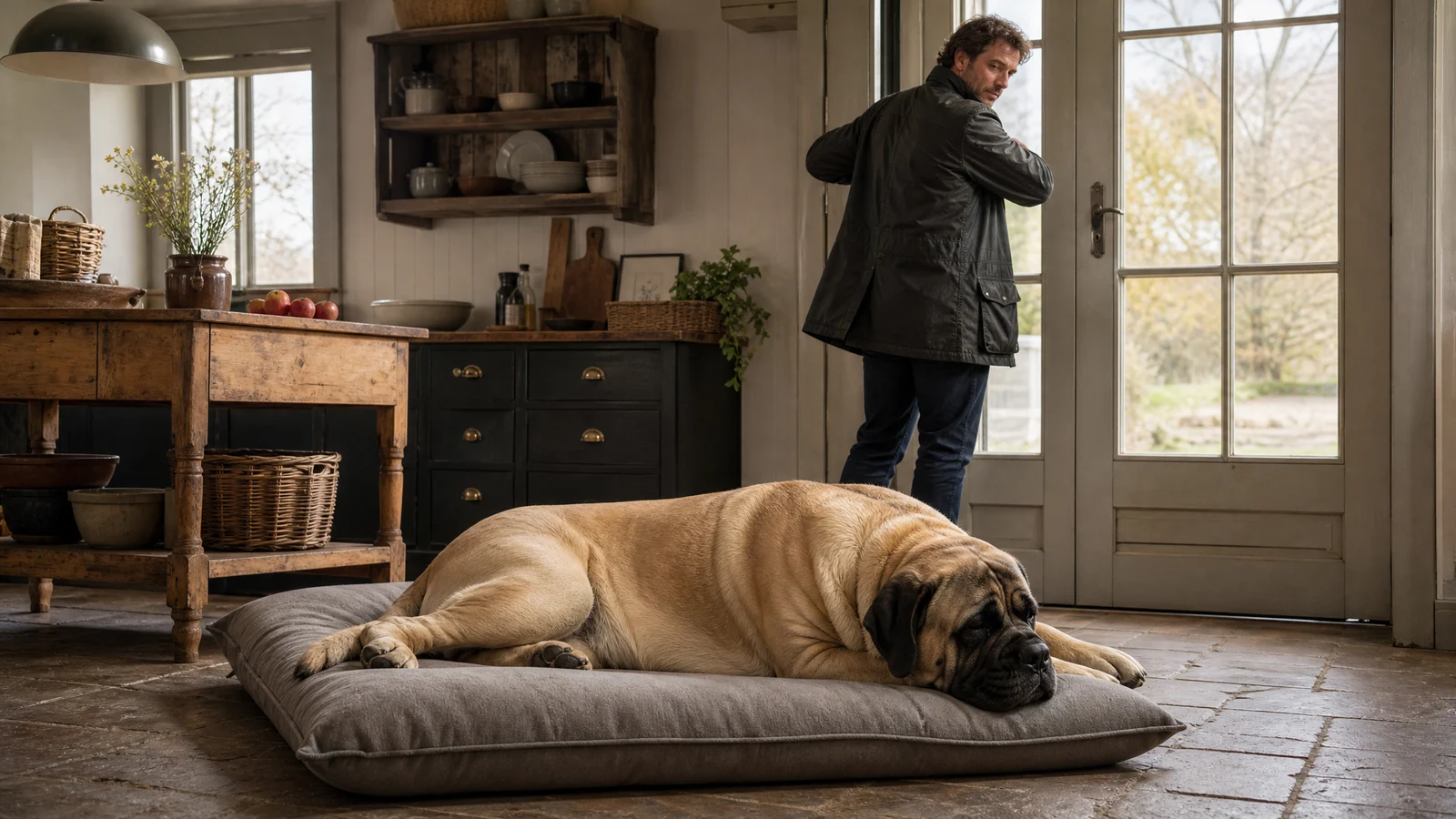 BehaviorLeaving Your English Mastiff Home Alone Without the Drama
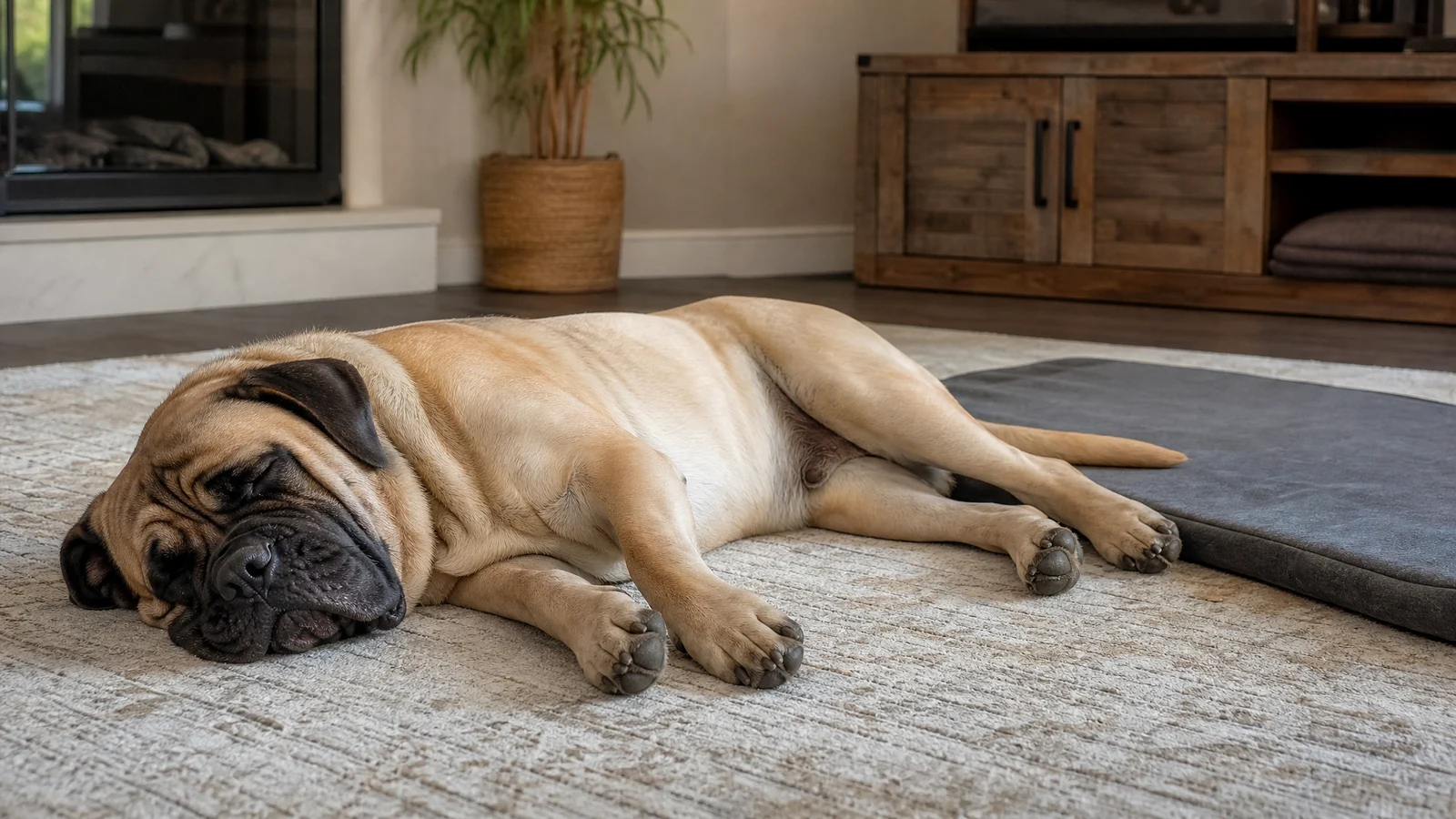 Training basicsAre English Mastiffs Easy to Train? Temperament Explained