
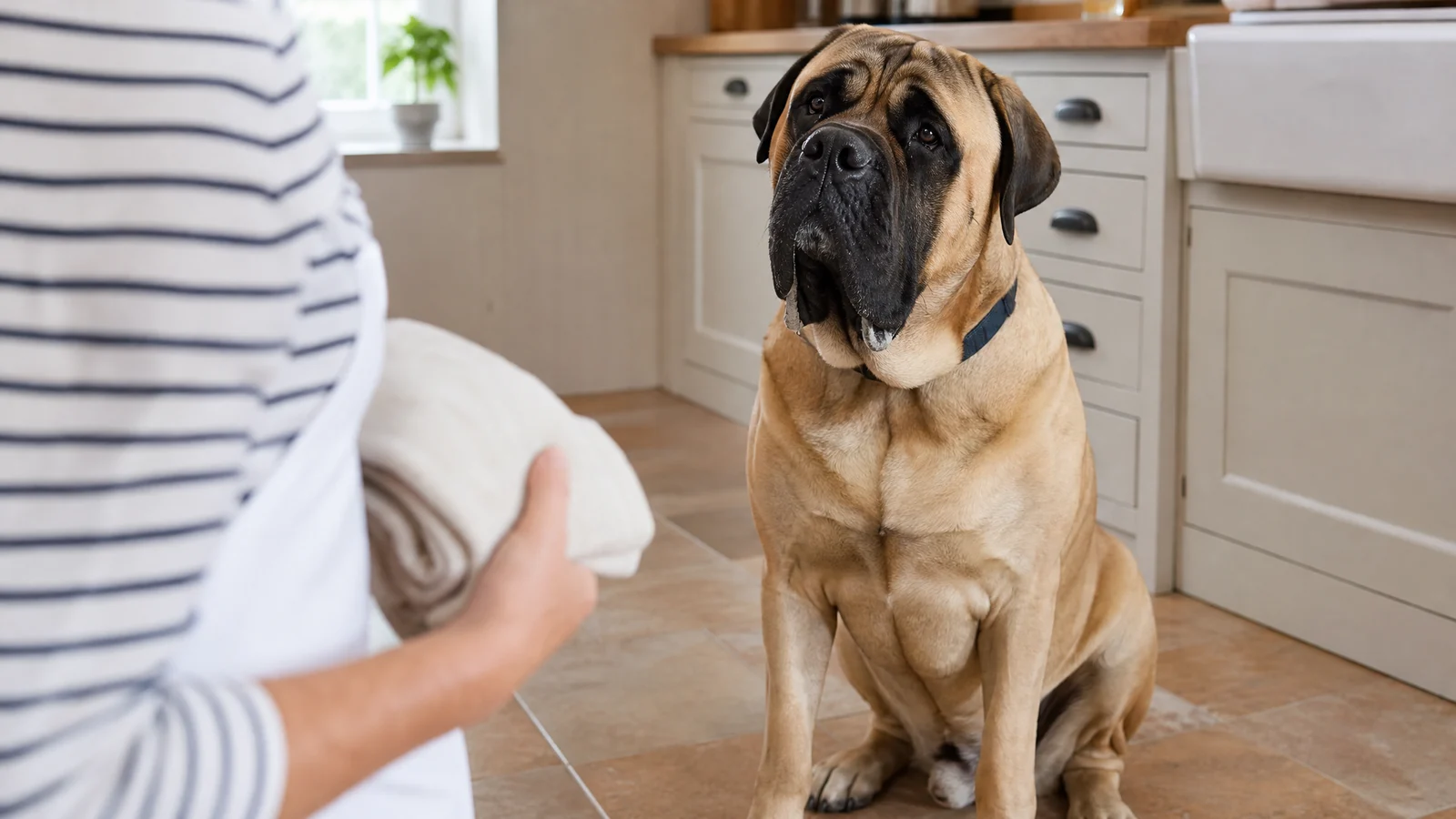
Drool cleanup is easy to describe and harder to perform when a very large dog dislikes hands near the mouth. The household needs more than towels. It needs a repeatable way to notice what is normal, ask for access to the face and stop before wiping becomes a wrestling match.
In this guide, we will map the face into visible care zones, teach consent signals and build brief routines around the events that actually create drool. The dog can approach, pause or leave. The owner can clean ordinary moisture while noticing when skin or mouth changes belong with a veterinarian. Each care round stays narrow enough that the dog knows exactly what will happen.
The goal is not a perfectly dry English Mastiff. Success means the dog understands the care station, offers workable access and remains comfortable through a quick look and wipe.
A Baseline for English Mastiff Drool and Face Care
Observe the dog at a quiet, ordinary time before introducing a cloth. Note the usual moisture around the lips, chin and facial folds, plus the dog's normal smell, color and willingness to eat. A baseline makes later changes easier to describe.
Keep the first observation visual. Do not lift lips or press into wrinkles if the Mastiff has not learned to accept that handling. Stand beside the dog, look at both sides and reward calm orientation toward you.
Take a simple dated note when the face is clean and comfortable. You do not need a dramatic photograph or daily inspection record. A brief baseline can help the household notice that moisture, odor, color or touch tolerance has changed.
Regular veterinary visits remain part of the routine. Ask the veterinarian what ordinary face care should include for the individual dog and what changes should prompt contact. Training supports access, but it cannot resolve a skin or mouth problem.
Separate cleanup from examination. A towel can remove ordinary drool after a drink, while a deliberate face check happens at the care station when the dog and handler are ready. Combining every quick wipe with prolonged handling can make the cloth predict an uncertain procedure.
The English Mastiff Face Map
Divide the task into zones so the handler knows exactly what will happen before contact begins. Work from the least sensitive area the dog already accepts. The sequence does not need to reach every zone in one session.
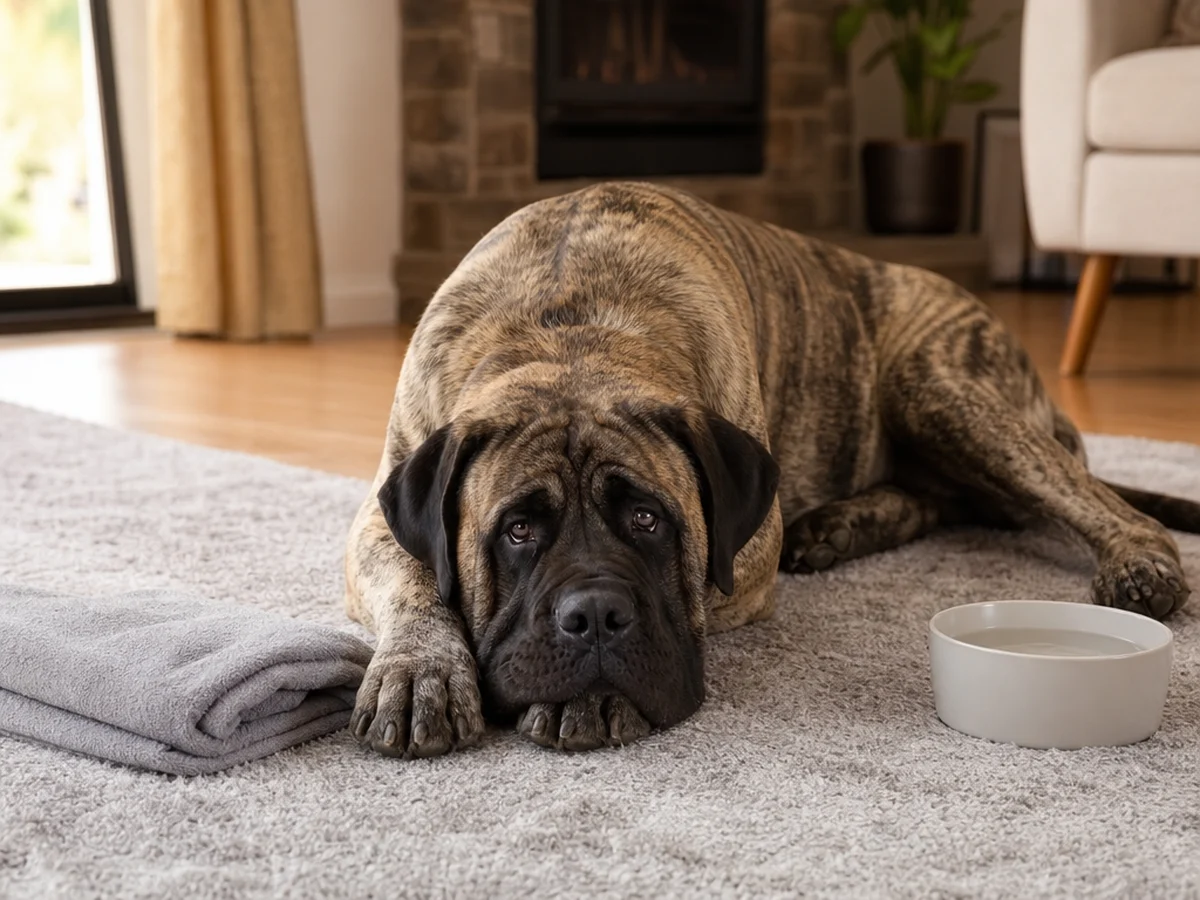
- Outer cheek: notice loose moisture on the coat and teach one light pass from the side.
- Chin: notice drips after food or water and teach a brief blot in a natural head position.
- Outer lip: observe moisture along the jowl and build a short supported look without pulling.
- Visible wrinkle: check only the surface until the dog voluntarily accepts closer access.
The map prevents wandering hands. If today's task is the outer cheek, the handler does not suddenly lift the lip because the dog happened to stay still. Predictability helps a sensitive area become understandable.
Use separate clean cloth areas as you move between zones and follow the veterinarian's individual care advice. Blot rather than scrubbing. End if the dog turns away repeatedly, stiffens or moves out of the station.
The ASPCA's handling guidance builds comfort through brief touch paired with praise and treats. The same principle applies to a face map. Access grows from small successful contact rather than restraint.
Store the map near the care station so each adult follows the same order. Children should not perform face care. A giant dog's ordinary head movement can create risk even when the dog is tolerant.
Consent Signals for Drool and Face Care
Choose one start signal the dog can offer voluntarily. A nose touch to an open hand or standing on a broad mat works better than being cornered with a towel. Reward the signal several times before any face contact follows.
Set the station where the dog already stands comfortably and can leave without squeezing past the handler. Good footing matters because a Mastiff who slips while the face is held may become wary of both the location and the procedure.
Start, Pause and Return
Next, show the folded cloth at the dog's side and reward remaining near it. The cloth disappears after the reward. Repeat until its appearance no longer changes the dog's body, then touch the outer cheek for an instant and reward.
Best Friends recommends beginning handling where a dog already accepts touch, then progressing to areas such as lips and ears. Its cooperative handling guide also emphasizes watching body language. A Mastiff who leaves has supplied an answer, not failed a command.
\nThe Dog Controls the Pause
Build a stop signal into every repetition. The handler lowers the cloth and removes hands after a head turn, step away or release word. Pause long enough for the dog to choose whether to return to the start position.
Do not immediately lure the dog back after a pause. Reset the station, wait and offer an easier opportunity. A dog who returns for a cheek touch may still decline lip handling, and that distinction should remain available.
PDSA's muzzle introduction begins by making the object predict high-value food and inviting the dog's nose forward. We can borrow that voluntary approach for the cloth without expecting the same equipment sequence.
Keep the session short enough that the dog would willingly return. Three calm cheek contacts may be a better lesson than one complete wipe followed by avoidance. Daily life will supply many future chances.
Vary the reward after the pattern is understood, but continue paying the difficult zones generously. The dog should not discover that cooperation makes rewards disappear just as access becomes more personal.
English Mastiff Drool and Face Care After Meals and Water
Meals and drinking create predictable care moments, so arrange the environment before the dog finishes. Keep a clean cloth within adult reach but outside the dog's food area. Let the Mastiff move away from the bowl and orient to the care station instead of reaching into the feeding space.
A Short Post-Meal Care Round
Begin with the zone that is visibly wet. A damp chin may need a blot while the outer lip needs no handling. Use the start signal, complete one zone and release. Return for another zone only if the dog offers the position again.
Place a washable mat beneath bowls and use ordinary household cleanup for the floor. The face-care lesson should not expand because water splashed elsewhere. Separating dog handling from room cleanup keeps the request brief.
If the dog is excited after eating, wait for a calmer moment rather than following with the cloth. Use a quiet transition to the station and reward the offered start. The dog should not learn that finishing food triggers immediate pursuit.
Keep separate cloths available for ordinary floor cleanup and the dog's face. That simple distinction helps adults avoid grabbing a damp or heavily used household towel when the dog offers a cooperative care position.
Check the cloth pressure on your own hand. A soft blot needs very little force. Dried material that would require scrubbing is a reason to ask the veterinarian about suitable care, not a reason to hold the dog more firmly.
End with a familiar release and put the cloth away. The final event should be the dog leaving comfortably, not the handler inspecting one more area after the procedure was declared finished.
English Mastiff Drool and Face Care in Real Scenarios
The face map stays the same while timing changes. Practice each scenario at an easy level before the household needs it. A dog who accepts a quiet kitchen wipe may still find a visitor, car ride or veterinary waiting room too stimulating for the same request.
Before a Visitor Greeting
Complete face care before the visitor enters, while the home remains calm. Release the Mastiff to a resting area, then handle the doorway separately. Do not ask a guest to hold the cloth or reward the dog.
If excitement has already raised drooling, manage the floor and furniture first. Wait until the dog can offer the start signal. Social access should not depend on enduring a rushed face wipe.
After a Car Ride
Prepare the cloth before opening the vehicle area, but move the dog to safe footing before handling. Let breathing and body tension settle. The first priority is a secure transition, not removing every drop immediately.
Use only the familiar zones and end at the first decline. Travel can change tolerance even in a dog who is comfortable at home. Resume ordinary care later in the established station.
During a Veterinary Visit
Tell the clinic what start and stop signals the dog knows. The veterinary team decides what examination is needed, while the owner can demonstrate the familiar voluntary position if asked. Do not promise that training makes every procedure possible without adaptation.
The site's Mastiff socializing guide can support calm observation around people. Face handling remains its own learned skill and should not be tested by an unfamiliar person without a clinical reason. If watchfulness complicates access, the Mastiff guarding guide helps keep visitor management separate from care training.
Keep a spare clean cloth in travel supplies, but do not let the presence of supplies override the dog's body. Management can protect seats and clothing until a comfortable wipe is available.
When Drool and Face Care Needs Veterinary Help
Routine training should become easier across repeated ordinary events. The dog approaches the station, offers the start signal, remains loose through familiar zones and leaves without avoiding the handler. Progress is voluntary access, not the speed of a complete wipe.
Contact the veterinarian when the household notices a sudden change in drooling, willingness to eat, mouth comfort, odor, color or skin condition. Also raise new avoidance of previously comfortable touch. Describe the baseline, timing and exact zone rather than guessing at a cause.
Pause work on a painful or concerning area until the veterinarian advises what is appropriate. Continue easier handling elsewhere only if the dog remains willing and the clinic agrees. Training should never be used to push through a health concern.
Keep markers, releases and household reward practices familiar across daily training. The same language makes face care one understandable routine rather than a special struggle.
Long-term success still includes towels, washable surfaces and realistic expectations. An English Mastiff will not become a dry-mouthed dog because handling improves. The win is a clear care round in which the dog approaches, permits a useful look and can pause the procedure without conflict.
 BehaviorLeaving Your English Mastiff Home Alone Without the Drama
 Training basicsAre English Mastiffs Easy to Train? Temperament Explained
 Training basicsEnglish Mastiff Crate Training Without Separation Distress