
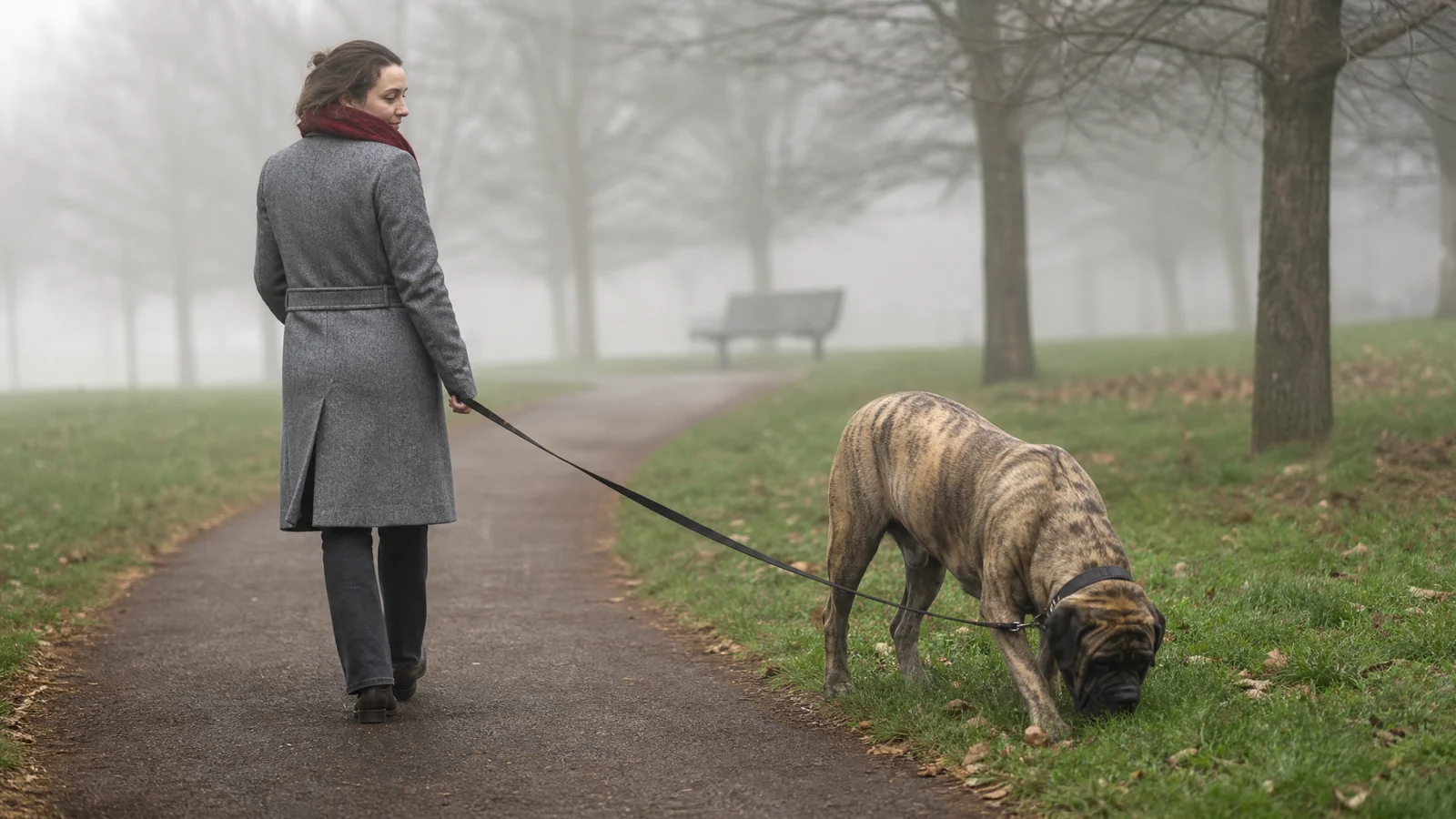
An English Mastiff does not need relentless mileage to have a useful day. The breed has comparatively low exercise requirements, yet low does not mean none.
Comfortable movement, opportunities to sniff, simple thinking tasks and enough recovery form a more useful plan than chasing a universal target. The quality of the next transition matters as much as the outing itself. Observation is therefore a daily training skill, not an afterthought. It lets tomorrow's plan remain honest.
This guide judges exercise by movement quality, recovery, brain work, weather and life stage. We will also identify signs that the plan needs to become easier or receive veterinary input, so each day informs the next instead of becoming a fixed formula.
English Mastiff Exercise Starts With Comfortable Movement
The PDSA exercise guide makes an important general point: exercise needs differ by breed, age, health and the individual. For a Mastiff, begin with purposeful but moderate movement and watch the dog in front of you rather than borrowing a demanding plan from a more active breed.
Adult Mastiffs can benefit from free play and daily walks of a mile or two according to the breed material. That is context, not an assignment for every dog. Route, footing, temperature, pace and health change what the same distance asks of an individual.
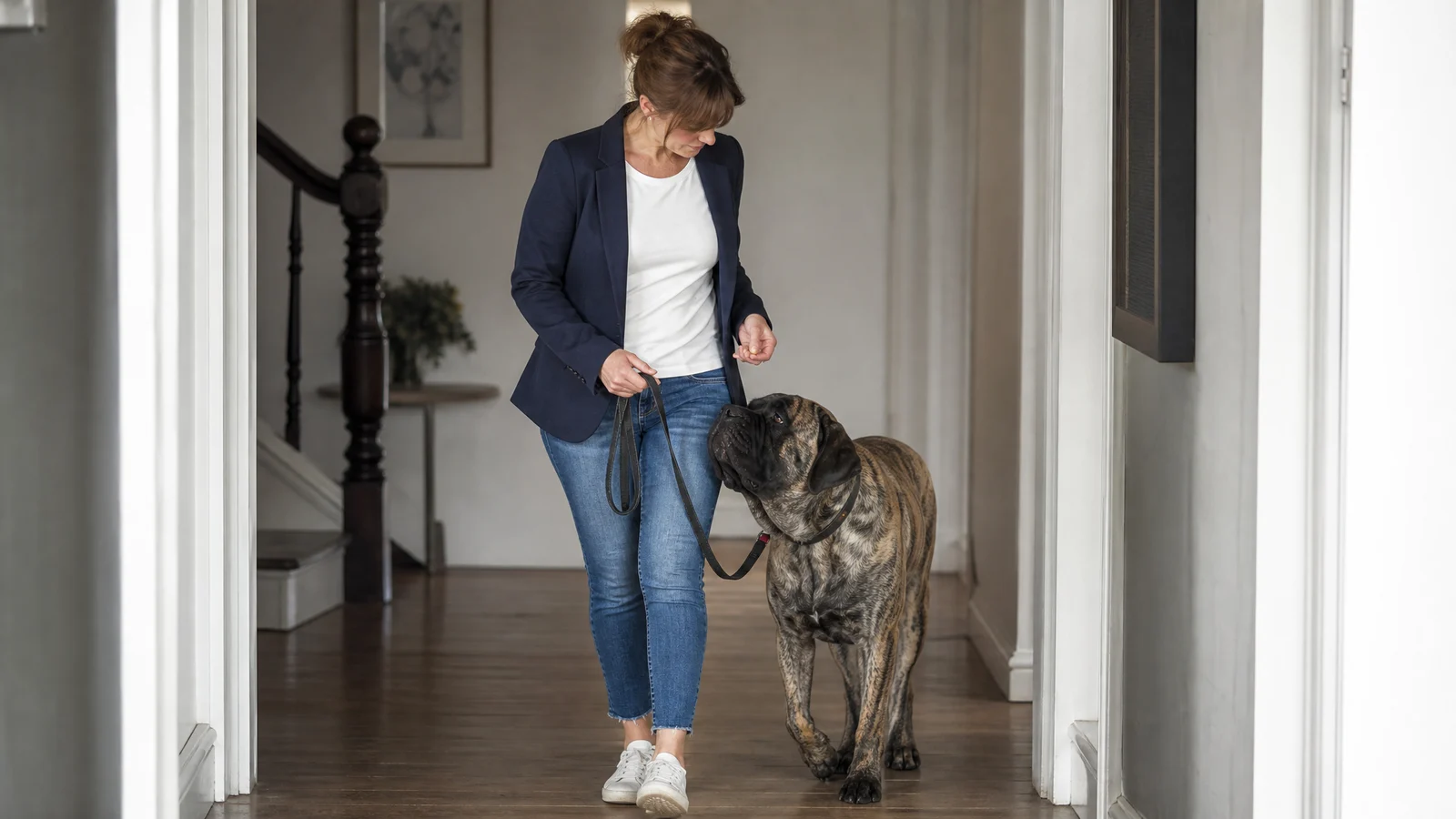
We prefer a walk that ends with the dog still moving comfortably over one that proves a number and produces a difficult return. Let sniffing happen, use broad turns and choose stable surfaces. A calm start also makes it easier to read whether the dog is eager, stiff, distracted or already tired.
Record observations in ordinary language after activity. The following signals are more useful than declaring a day successful because a route was completed.
- At the start, note whether the dog rises freely, chooses to continue and settles into an even pace without repeated hesitation.
- During movement, watch breathing, stride, interest in the environment and whether a turn toward home improves comfort.
- Afterward, notice whether the dog drinks, rests and returns to normal household behavior without prolonged agitation.
- Before the next outing, check whether the dog looks ready or still appears tired, sore or reluctant to move.
Recovery Judges the Exercise Amount
Exercise is not finished when the walk ends. Recovery reveals whether the body and brain handled the activity well. A dog who settles comfortably and later moves normally gives a different answer from one who remains restless, unusually tired or reluctant at the next transition.
Useful Tiredness
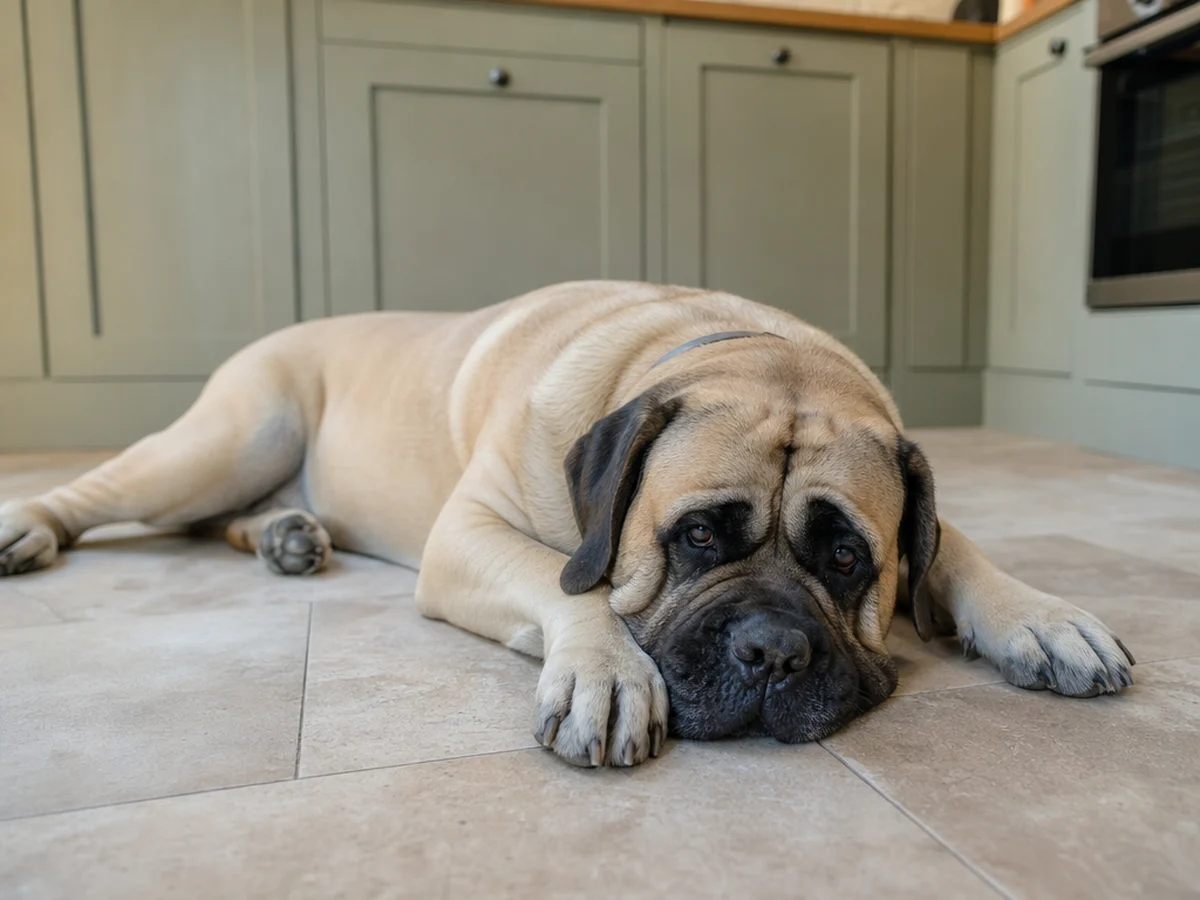
Useful activity can leave an English Mastiff ready to rest without looking depleted. They can change position comfortably, respond to family life and show ordinary interest later. The aim is not exhaustion, because exhaustion hides information and leaves no room for learning.
A predictable cool-down helps you observe the change. Return at an easy pace, offer access to water and let the dog choose a comfortable resting place. Avoid adding a burst of exciting play simply because the scheduled walk is over.
Recovery That Changes the Next Day
If the dog is slower, less willing or less coordinated after an outing, reduce the next physical demand. Replace distance with quiet sniffing or a simple food-search task. One easier day is not a failed plan, since adjustment is the plan.
Sudden exercise intolerance, limping, collapse, breathing difficulty or a marked behavior change belongs with a veterinarian. Keep regular veterinary wellness visits as part of the exercise system, particularly because a large dog may compensate for discomfort before the problem is obvious.
Free play deserves observation too. Let the dog choose movement in a safe space and interrupt before footing, excitement or fatigue makes turns sloppy. A pause followed by willing reengagement is different from a dog who repeatedly seeks rest.
Walks and play need not carry the whole day. Several comfortable opportunities can be easier to interpret than one ambitious event. Keep the pattern flexible enough that weather, household demands and the dog's response can change it.
Brain Games Expand English Mastiff Exercise
Movement answers only part of the daily need. The ASPCA enrichment guide notes that dogs need chances to smell, play, chew and search, and food puzzles can turn eating into mental activity. Those options suit a breed who may bore with repeated drills.
Brain work should invite the dog to solve a clear problem without creating frantic frustration. Start easy enough for success, supervise anything involving food or objects and stop while the Mastiff is still interested. Rotate the type of task instead of making one puzzle harder every day.
A Brain Game Menu
These games create different kinds of thinking. Choose one that fits the dog's current energy and the space available, then put it away after the activity ends.
- Scatter part of a meal across a safe room or yard so the dog can search at a comfortable walking pace.
- Hide food in open boxes and let the dog investigate with their nose, keeping the arrangement stable and easy to step around.
- Practice a familiar cue in a new room, reward success and finish before repetition makes the lesson dull.
- Offer a supervised food puzzle that the dog can move without needing frantic force or awkward body positions.
- Build a simple find-it game with one visible reward, then make the hiding place slightly less obvious only when the dog stays engaged.
For a broader training framework, the Mastiff temperament guide explains why quick learning and boredom can appear together. Variety preserves the value of these games without turning enrichment into another repetitive class.
Food games should fit the dog's daily ration and eating style. Set aside part of the normal meal when practical rather than automatically adding more food, and supervise the materials. If the dog becomes frantic, reduce the search area or make the answer visible again.
Cue games offer a nonfood variation when praise, access or a favorite object has value. Ask for one familiar action, reward it and switch activities. This protects the quick-learning Mastiff from a long chain of repetitions that stops being meaningful.
Weather Changes Exercise Quality
The same route can ask far more in warm or humid conditions than it does on a cool day. Choose cooler periods, shaded options and a turnaround point that protects the return trip. A Mastiff who slows or lies down has already given information, so do not turn that response into a contest.
Rain, ice and poor footing create different problems. Shorten the route when surfaces reduce stability, and move scent work indoors when conditions make outdoor movement awkward. The purpose is comfortable activity, not preserving the appearance of a schedule.
Household games can carry more of the mental load when outdoor options shrink. Keep paths clear for a giant dog and place searches where they do not require tight pivots or climbing over furniture. Safe space is part of the activity design.
Indoor movement also needs traction and turning room. Clear narrow pathways, remove unstable rugs and avoid games that send a giant dog skidding toward furniture. A simple target or search performed at walking pace can provide engagement without speed.
On pleasant days, use environmental variety gently. A new quiet path may provide more mental work than extra distance because the dog is processing unfamiliar smells and surfaces. Follow that outing with an easier familiar option rather than assuming novelty and duration should rise together.
Growing Dogs Need an Exercise Filter
A puppy is not a small adult with a shorter route. Growth, coordination, confidence and the day's other experiences all change what activity means. Favor self-paced exploration on safe ground, easy play and brief training rather than repetitive impact or a forced pace.
Exploration Before Endurance
Let a puppy pause, sniff and investigate instead of pulling them through a distance target. New surfaces and ordinary environments can be mentally tiring even when the body has not traveled far. The English Mastiff Training home page places movement beside social learning and manners rather than treating endurance as the main goal.
The general exercise source advises protecting growing joints. Because the brief does not provide a Mastiff-specific formula, ask your veterinarian about activity for the individual puppy. Revisit the question as the dog grows and their movement changes.
Growth can also make coordination look different from one period to the next. Avoid judging a puppy by an earlier stretch when their body felt easier to organize. Keep surfaces predictable and let new movement skills emerge without adding impact.
Social outings count toward the puppy's mental load. Watching people from a comfortable distance or exploring a new place can leave a young dog ready for rest even when the route was short. Balance novelty with familiar recovery time at home. A puppy who settles after observing a new place may have completed enough work for that part of the day. Recovery completes the experience.
When English Mastiff Exercise Needs Adjustment
Restlessness after activity does not automatically mean the dog needs a longer walk. The outing may have been too exciting, too repetitive or physically uncomfortable. Try changing one variable, such as pace, environment or the amount of sniffing, and observe the recovery that follows.
A dog who loses interest in repeated cues may need novelty rather than intensity. The AVSAB training statement supports reward-based teaching with structure and clear guidelines. Use that structure to make tasks understandable, then reward engagement without pressuring the dog to continue.
On the other hand, a Mastiff who is eager to move, recovers smoothly and remains comfortable may enjoy another type of activity. Add variety before adding difficulty. A new sniffing route or cue game can change the experience without increasing physical strain.
Use Tomorrow to Refine the Exercise Plan
Look at the full cycle before planning tomorrow: willingness at the start, movement during activity, settling afterward and comfort at the next outing. Keep what produced an even pattern and reduce what created reluctance or prolonged arousal. That ledger makes the plan individual without inventing a precise requirement.
For more structured options, compare the safe modern choices in our English Mastiff sports and jobs guide. The best exercise plan is repeatable, varied and easy to adjust, with body work, brain work and recovery all carrying equal authority.
 Training basicsHow to Potty Train an English Mastiff Puppy Calmly
 Training basicsHow to Train an English Mastiff With Gentle, Reward-Based Methods
 Training basicsEnglish Mastiff Leash Training for Pulling and Lunging