
The English Mastiff has working history, but history does not assign a modern dog an operational role. Today's useful choices are safe enrichment and recreational activities that reward smelling, thinking, moving comfortably and cooperating with a person. The individual dog's interest and recovery decide what belongs on the menu.
This guide compares scent work, precision skills, low-impact movement, food enrichment and class readiness. We keep former guardian and war roles in historical context only, with no instruction that develops protective behavior. Modern activities should make family life richer, not recreate dangerous work. A good choice is easy to begin, easy to stop and comfortable enough that the dog wants another turn later.
History Is Context for English Mastiff Dog Sports
The Mastiff is an ancient working-group breed whose historical roles included hunting, estate guardianship and war. The modern breed material also describes them primarily as devoted family companions. That shift matters, because a historical label does not prove what one dog enjoys or can do safely today.
Use history to understand the breed's dignity, size and relationship with people, then close the history book when selecting an activity. We recommend modern reward-based options with clear rules and easy exits. There is no need to rehearse threat, pursuit or confrontation to give a Mastiff a meaningful job.
The breed can learn quickly and may bore with repetitive drills. An activity therefore needs enough variation to stay interesting without demanding endless intensity. Short searches, changing cue sequences and calm problem solving fit that balance better than mechanical repetition.
Start selection with three observations: what the dog approaches, how their body moves and how they settle afterward. Interest without comfortable movement is not a fit, and physical ease without engagement may not hold attention. The activity must satisfy both sides.
Reward preference matters as well. Food may support searching, while access to sniffing or a familiar toy may support another dog. Test rewards in a quiet place before expecting them to carry a new sports environment.
Scent Work Opens the Dog Sports Menu
Scent work lets the dog make choices at a self-directed pace. The Best Friends nose work guide says the activity can suit older or physically limited dogs as well as other participants. That broad accessibility makes searching a sensible first category to explore.
Start With Visible Success
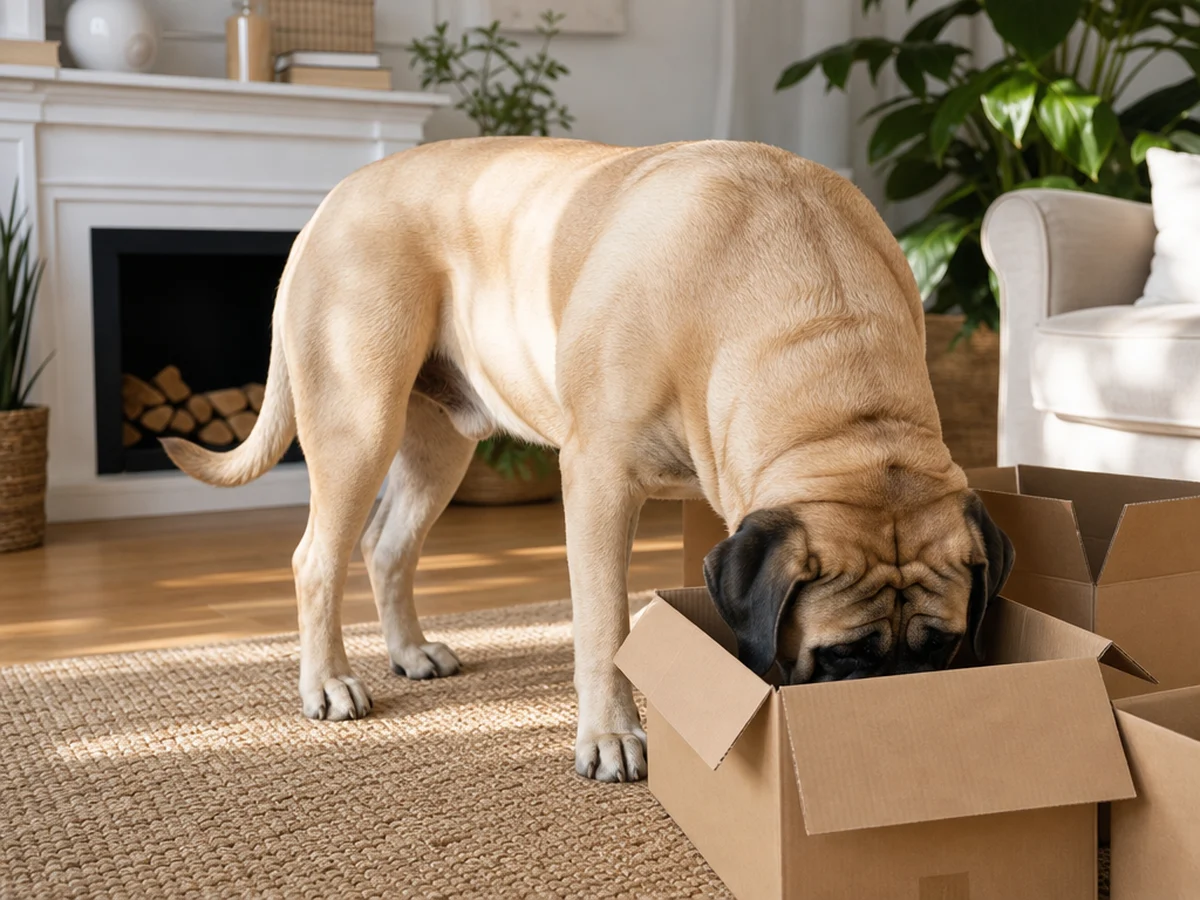
Place a food reward in an open box while the dog watches, then release them to investigate. Reward the find and reset the space before interest fades. Once the task is fluent, change the box position or add empty boxes without making the search physically awkward.
Let the nose lead instead of directing every step. The handler's job is creating a safe search area, observing and paying the find. Broad spacing matters for a giant dog who needs room to turn.
Change the Search, Not the Pressure
Move searches between safe rooms, use different container arrangements or hide a familiar toy in an easy location. Variety changes the question while the reward system stays clear. If the dog walks away, simplify rather than insisting.
A search can remain a home enrichment game or become a recreational class. Both outcomes are valid. The value lies in focused investigation and shared communication, not in collecting a title.
Container searches also teach the handler to wait. Avoid pointing repeatedly or crowding the dog, since those movements can pull attention away from scent. Stand where the dog has room, observe the search and mark the clear find.
End with an easy known hide if a harder arrangement causes confusion. The final answer need not prove progress. It should restore the rules of the game and leave the Mastiff ready to rest.
Precision Dog Sports Reward Mastiff Thinking
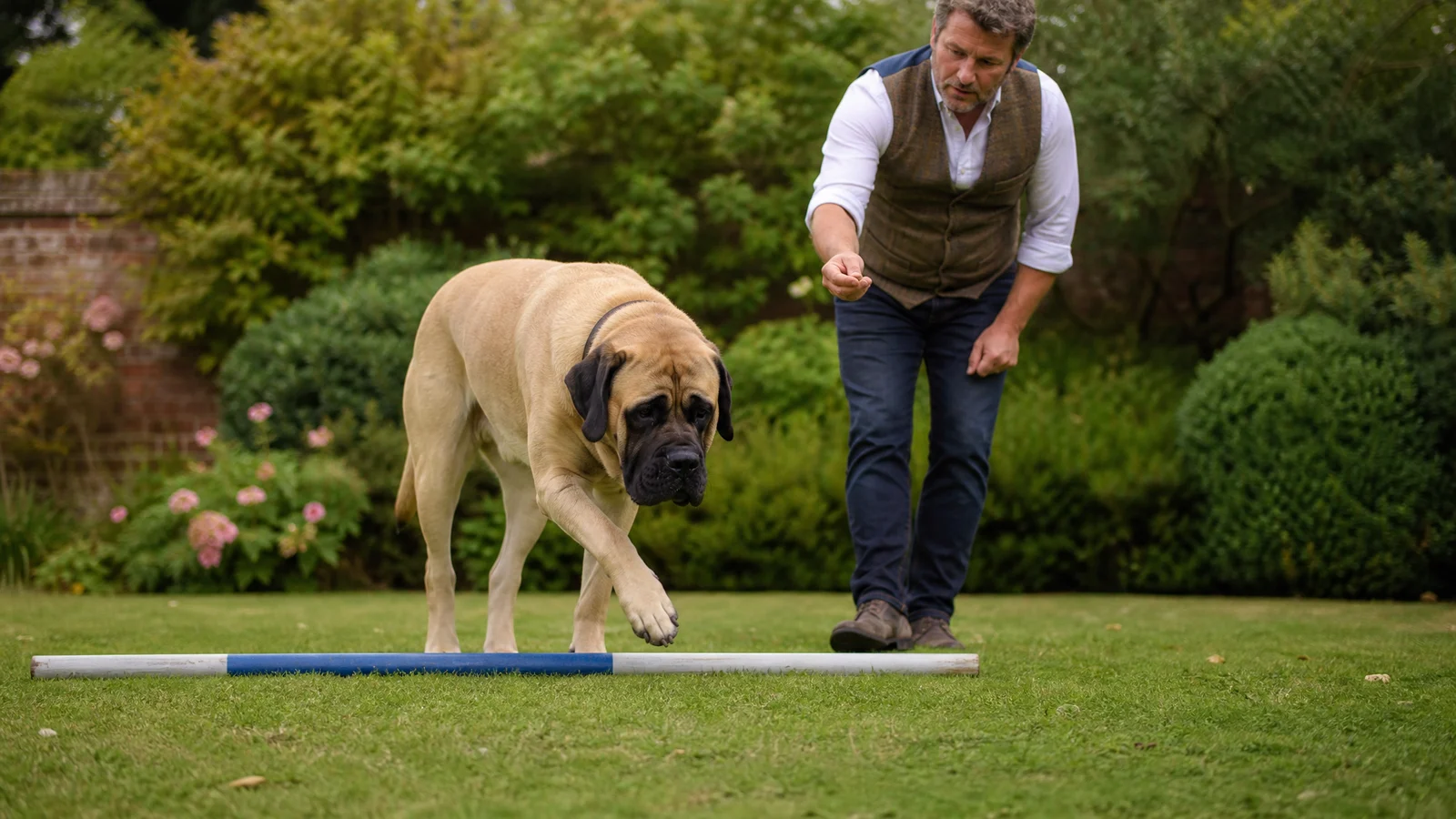
Rally-style cue courses and structured obedience games ask the dog and handler to move through a sequence together. For a Mastiff, the best version emphasizes communication and comfortable positions rather than rapid repetition. The course changes, which can keep a quick learner engaged.
Begin with useful foundations at home: attention, a hand target, a comfortable stationary position, a release and a few connected leash steps. Our English Mastiff Training home page shows how to build those pieces without relying on physical pressure.
The menu below compares activity demands without claiming that every Mastiff fits the same choice. Use it to select a trial, then let the dog's response revise the selection.
| Activity family | Main task | Question to ask |
|---|---|---|
| Scent games | Search and indicate a find | Does the dog investigate willingly and recover calmly? |
| Precision games | Follow changing cue sequences | Can positions stay comfortable and sessions remain varied? |
| Low-impact movement | Navigate flat, stable patterns | Has a veterinarian cleared the activity for this individual? |
| Home enrichment | Solve food or object problems | Can the setup stay safe, supervised and frustration-light? |
Precision practice can be split across the day rather than built into one long session. A hand target near the kitchen, a mat cue during a quiet household transition and several leash steps outside all support the shared language. The changing contexts provide variety without adding speed.
Comfortable positions must remain optional. If a sit or down looks awkward, use a stand, target or turn that the dog performs freely and discuss persistent difficulty with a veterinarian. Sports rules never outrank the individual dog's body.
Low-Impact Dog Sports Need Individual Screening
Agility-like foundations can mean walking around cones, stepping onto a broad stable surface or following a curved path on flat ground. They do not need to mean jumping, sharp turns or speed. For a heavy dog, the safe definition should begin with body comfort and veterinary guidance.
The PDSA agility guide notes that the sport places demands on joints, the heart and breathing, and recommends discussing concerns with a veterinarian. It also advises waiting until a dog is grown before jumping. The brief does not provide Mastiff-specific obstacle rules, so we do not invent them.
Ask your veterinarian to assess the individual before organized athletic work. A qualified reward-based instructor should be willing to adapt surfaces, spacing, repetitions and equipment. Skip any exercise that produces reluctance, unstable footing or difficult recovery.
Regular veterinary wellness visits support these decisions over time. A dog who was comfortable with an activity earlier may need a different version as health, conditioning or age changes.
Conditioning for any movement activity begins below the visible sport. Calm leash travel, waiting while equipment is arranged and walking on ordinary stable surfaces are useful foundations. They also reveal whether the dog enjoys the preparation that a class requires.
Heat and humidity can change the answer before a session begins. Choose cooler conditions, shorten the plan and preserve an easy route back to rest. A missed practice is safer than asking a heavy dog to complete an activity after comfort declines.
Home Jobs Count as English Mastiff Enrichment
A job can be a repeatable household activity with a clear beginning and end. The ASPCA enrichment guide describes food puzzles and opportunities to smell, play, chew and search. Those choices create purpose without assigning the dog a risky operational task.
Use a small menu and rotate it according to energy. Supervise the setup, account for food used and choose materials that the dog cannot easily swallow or crush into hazards.
- Ask the dog to find part of a meal scattered across a safe, uncluttered room, then finish with calm rest.
- Send the dog to a mat while a family member prepares an activity, reward the wait and release them to begin.
- Place food in a suitable puzzle that moves easily on a nonslip floor and remove it when the activity ends.
- Practice carrying a safe soft item a short distance and trading it for a reward if the dog enjoys holding objects.
- Build a simple choice game in which the dog touches one target, earns a reward and then changes to another target.
Home activities should not become a test of persistence. If the Mastiff loses interest, reduce the difficulty or choose another category. Voluntary engagement tells you more than completion obtained through repeated prompting.
Rotate home jobs so each retains meaning. A search day, a target day and a puzzle day can all use the same reward system while asking different questions. Rotation is not a rigid calendar, and the dog's interest can change the choice.
Give every job an end cue and remove the materials afterward. Clear endings help the Mastiff shift from activity to rest. They also prevent unsupervised access from turning a safe object into a chewing or swallowing hazard.
A Dog Sports Class Must Fit the Mastiff
A class is useful when the space, instructor and activity allow the dog to learn comfortably. Observe before enrolling if possible. Look for adequate room, reward-based teaching, stable surfaces, planned breaks and options for dogs who need more distance.
Readiness Before Enrollment
The dog should be able to take rewards, respond to an easy cue and recover after noticing another participant at the distance the class provides. Those skills do not need to be perfect. They need to be available enough that the environment will not overwhelm the lesson.
The English Mastiff exercise guide helps you read movement and recovery before adding a formal activity. A class cannot compensate for discomfort or a plan that already asks too much.
A Trial Can End With No
Attend a beginner observation or trial when that option exists, and treat the dog's response as the result. Enthusiastic reengagement, comfortable movement and calm recovery support continuing. Persistent avoidance, physical strain or escalating arousal support choosing something else.
A useful no prevents the wrong sport from becoming a weekly obligation. Return to a home game or test another activity family. Enrichment is successful when it fits, not when it looks impressive.
Build One English Mastiff Dog Sports Card
Write a compact activity card for the next session. Name the category, the simplest setup, the reward, the dog's stop signal and what comfortable recovery should look like. That card keeps the session specific without promising results on a fixed timeline.
For example, choose an open-box scent search in a clear room, reward each find and stop while the Mastiff remains interested. Afterward, note movement, engagement and settling. Use those observations to repeat, simplify or select another modern activity.
The right sport or job is a safe enrichment practice that the dog willingly joins and comfortably leaves. History may explain why the breed fascinates us, but present-day body language, health and enjoyment choose the work.
 Exercise and jobsEnglish Mastiff Exercise: Read Movement, Thinking and Recovery
 Training basicsHow to Potty Train an English Mastiff Puppy Calmly
 Training basicsHow to Train an English Mastiff With Gentle, Reward-Based Methods