

Yes, usually. Mastiffs learn quickly and genuinely want to please, but the repetition of a typical class bores them fast, and a bored Mastiff may simply lie down and snore. Their trainability rating is 3 of 5, labeled agreeable, and that fits the dog: willing, never frantic, and unimpressed by endless drills.
That temperament matters because a sensitive, dignified dog with this much power is shaped more by how you teach than by how much you teach. Harsh voices wound them and dull sessions lose them, while gentle, varied, rewarded work gives you a calm giant who is a joy at home. Read on for how this plays out in an apartment, a home with young kids, a two-dog household and a long workday, ending with a two-week plan.
The Mastiff Temperament Behind the Answer
Every case below draws on the same few traits, so it helps to name them first. The breed standard describes a combination of grandeur and good nature, courage and docility, and says dignity rather than gaiety is the correct demeanor. Set that beside a trainability rating of 3 of 5 and you get a dog who cooperates on their own terms, which is a workable arrangement once you know what those terms are.
Willing, but Quick to Bore
Mastiffs learn quickly, and the wish to please is real. What undoes it is repetition. Drill the same cue over and over and attention drifts, then the whole body follows, folding onto the floor with a long sigh that turns into snoring. That is not stubbornness. It is a quick learner telling you the lesson ended a few repetitions ago.
Variety is the fix. Rotate between a sit, a down, a hand target, a few steps of loose-leash walking and a calm settle, and change the reward too: a treat, a cheerful word, a slow scratch along the chest. End while your dog is still interested. The dog who sagged during drills will often work happily for longer in total.
Sensitive and Easily Hurt
Mastiffs communicate a great deal with their eyes and are excellent at reading your expressions and body language. In training that is a gift, because a soft glance or a relaxed shoulder tells them they got it right. It also means they notice your impatience before you voice it. You can easily hurt a Mastiff's feelings by raising your voice, so a calm tone, a clear marker word and a treat will carry you further than volume.
Gentle Dogs Still Need Daily Work
Plenty of adult Mastiffs are gentle enough that almost anyone in the family can walk them. That calm is built by practice and kept up by practice. We have trained this breed for many years, and the pattern is steady: short daily sessions of about 15 to 30 minutes keep manners dependable.
The stakes are physical. The UKC describes a dog who is large, massive and powerfully built, and even a female at a fairly modest weight for the breed can be very strong. Short, varied, kind and daily: that is the shape of Mastiff training.
A Mastiff in a Third-Floor Apartment
Apartment life suits this breed better than their size suggests. Mastiffs have comparatively low exercise requirements, can live happily in an apartment, and score 4 of 5 for adaptability. The work lies in the details: the stairwell, the thin walls, the drool on the hallway floor and a dog with firm opinions about where to lie down.
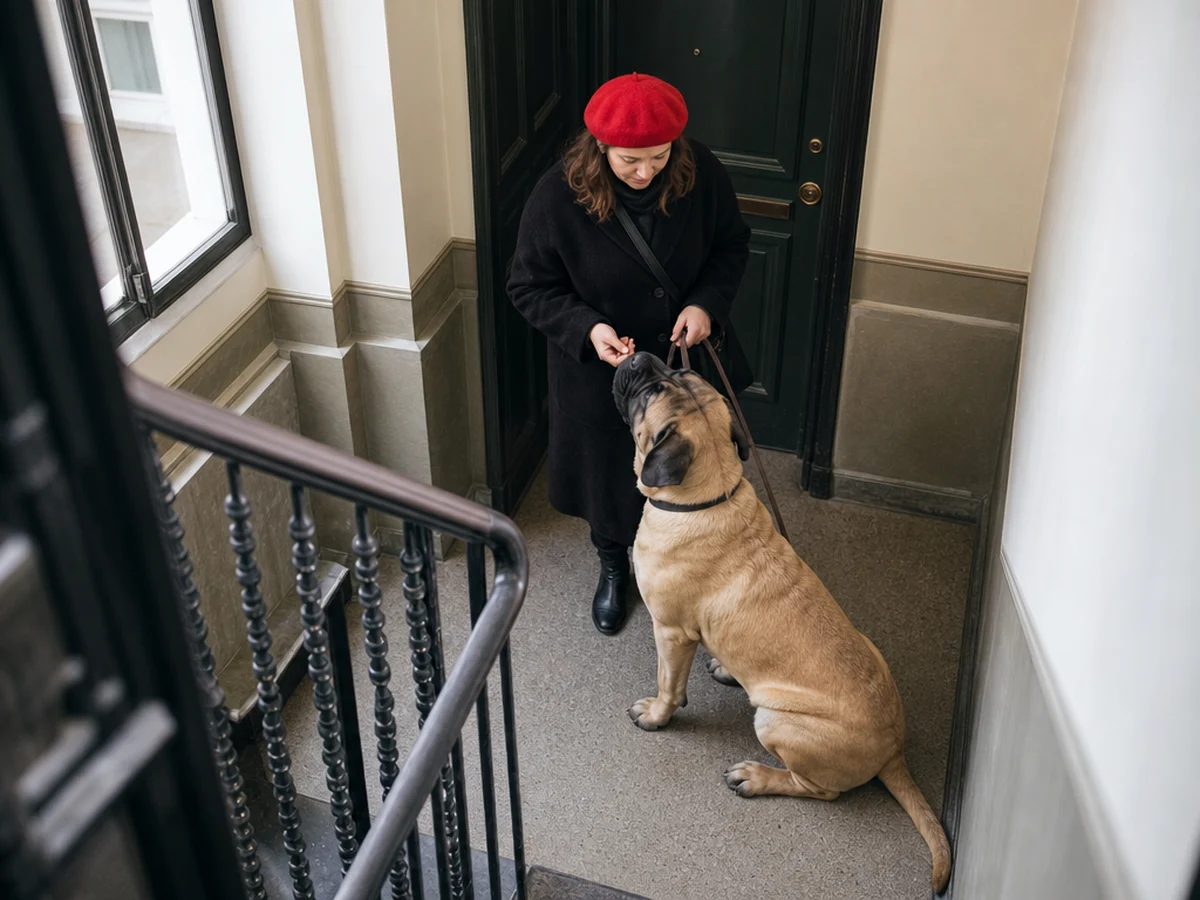
Stairs and the Walk Home
Plan every outing around the return trip. Adults do well with free play and daily walks of a mile or two, but Mastiffs are notorious for plopping down when they are tired or overheated, and a stairwell is a poor place for a dog to decide they are finished. The rule of thumb is not to walk them farther than you could carry them back.
That rule is a useful honesty check on a third floor. Keep walks shorter in warm weather, carry treats for the last block and the final flights, and reward steady steps so the climb becomes part of a good routine rather than a slog.
Neighbors and Noise
Mastiffs rarely bark, and the breed barks mostly to alert, so noise is seldom the problem. Watch the triggers an apartment supplies: footsteps in the corridor, a neighbor's door, people passing below the window. Learn the signs your dog is about to bark and ask for a sit or down first, then reward it.
If barking has already started, teach a Quiet cue by saying it calmly and offering a steady stream of tiny treats. Expect several days of practice before the cue sticks.
Short Indoor Sessions
Because space is limited, mental work does the heavy lifting. Fit small sessions into the day: a settle on a mat while dinner cooks, a hand target at the door, a down in the hallway while you find your keys. Keep switching the cue so your dog never faces a long run of the same thing. Those pockets add up toward the daily total that keeps manners reliable, and a Mastiff who has worked a little settles more easily on the rug.
A third-floor Mastiff needs a plan for the stairs and a reason to stay interested, not a bigger floor plan.
Can Mastiff Temperament Handle a Home With Young Kids?
Very often, yes. Mastiffs score 5 of 5 for being good with young children and 5 of 5 for affection with family, and the patient, dignified manner suits a house full of small people. The risk is mass, not malice. A friendly lean from a dog this size can flatten a toddler, so training in a family home is mostly about teaching the dog where to be and teaching everyone how to share the job.
Size Around Toddlers
Gentle does not mean unsupervised. Teach a rewarded settle on a bed or mat so your dog has a default spot while little ones play, and use gates or doors to give both sides breaks. Reward calm lying down near the children often, so choosing calm is the habit that pays. Even a dog with the sweetest intentions can knock a child off their feet by accident, and supervision is the simple answer.
Who Handles Which Cues
Adults should teach every new cue and run the training. Once your dog performs a cue reliably, older children can join in with a treat pouch and a calm voice, while the youngest can help in small ways, such as dropping a treat on the floor after an adult asks for a sit. Dogs learn best with structure and routine, so everyone should use the same cue words and the same marker word.
Noise is the other family factor. Mastiffs read faces and bodies closely and are hurt by raised voices, so a house of shrieks and slammed doors is a lot for them. Teach children to call the dog calmly and give your dog a quiet retreat.
The breed is protective of family and naturally wary of strangers, which makes early socialization with visiting children and adults essential. Our English Mastiff puppy training timeline shows how to pace it. The dog supplies the gentleness, and the adults supply the structure.
A Mastiff Sharing a House With Another Dog
Mastiffs score 3 of 5 with other dogs, which the scale reads as fine with supervision, and playfulness sits at a moderate 3 of 5. In a two-dog house that points to a dog who is usually agreeable but not automatically a wrestling partner. Your job is to give each dog their own lessons, keep prized items from becoming a contest, and decide whether the second dog is a helper or a distraction.
Train Them Apart First
A Mastiff who bores quickly will happily watch the other dog instead of working, and the other dog may race in to claim the treat. Teach new cues one dog at a time in separate rooms, with the housemate resting elsewhere with a chew. Each dog gets full attention and their own rewards. Separate time also keeps your Mastiff's sessions short, which is exactly how they like them.
Keeping Rivalry Out of the House
Rivalry usually grows around the things dogs value most. A few habits head it off:
- Serve meals in different rooms, or with a gate between the dogs, and clear the empty dishes before either wanders over to check.
- Hand out long-lasting chews behind closed doors so nobody has to guard a prize.
- Greet and reward each dog in turn at the door, so neither learns that excitement wins attention.
- Pause play and give both dogs a break if it gets rough, since a tired or overheated Mastiff may simply plop down and need space.
When a Second Dog Helps or Distracts
A calm, settled housemate can be a good example, and once both dogs know the cue you can practice a mat settle side by side, rewarding each. A bouncy younger dog can pull focus from a dignified Mastiff, though, and constant play may leave a Mastiff wanting to withdraw. Watch your Mastiff's eyes and body, since they read yours so well and their own signals will tell you when they have had enough. Keep supervising until you trust the pair.
Two dogs means two sets of lessons and one set of house rules.
How Does Temperament Cope With an Owner Out All Day?
A Mastiff scores 5 of 5 for affection with family, so long empty hours ask a lot of a dog who loves company. The same traits that make them cooperative also give you something to work with: low exercise needs, moderate mental stimulation needs and a talent for settling. A working day does not rule out a happy Mastiff, but the hours you are home need to count and the hours you are away need a plan.
Making the Alone Hours Easier
Take a gentle walk before you leave, well within the carry-back rule and cool in warm weather. Teach a rewarded settle on a bed until lying there is your dog's favorite default, and leave a chew or food puzzle to suit those moderate mental needs. If you can, arrange a midday visitor or break, since a dog this devoted to family finds the day long. Build alone time gradually rather than all at once.
What Evening Sessions Can Cover
Evenings are where the daily 15 to 30 minutes fits. Split it into short blocks and rotate cues so a quick learner never bores: a stretch of loose-leash walking, a settle, a down near the door, a hand target. Finish on a success and let your dog rest. Keep your voice warm and calm, because after a day apart your Mastiff is delighted to see you and listening closely.
Handling and Vet Visits
Spend a few evening minutes on handling. The ears and the deep wrinkles around the head, eyes and muzzle should be regularly inspected and cleaned, the nails trimmed short, and the coat given a quick brush every few days. Reward calm for each touch. That routine doubles as rehearsal for the clinic, which matters because a vet visit is partly a handling-safety problem for this breed.
A Mastiff's size, nervous head movements and a rush of adrenaline can make exams risky, and many owners need extra help from the vet team. Some dogs are startled or very frightened by staff, which can end in a failed visit or several people steadying the dog for a blood draw. Rewarding calm in the waiting room and on the exam table gives the team a better starting point.
The encouraging part is that fear of the vet is not fixed. A startled Mastiff can learn that the clinic means attention and treats, and walk in confidently after a few good visits. Short, happy drop-ins where nothing is done to the dog build that link, and regular check-ups keep the clinic a familiar place rather than a rare ordeal. A Mastiff who spends the day alone can still be a model citizen when the evenings are short, varied and kind.
Two Weeks to Put Mastiff Temperament to Work
Whichever household you have, the plan has the same shape: short, varied, rewarded and calm. Start tomorrow and bend the details to your situation.
- On days one and two, pick a marker word, load a treat pouch and teach everyone at home the same cue words. Note when your dog's attention fades, because that is where sessions should end.
- On days three and four, begin the daily block of about 15 to 30 minutes, split into short sessions that rotate a sit, a down, a hand target and a settle on a mat.
- On days five and six, add loose-leash walking and calm manners at doors and stairs, keeping every outing inside the carry-back rule.
- On day seven, rest with an easy walk and a chew, and jot down what made your dog's eyes light up.
- On days eight and nine, start handling practice with ears, face, wrinkles and paws, rewarding calm for each touch.
- On days ten and eleven, make a happy drop-in visit to the vet clinic where nothing is done, only attention and treats, and book a regular check-up if one is due.
- On days twelve and thirteen, practice in your hardest moment, whether that is the hallway, the toddler hour, the other dog or the evening return, using a sit first or a Quiet cue as needed.
- On day fourteen, review which sessions bored your dog and which brought out the best, then keep the winners for the next two weeks.
The pattern behind every case is the same. A Mastiff cooperates when sessions are short and varied, voices stay calm and rewards are real, and that is how a dog with this much strength becomes dependably gentle. For the full order of skills, see our complete English Mastiff training guide, and let your dog's dignity and good nature do the rest.
 Training basicsEnglish Mastiff Crate Training Without Separation Distress
 BehaviorIs an English Mastiff a Good Guard Dog? Guarding Explained
 Puppy trainingEnglish Mastiff Puppy Training Timeline, 8 Weeks to 2 Years