
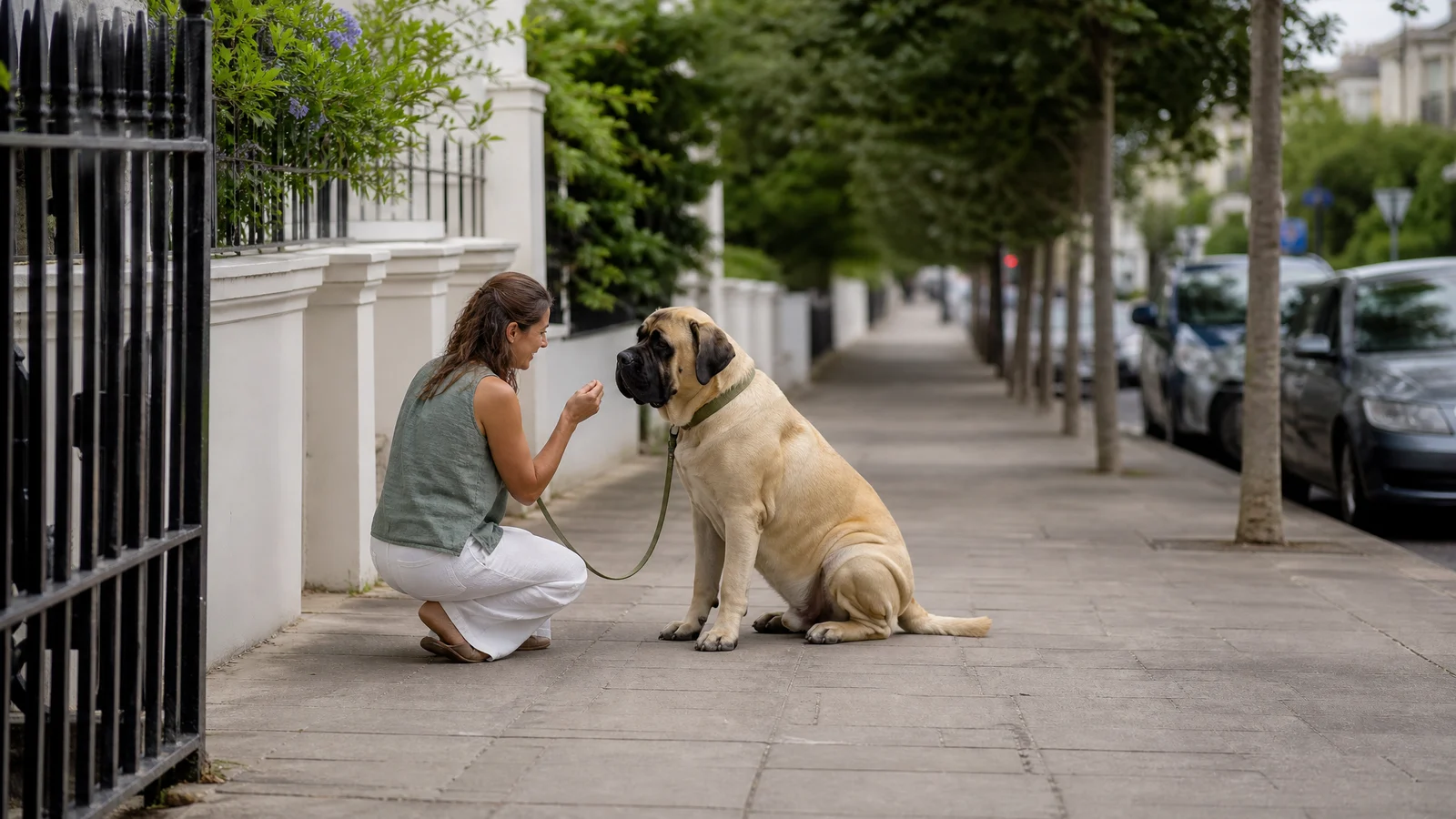
Halfway down the block, a Mastiff sits, and no amount of cheerful begging moves them. Owners describe the indoor version too: three repetitions into a lesson, the dog sighs, flops over and starts to snore. Neither one is stubbornness. A heavy, easygoing dog who is bored, hot or unconvinced simply stops, and with somewhere between 120 and 230 pounds on the other end of the leash, you cannot argue them into moving.
Below, you'll find the working principles we use for this breed, including how to vary sessions, pick rewards, keep lessons brief, handle strength without a tug of war and fold training into family life. Start early, while the dog is still small enough to steer. The habits you build now are the ones you will live with at full size, and done right they give you a calm giant who is a pleasure to have in the house.
Gentle Training Suits the Mastiff
The first principle holds up all the others: this breed takes to kindness and goes flat under pressure. Mastiffs take best to gentle training, and when they are treated with love, inclusion and respect they can excel in almost any sphere. Read that as a practical instruction. A dog who wants to live inside the household learns better from training that happens inside it, not from a drill ground you visit twice a week.
Mastiffs communicate a great deal with their eyes and read your expressions and body language very well, so your mood arrives before your cue does. Raise your voice and you can easily hurt their feelings, which at home looks like a dog who turns away, lowers their head or lies down in the middle of the floor. Keep your voice calm and let a marker word such as yes carry the information.
Why Rewards Work
Gentle methods are also just effective. When a dog earns food, toys or praise for something they did, they are more likely to do it again, which is the whole idea behind reward-based training. With an animal this large you want habits the dog chooses to repeat, not ones you have to extract.
Gentle does not mean casual, though. Some owners find their adult Mastiff so mellow that almost anyone in the family can walk them, and they still train every day for 15 to 30 minutes. The mellowness is practiced. With this much dog, regular rewarded work is what keeps manners dependable.
Expect a thoughtful learner rather than a keen one. Trainability for the breed is rated agreeable, not eager, and our piece on how temperament shapes trainability goes deeper into what that means day to day.
Vary Every Training Session
A typical group class runs the same cue over and over, and that is exactly the format Mastiffs find dull. Quick learners who want to please are the ones who tune out when nothing new arrives, and the result is a dog who lies down and snores. We would push the point further: a snore means the session was too samey, not that the dog is dim or defiant.
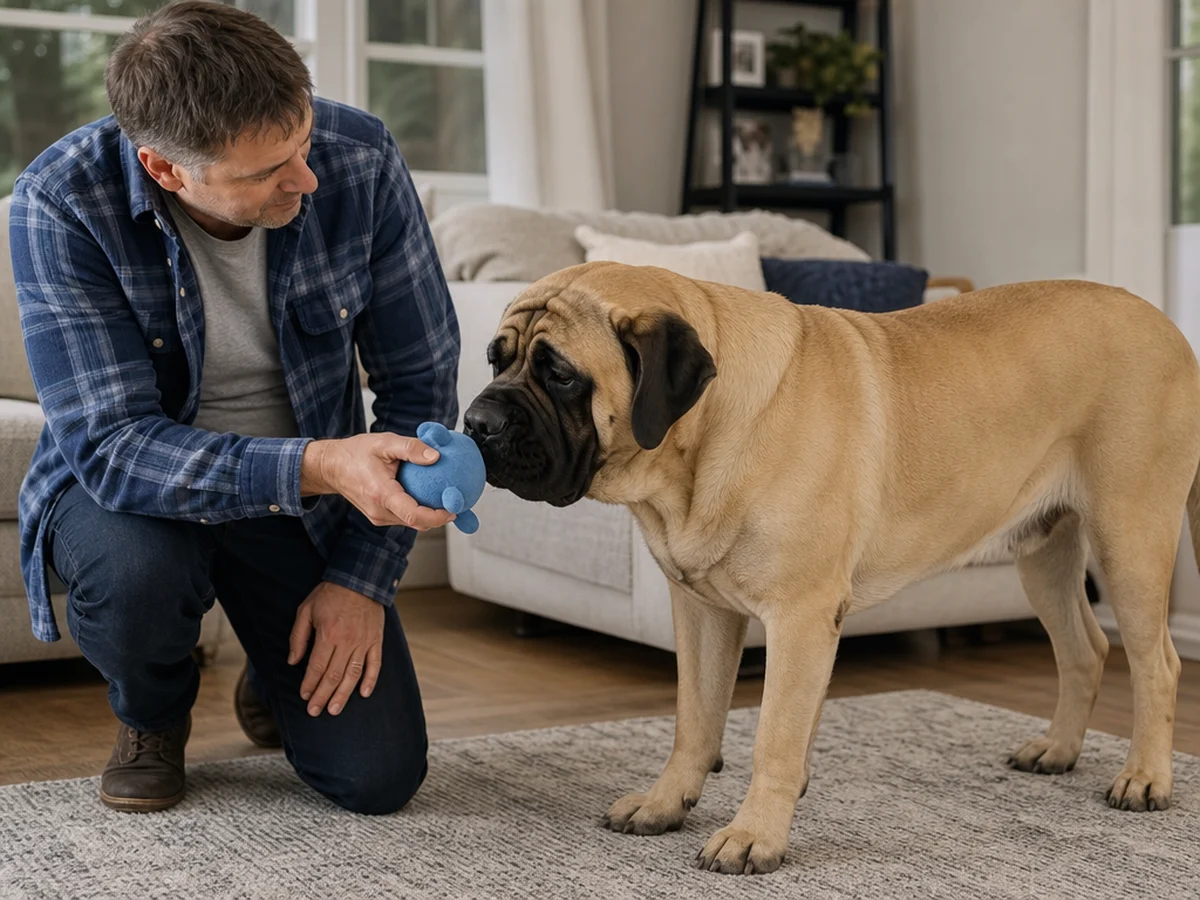
So rotate. A single session might hold a quick sit, a nose touch to your hand, a few steps of loose-leash walking around the kitchen and a settle on a mat, each rewarded a handful of times before you move on. Change the room, the reward or where you stand between rounds. The aim is a dog who is slightly curious about what comes next, which is a lot more useful than a dog who is merely obedient for ninety seconds.
Teaching a New Cue in Small Steps
When you do teach something new, decide on the final behavior first and break it into small steps that you mark and reward in order. Here is that approach for a settle on a mat, the cue most Mastiff households end up using every single day.
- Put the mat down and reward any glance at it or step toward it, tossing treats onto it so the dog keeps returning.
- Reward only when all four paws are on the mat, then wait for the dog to offer a sit or a down by choice.
- Mark the moment they lie down and deliver the treat low, between the paws, so they stay put to receive it.
- Add the cue word just before they lie down, then reward as usual.
- Stretch the time between treats, paying for calm breathing and stillness, and release with a word like free before they get up on their own.
- Move the mat to other rooms, then the porch, a friend's house and the vet's waiting room.
Say the cue once. If you repeat it, you teach the dog that the first one was optional, and a Mastiff will happily accept that deal.
Is a Treat Always the Right Training Reward for a Mastiff?
No, though food is where most people should start. A treat is the fastest way to tell a dog they got it right, and new cues deserve speed. But Mastiffs are only moderately playful and moderately energetic, so a ball or tug toy is a weak default, and plenty of them will simply watch it roll away. Match the reward to the moment, using the table below as a starting point.
| Reward | Works best for | Watch for |
|---|---|---|
| Small soft treats | Teaching new cues and rewarding quick responses | Extra food adds up fast in a big dog |
| Calm praise and slow touch | Settling, polite greetings, quiet moments | Excited praise can set off leaning and wiggling |
| Life rewards | Walks, door manners, release from a stay | They must follow the behavior right away |
| Short play | Dogs who truly enjoy it | End the game if it turns rough or mouthy |
Matching the Reward to the Moment
For food, use small, soft pieces that are gone in a swallow so the session keeps moving. Count them against the day's meals. A Mastiff can put on weight quickly, and a heavier dog is harder on joints and much harder to lift into the car when the day goes wrong.
Praise and touch work well because these dogs are deeply affectionate with their family. Use a low, slow voice and slow strokes for calm behavior, and save the bouncy voice for recalls. A hyped-up Mastiff is a leaning, swiping, tail-sweeping Mastiff, and your coffee table will notice.
Life rewards matter most on walks. Mastiffs are notorious for plopping down when tired or overheated, so a sniff break, a shady patch or heading home pays better than another biscuit. The old rule of thumb is not to walk them farther than you could carry them back, which with a dog this size is a humbling bit of arithmetic.
Short Training Sessions Beat Long Ones
End while the dog still wants more. A Mastiff who is still watching your treat hand has learned that training is worth showing up for. One who has flopped onto the floor has learned how to outwait you, and they are better at it than you are. Quit right after a clean success, not after a string of sloppy ones, even if that means a session lasts only a couple of minutes.
Short does not mean rare. Many owners get the best results from small bursts scattered through the day: after breakfast, before you leave, while dinner cooks and again in the evening. That adds up to the 15 to 30 minutes of daily work that keeps manners dependable, without any single session becoming a chore for a dog who would rather be napping.
Walks Count as Sessions
Adults do well on daily walks of a mile or two plus free play, and the sit-down-and-refuse moment is usually a message about heat or tiredness rather than defiance. Turn for home early, cool them off and reward the walk back. Several short, pleasant outings teach more than one heroic trek that ends with you wondering how to get a Mastiff-shaped boulder to the car.
Puppies need shorter sessions still, and what to teach at which age is mapped out in our Mastiff puppy training timeline. Whatever the age, start early. A young Mastiff who learns to greet politely and walk on a loose leash at modest size saves you from learning those lessons at full weight.
Why Not Rely on Strength in Mastiff Training?
Because you will lose, and probably in public. Males are listed at up to 230 pounds, and even females, listed at 120 to 170 pounds, are very strong. A dog this powerful can break through a flimsy gate without trying, so sturdy gates are part of the plan. Your arms are not a training plan, and the dog does not need to be angry to overpower them.
The plan is to need strength as rarely as possible. Use sturdy gates, a leash you can hold securely and a crate sized for the adult, with room to stand, turn and stretch. Owners report that Mastiffs outgrow crates, sometimes before reaching full size, and that thin metal ones get bent by sleep kicking and twitching. Many choose a crate that looks absurdly big around a young dog because they will sprawl in it for years.
Loose-Leash Walking Without a Tug of War
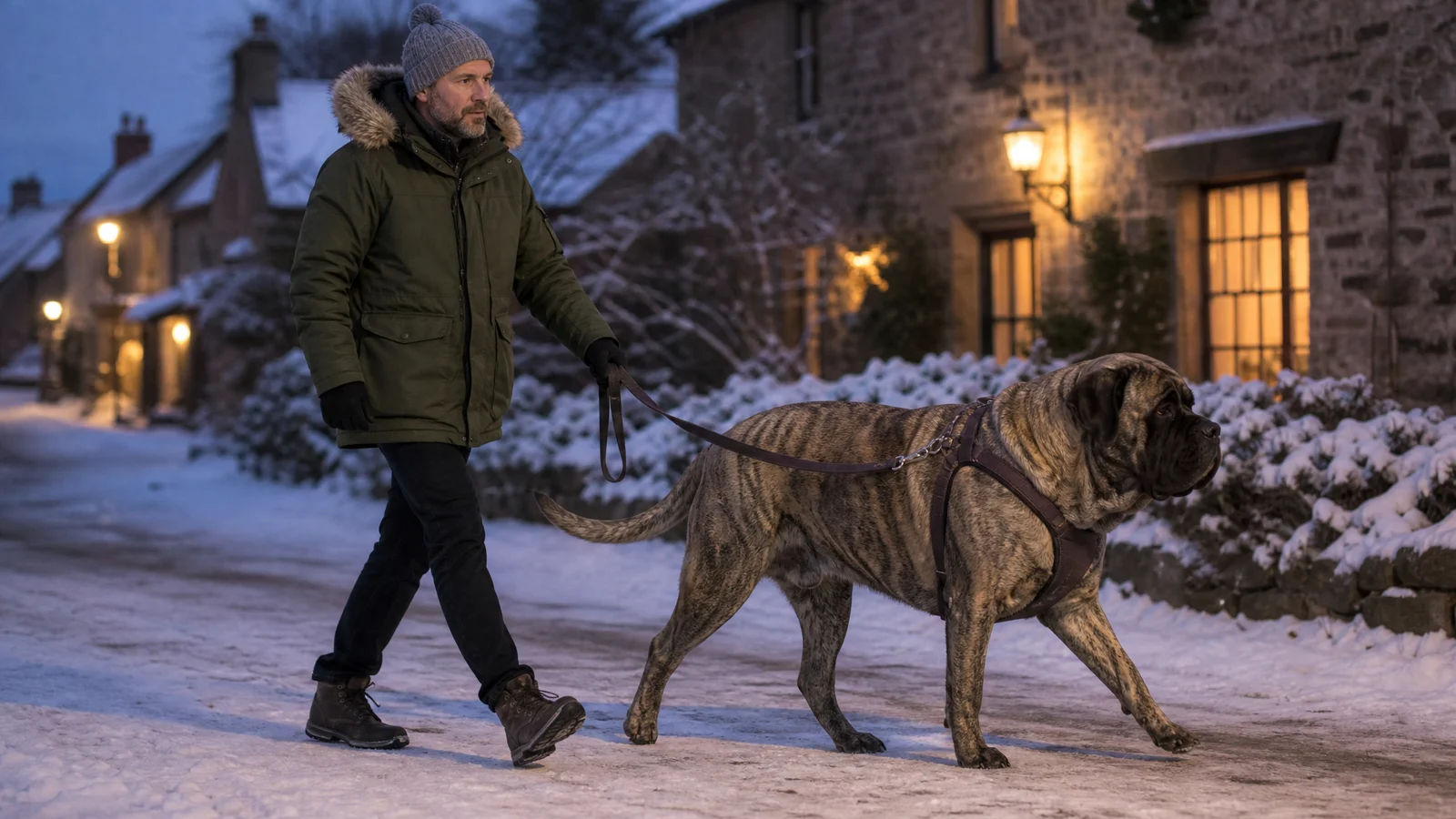
Pulling is the clearest case. A Mastiff leaning into the leash is not being rude, they are just heavy, and nobody wins a pulling contest against that. The method that works is dull and rewarding: when the leash goes slack, reward and walk on, and expect to stop and start many times at first.
- Start somewhere boring, like the hallway or driveway, with treats ready at your side.
- Stop the moment the leash tightens and wait calmly for it to loosen.
- Reward at your side the instant it is slack, then walk on.
- If they keep pulling after you stop, turn and walk the other way, then give praise and a treat as they turn with you.
- Calling them to your side after a pull and praising them for coming also works, and some owners still use that simple method years later.
Progress looks like fewer stops per block, not a sudden miracle.
Head Halters and Muzzles
A head halter gives some owners good steering and polite walking, especially when the dog was introduced to one very young. It is not right for every Mastiff. A dog who dislikes the halter and also dislikes walks may barely wear it, and no steering gain is worth turning walks into an argument. Introduce it gradually with treats, nose in, treat, off, and be willing to try another approach.
A muzzle deserves the same patience, well before you need one. Fitted loosely in the middle of a stressful vet visit, it is easy for a strong Mastiff to remove and can leave them more upset. Owners also report that handling at the clinic can be risky because of the dog's size and sudden head movements.
Teach your dog to put their nose into a well-fitted muzzle for treats in the living room, and it becomes a calm routine that stays on. Keep regular vet visits on the calendar so these skills get practiced in low-stress settings.
Include the Mastiff in Family Life
Training that lives only in scheduled sessions stays there. A Mastiff learns the most from what happens in the kitchen, at the front door and beside the sofa, and they want to be wherever the family is. We have trained this breed for many years, and the households that fold lessons into the day's routines get reliable manners faster than the ones that treat training like a dentist appointment.
Kids, Feet and Small Dogs
A Mastiff is rarely rough on purpose, but they often do not notice small children or your feet. A sweeping tail, a leaning body or a heavy step can knock someone over or hurt them, so many owners supervise every interaction closely and accept that toes will be stepped on. Teach a sit or settle on cue, and reward them for keeping their body still around kids. That prevents most of the accidents.
Treat small dogs the same way. Mastiffs are often friendly with little dogs, but size creates risk, and owners either keep a very small dog out of the picture or manage the occasional accidental rough moment in play. Some adults become gentle enough to let a young child hold the leash under supervision, but that is earned through many rewarded repetitions. Our guide to kids, dogs and strangers covers introductions in detail.
Daily Routines That Teach
A few standing rules turn ordinary life into practice, and none of them need a separate training slot.
- Ask for a sit before the food bowl goes down, the door opens or the leash leaves its hook, and let the thing the dog wants be the reward.
- Reward a settle on the mat whenever the family eats, so being near the table means being still.
- Greet visitors with all paws on the floor, rewarding the dog before they build up speed, because a leaning Mastiff greeting is a lot of dog.
- Hand out treats for staying out from underfoot in the kitchen, which protects your toes and any toddlers.
- Practice handling paws, ears and mouth with treats, so grooming and vet exams go smoothly.
Mastiffs are protective of family and naturally wary of strangers, so pair those greetings with plenty of calm, rewarded exposure to new people while the dog is young.
Training Works When Habits Calm, and Stalls Need a Pro
Put together, the principles say one thing: a Mastiff is a big, sensitive, easygoing dog, so you win by making calm behavior pay, not by out-muscling them. Gentle methods, varied and brief sessions, the right reward for the moment, management in place of strength and a real place in the family add up to a dog whose size is never tested. Keep regular vet visits going too, because pain can look like stubbornness.
Progress with this breed is quiet, so look for these small shifts.
You may see a dog who settles on their mat without being asked when the family sits down to eat, and a leash that stays slack for longer stretches so that you stop less often. Visitors get a greeting with paws on the floor, and children get a still, steady dog. Sessions end with the dog still watching your hand rather than lying down, and a halter or muzzle goes on calmly because it has always meant treats.
Call in a reward-based trainer or behavior professional if you see any of these, and see your veterinarian first if pain could be involved.
- The dog freezes, growls or snaps around food, handling or visitors.
- Wariness of strangers is growing instead of easing, despite steady, rewarded exposure.
- You cannot physically manage the dog on a walk, even with good setup and rewards.
- Vet visits or grooming have become unsafe for the dog or the people involved.
- A sudden change in behavior appears, such as reluctance to rise, move or be touched.
- Progress has stalled for a long stretch even though your sessions are short, varied and rewarded.
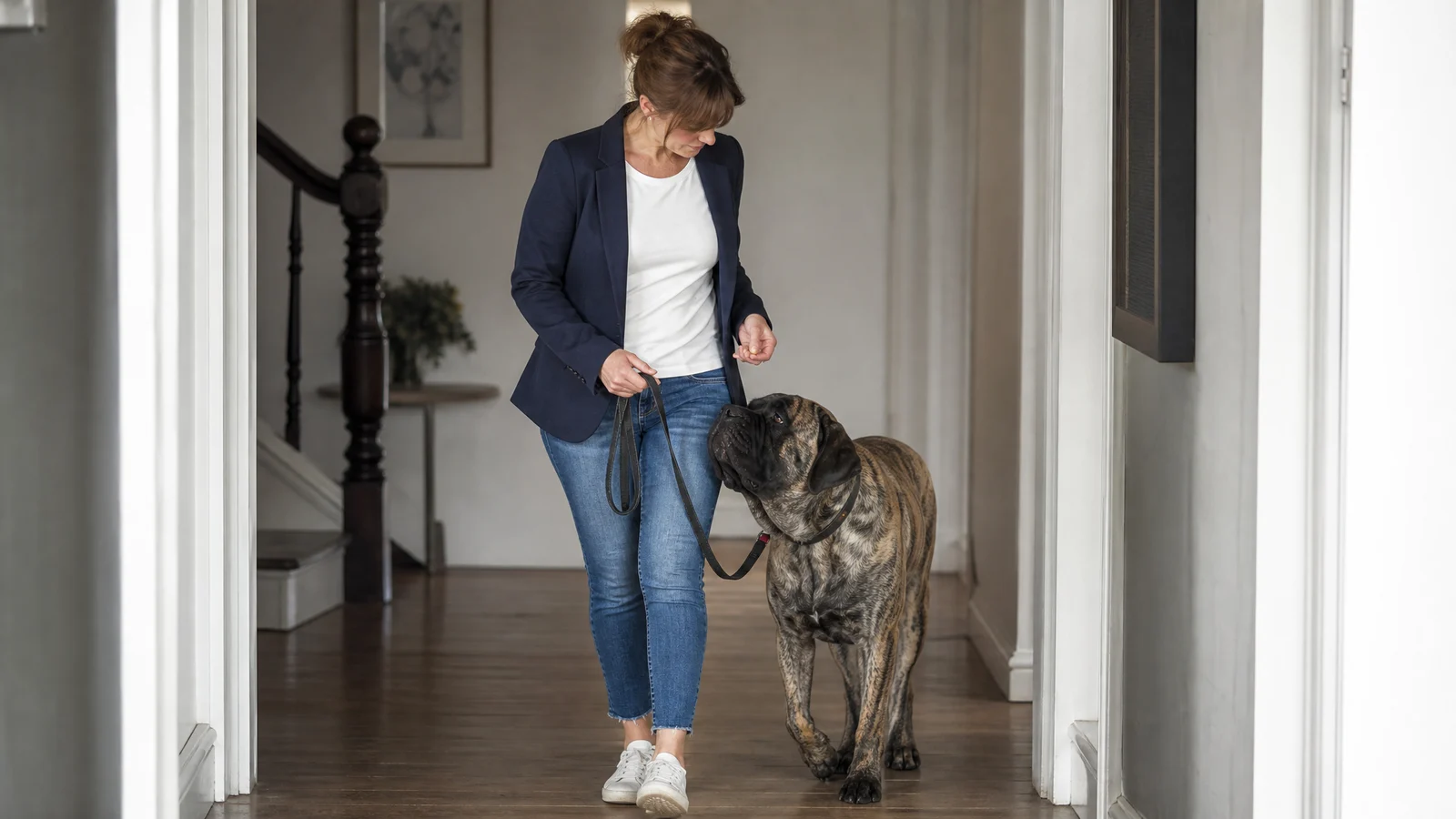 Training basicsEnglish Mastiff Leash Training for Pulling and Lunging
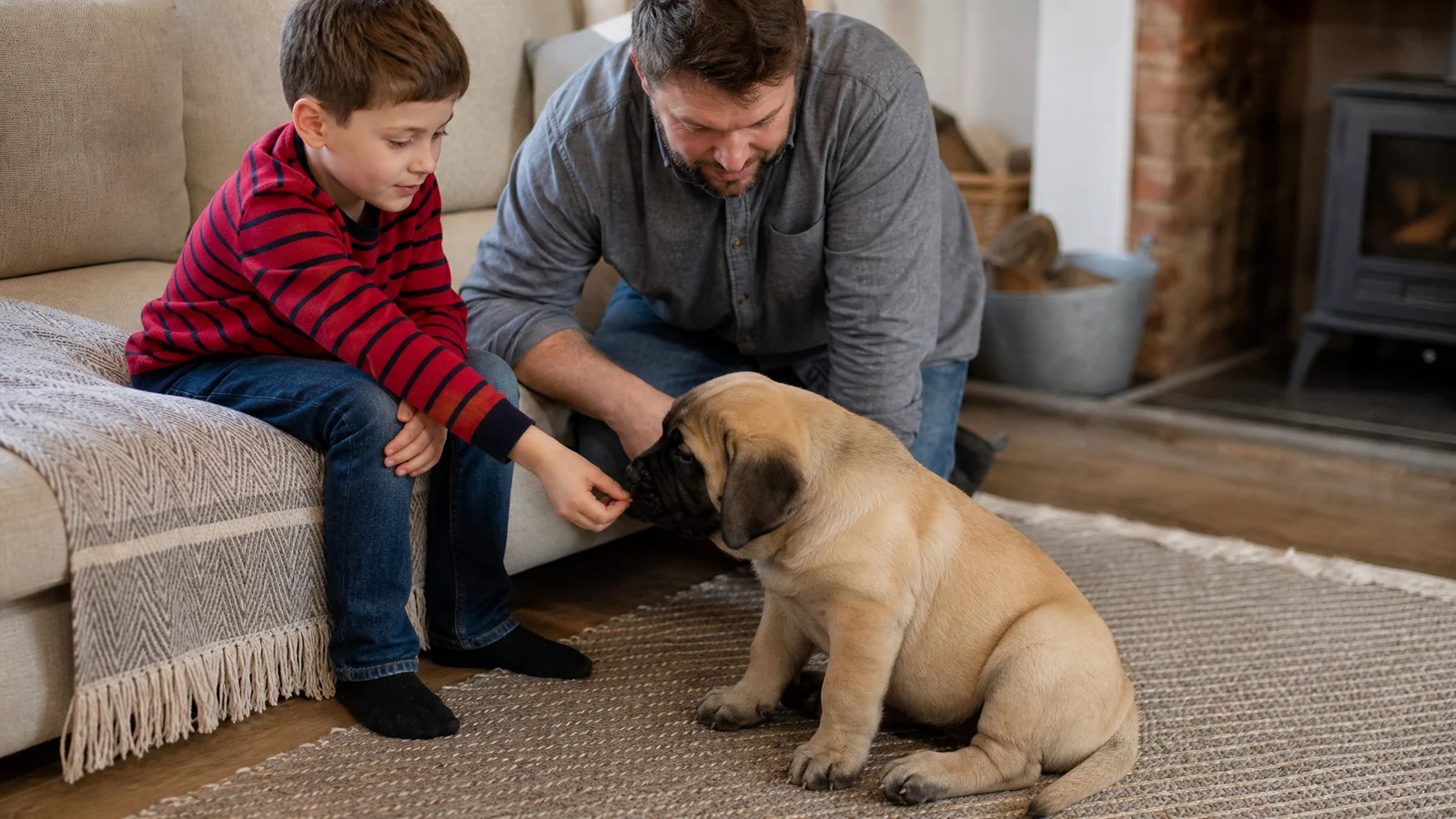 BehaviorEnglish Mastiffs With Kids, Dogs and Strangers: A Socialization Plan
 Training basicsA Harness and Treat Plan for Walking Your English Mastiff