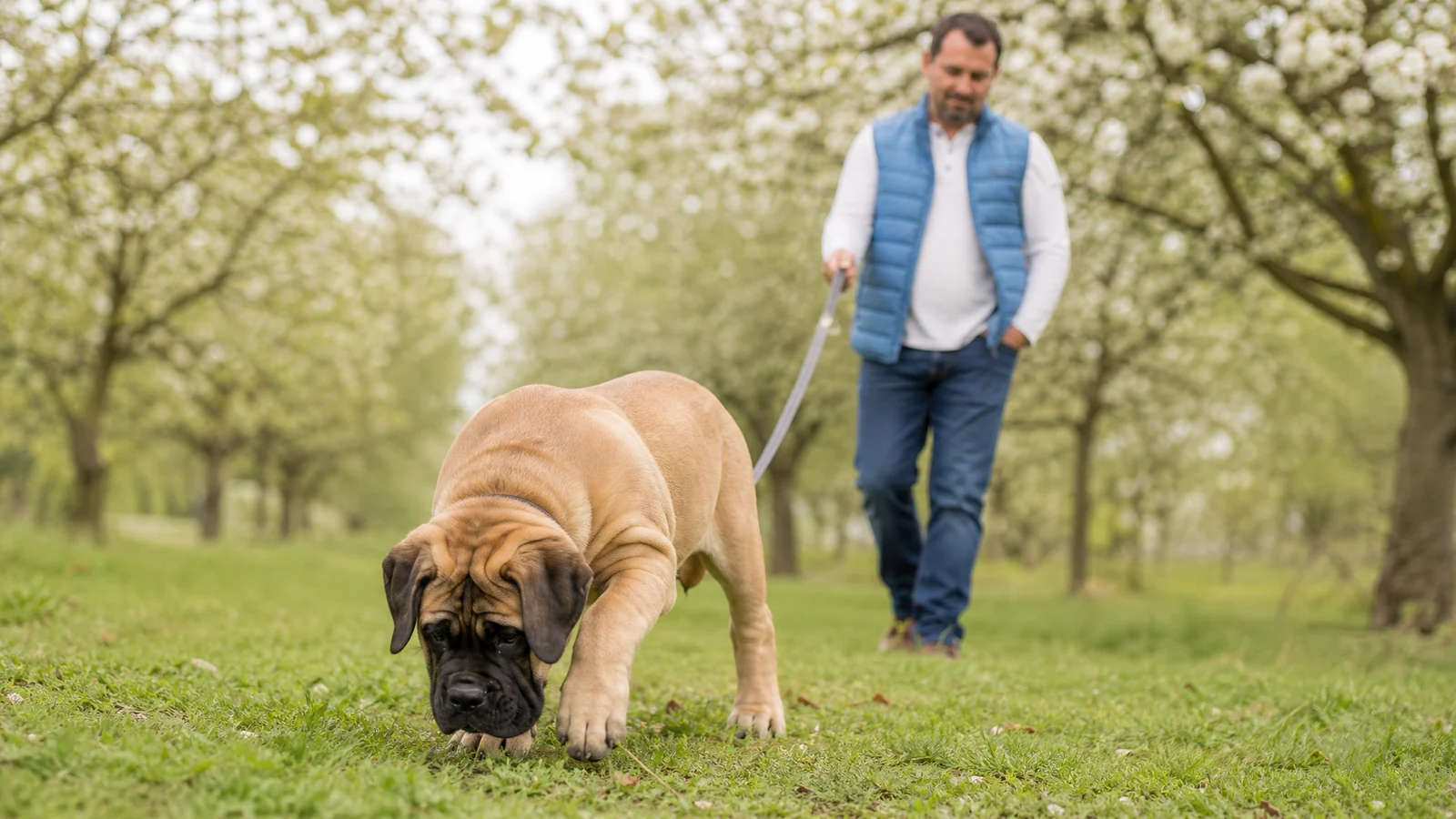
Some English Mastiffs surge to the end of the leash as soon as a walk begins. Others take a few steps, stop and seem impossible to restart. These look like opposite problems, but both tell us that the dog's pace and the handler's plan have stopped matching.
In this guide, we will check fit while the dog moves, build a useful reward zone, make starts and stops readable, and practice a short loop that never depends on dragging or overpowering a giant dog. A harness can improve comfort and control, but it cannot teach pace by itself. The plan also separates training difficulty from a change that deserves professional help.
Separate Harness Comfort From Walking Skill
Begin in a quiet room before judging the dog's leash behavior. Present the harness, reward the Mastiff for approaching and fasten it without rushing. Let the dog walk, turn, sit and lower the head while you watch how the equipment moves across the chest and shoulders.
A dog who scratches, freezes or changes stride when the harness appears may need equipment work before pace training. A dog who moves normally indoors but surges outside may understand the equipment and still need a clearer walking lesson. Treat those as different findings rather than calling both stubbornness.
Equipment and training answer different questions. Fit protects movement, while rewards explain where and how walking together pays. Keep those jobs separate so a difficult outing does not lead to endless strap changes, and a visible fit problem is not dismissed as incomplete training.
Keep regular veterinary visits in the larger plan. Sudden reluctance, a new uneven stride or sensitivity while being fitted deserves veterinary attention because training cannot make discomfort safe.
English Mastiff Harness Fit for Pulling and Stopping on Walks
A standing fit check is only the first view. Watch the harness during several easy steps, a broad turn and a relaxed stop. The straps should remain secure without cutting across moving joints, twisting the body or changing the dog's ordinary stride.
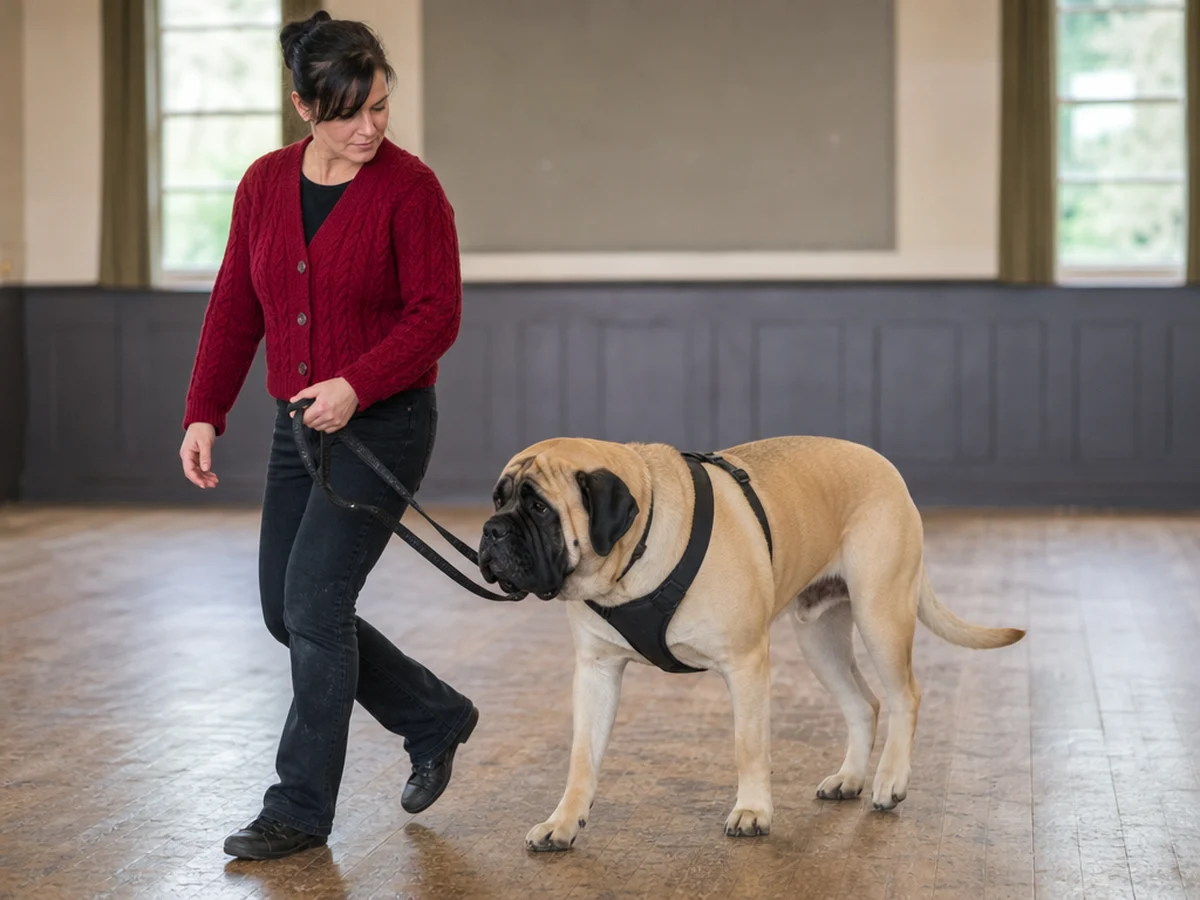
Use the table as an observation guide, not as a universal fitting formula. Mastiff bodies vary, and puppies change quickly. Follow the maker's directions and ask a knowledgeable professional to check fit when you cannot keep the harness stable and comfortable.
| What You See | What to Check | Next Step |
|---|---|---|
| Harness shifts during a turn | Strap adjustment and attachment position | Refit before outdoor practice |
| Stride shortens after fastening | Pressure near shoulders or chest | Remove it and reassess comfort |
| Dog moves freely but pulls outside | Reward placement and difficulty | Begin pace work in an easier place |
| Dog stops or resists suddenly | Body, weather, surface and surroundings | End the test and investigate the change |
Repeat the moving check as a puppy grows and after any equipment adjustment. Also check before an ordinary walk. A strap that was correct last month can sit differently after growth, coat changes or repeated use.
Photograph the harness from the side and front when the dog is standing naturally. A dated visual record can help a household notice gradual movement or growth that memory misses. It also gives a fitting professional a clearer starting point if the equipment repeatedly twists.
English Mastiff Rewards for Pulling and Stopping on Walks
Choose a broad reward zone beside you rather than demanding an exact heel. Take one or two easy steps, mark while the leash remains soft and deliver the treat beside your leg. Feeding out in front can pull the dog's body forward and accidentally pay the surge you are trying to change.
The humane training statement describes using a cue, a marker and a reinforcer to teach wanted behavior. The marker identifies the shared pace. The treat arrives where you would like the Mastiff to return on the next repetition.
Use soft, easy-to-swallow rewards and account for them in the dog's normal food plan. Deliver frequently in a quiet setting, then vary the interval only after the dog is choosing the zone. Praise and access to a safe sniff can also reward a connected stretch.
Practice curves instead of sharp pivots. A giant body needs room to organize a turn, and the handler should remain readable. Mark when the dog notices the change and comes through the curve with a soft leash.
When the English Mastiff Surges
Stop forward movement as soon as tension appears. Do not pull backward. The loose-leash lesson recommends waiting for pulling to stop, then rewarding slack before moving again.
If the dog remains fixed ahead, make a broad, calm change of direction and reward the first step that comes with you. Best Friends gives the same turn-and-reward approach in its pulling guide. The turn creates another chance to match pace without adding force.
Vary the number of connected steps before the reward while keeping early success generous. Predictable food after every identical count can make the dog surge toward the expected payment point. An uneven but achievable pattern keeps attention on the handler's movement.
When the English Mastiff Plants
First look for a reason to stop. Check heat, footing, traffic, fatigue, equipment and the dog's whole body. A planted Mastiff may be giving useful information, and continuing to lure forward can hide the condition that made movement difficult.
When the dog looks comfortable and the setting is easy, wait with a soft leash. Mark a weight shift, head turn or first step toward you, then place the reward where movement will continue naturally. If no willing movement appears, end the training problem rather than turning it into a strength contest.
Notice whether planting follows a request to leave a smell, turn toward home or walk onto a different surface. The pattern changes the next setup. Practice the transition in a less valuable or more comfortable place instead of increasing the value of a lure at the same difficult point.
English Mastiff Starts and Stops for Pulling and Stopping on Walks
Give each transition its own cue. Say the start cue once, move one step and reward the dog for coming with you. For a stop, slow your body, stop and reward the Mastiff for settling into a balanced stance beside you.
Practice when neither transition is urgent. Start and stop across a quiet room, a driveway or another secure low-distraction space. The dog should not meet the cue for the first time beside a busy road or at the far end of an exhausting outing.
A start cue does not mean pulling the dog into motion. It predicts an available reward for moving together. A stop cue does not mean the leash becomes tight. It predicts that both partners will pause and check what happens next.
Add a sniff release after several connected transitions. The dog learns that matching pace can open access to the environment. The release also keeps the walking zone from becoming an endless demand for close position.
Give the release a clear ending too. Say the start cue once, allow the dog time to lift the head and reward the first step back into the shared zone. If the sniff is too absorbing for that level, choose an easier patch on the next repetition.
Run a Short English Mastiff Walking Loop
A repeatable loop lets you see which transition needs work. Choose a quiet, comfortable stretch with an easy return. The purpose is several clear decisions, not distance or fatigue.
- Check the moving fit indoors, prepare rewards and walk to the start with the leash soft.
- Give the start cue, take a few connected steps and reward beside your chosen zone.
- Stop while the dog is still moving comfortably, reward the balanced pause and release to sniff.
- Restart after the sniff, make one broad curve and reward the dog for matching the turn.
- Return before pace or comfort deteriorates, then remove the equipment calmly indoors.
Keep the first loops deliberately easy. If every repetition ends with pulling, planting or refusal of food, the location or length is ahead of the lesson. Return to the easiest transition the dog can complete willingly.
This clinic complements the site's broader Mastiff leash training guide. That guide handles route choices, lunging and recovery around distractions. Here, the narrower question is whether equipment, reward placement and transitions create a pace both bodies can maintain.
Leave a quiet recovery period after the loop rather than immediately repeating it. Watch how the dog lies down, rises and moves later in the day. Comfortable recovery supports another small practice, while stiffness or unusual reluctance belongs in the veterinary record.
Troubleshoot Pulling and Stopping on Walks
Review the last useful moment before changing the plan. A surge after a reward may mean the food landed too far forward. A stop after a long sniff may mean the release had no clear ending. A stop that appears only on the return may point to fatigue or environmental concern rather than an incomplete cue.
- If tension begins at the first step, reduce the setting and reward the start.
- If it begins after food, change reward placement before changing the cue.
- If the dog plants at one location, inspect the surface and surroundings without forcing a pass.
- If the dog slows across the whole loop, end early and review comfort with the veterinarian.
Change one variable on the next loop. Moving to a quieter place while also changing the harness, reward and cue makes the result hard to interpret. A single change gives you evidence that can shape the following practice.
Use the site's guide to how to train a Mastiff for matching marker words and household cues. Write the start, stop and release words beside the leash so each walker presents one familiar system.
A simple log can hold the location, harness fit, first difficult transition and recovery after the loop. Review several entries before deciding that a cue is weak. A repeated pattern is more useful than one frustrating outing.
Read Progress and Know When to Get Help
Progress looks like easier harnessing, a normal stride, softer changes at the end of the leash and a willing first step after a pause. It may begin as one calm loop rather than a longer walk. Record which transition stayed easy and where comfort or connection changed.
Work with a skilled trainer using a reward-centered plan when easier setups still produce repeated surging or planting, or when the dog's strength makes practice hard to arrange safely. Ask your veterinarian about sudden reluctance, limping, repeated exercise intolerance, breathing difficulty or a change in gait.
The practical goal is not perfect position. It is an English Mastiff who can move, stop and restart without equipment discomfort or a contest with the leash. When the dog's body and the training evidence both look comfortable, the shared pace can grow one short loop at a time.
 Training basicsManners for a Huge Dog: Greetings, Jumping and Door Etiquette
 Exercise and jobsSafe Play and Short Walks for a Growing English Mastiff Puppy
 BehaviorWiping Faces and Wrinkles: Handling an English Mastiff Who Drools