
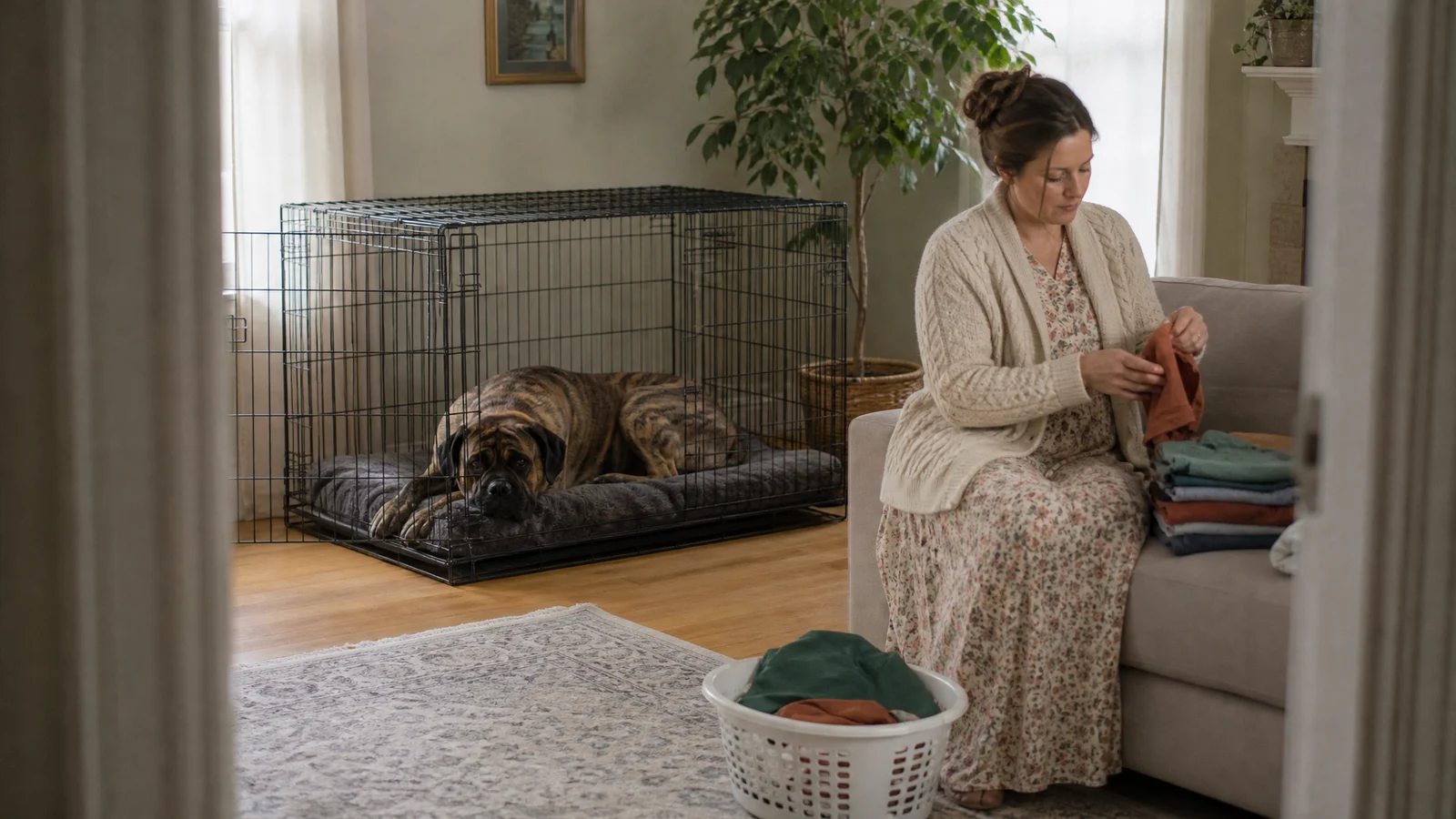
Crate training an English Mastiff is not one lesson. A puppy may enjoy a bed inside an open crate yet worry when the door moves, and a dog who rests behind a closed door may still struggle when people leave. Treating those responses as separate skills makes the plan clearer and kinder. It also prevents a difficult absence from being mistaken for a simple crate lesson. Each part can then progress at the dog's comfortable pace.
This guide separates physical fit, voluntary entry, door work, household distance and signs of serious distress. We use rewards and choice throughout, because the breed is sensitive to harsh voices and grows into a dog whose comfort cannot be created by force.
English Mastiff Crate Fit Versus Crate Comfort
A crate can fit the room and still fail the dog. An English Mastiff needs usable room for an ordinary standing posture, an uncramped turn and the resting shape this dog prefers, but the brief does not support a universal crate dimension. Measure the individual dog and reassess the setup as the puppy grows.
Physical fit is only the first test. Place the crate where the puppy can rest without being isolated from ordinary family life, secure loose bedding that invites chewing and keep the floor stable. The American Kennel Club breed page describes Mastiffs as deeply affectionate with family, so connection matters while a separate resting habit develops.
We would prepare the space before asking for any duration. The setup should let the puppy enter and leave freely during early practice, with water and bedding handled according to safe household and veterinary guidance.
Use this setup check before training begins. Each point answers a practical comfort question rather than promising that equipment alone will make a dog relax.
- The dog can stand, turn and lie in the positions they normally choose without pressing awkwardly against the sides.
- The base does not slide, rock or trap paws, and anything inside is safe for this puppy when supervised.
- The location offers ordinary household company without constant traffic, direct heat or a stream of startling activity.
- The door can be secured open during entry practice so it does not swing toward the puppy and change the lesson.
Voluntary Crate Training Versus Being Placed Inside
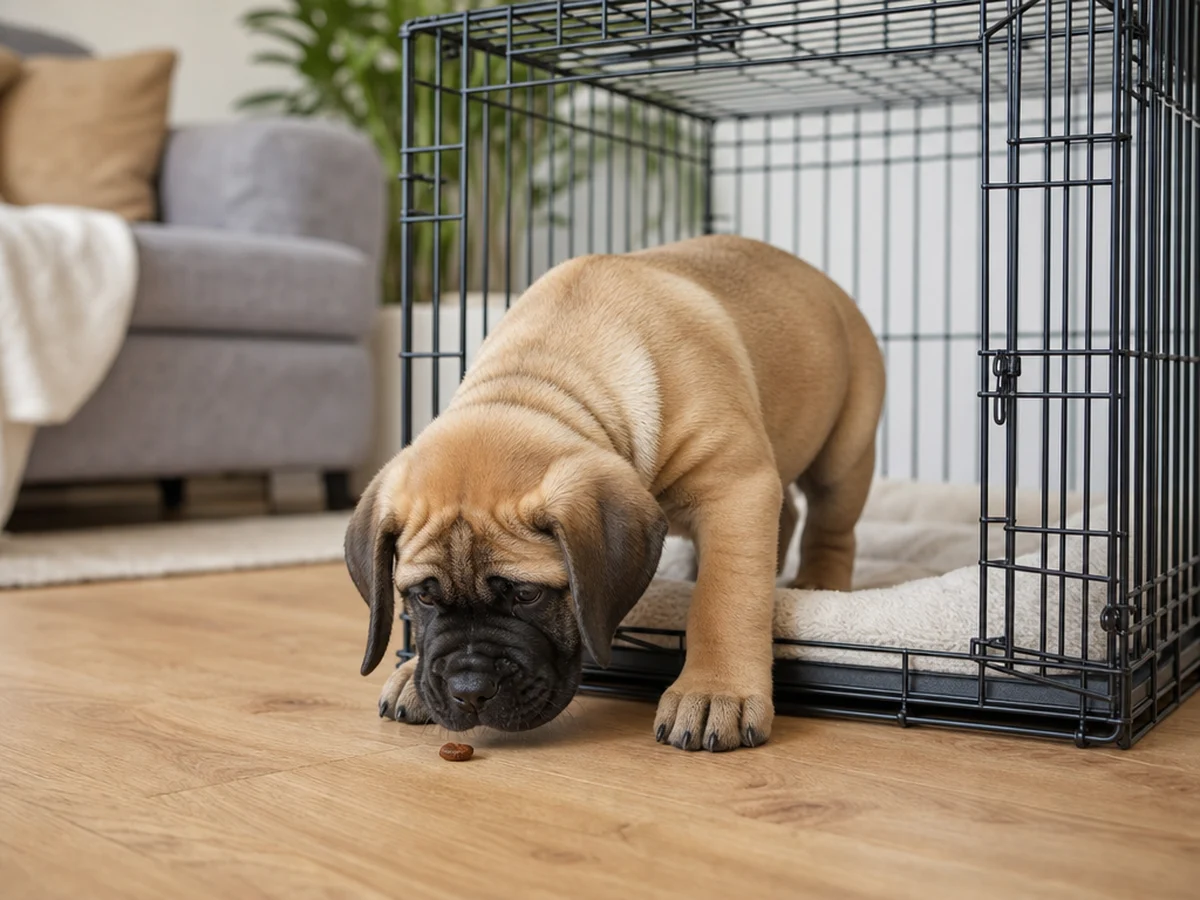
Voluntary entry teaches the useful idea that moving into the crate makes good things happen. Placing a reluctant puppy inside may get their body across the threshold, but it does not teach that emotional lesson. Begin outside the entrance and reward any calm investigation.
Shape the First Entry
Drop a reward near the opening, then allow the puppy to choose what happens next. Reward a glance, a step closer or a nose over the threshold according to what they can offer comfortably. The goal is a series of easy choices, not a dramatic first success.
As confidence grows, deliver rewards farther inside and let the puppy come back out. Add a verbal cue only after they are entering predictably. Leaving remains available, which prevents the cue from becoming a warning that the door will immediately close.
Build Rest Before Duration
A puppy who races in, eats and races out has learned entry, not settling. Place a safe resting item inside and quietly reward pauses, a hip shift or a relaxed lie-down. Keep your own movements ordinary so calm behavior, rather than constant entertainment, becomes valuable.
Short, varied practice suits a Mastiff who can tire of repetition. The broader English Mastiff training guide explains how reward choice and brief lessons support this sensitive, quick-learning breed.
The puppy's ordinary resting style helps define comfort. Some stretch long, others curl or shift between positions, so observe the shape this dog uses outside the crate and preserve room for it inside. Recheck that comparison during growth rather than waiting for the setup to look crowded.
Location deserves the same observation. If the puppy cannot settle beside loud household traffic, move the crate toward a calmer edge of family life. If isolation causes scanning and repeated rising, move it closer without turning the area into a play station.
A Moving Door Versus a Closed Crate
The door introduces sound, motion and reduced choice all at once. Separate those pieces. Mark relaxation before handling the door, shift it slightly, then pay continued ease, then return it to the open position before the puppy becomes concerned.
Closing the door for a moment comes later. Stay nearby, open it while the puppy is still comfortable and avoid making release the most exciting event in the room. If the dog stands, pants, scratches or stops taking food, the last change was too difficult and the next repetition should be easier.
Duration should grow unevenly rather than climbing without relief. Mix easier repetitions among slightly longer ones, and sometimes reward calm with the door open. This variation prevents the puppy from learning that every entry starts an ever-longer wait.
Door practice also changes with the handler's position. Sit beside the crate first, then shift your chair, stand briefly and return to the easier picture. This progression teaches that the door can remain unimportant even while a person changes posture.
Meals or long-lasting food items should not be used to hide a level of worry the dog cannot otherwise handle. A dog who stops eating when you move away is giving useful information. Reduce distance and restore easy engagement before asking for another absence.
Crate Training Versus English Mastiff Alone Time
Confinement and absence often arrive together in daily life, but teaching them together can hide the source of trouble. First move around the room while the puppy rests with the door open or briefly closed. Then practice tiny changes in household distance without leaving the property.
Distance While Someone Stays Home
Stand, sit again and reward continued calm. Walk a few steps away, return quietly and make the next repetition easier if the puppy rises in concern. Once movement inside the room is ordinary, briefly step out of view and come back before worry builds.
This lesson can also happen outside the crate on a bed or behind a safe barrier. A dog who learns to rest while people move through the home gains a skill that is larger than confinement. It also shows whether the crate itself is adding difficulty.
Departures Without a Test
Real departures should not be used to discover how long the dog can endure. The ASPCA separation guidance says practice should remain shorter than the time that triggers upset, and stress signals mean the plan should move back.
Vary harmless departure cues while staying home, such as picking up an everyday item and putting it down. When the puppy can remain relaxed, make absences very small and uneventful. A camera can help a household observe behavior without assuming that silence means comfort.
Daily routine can support the lesson without making every rest happen in the crate. Invite the puppy inside after an appropriate bathroom opportunity and calm activity, while they are ready to settle. At other times, reward resting on a bed so relaxation remains portable.
Household members should use the same entry cue and release pattern. Randomly calling the puppy out for exciting events can make listening for release harder, while repeatedly closing the door after every entry can weaken voluntary choice. Mix open rest, brief door work and ordinary bed rest.
Read the Crate Response Before the Next Change
A brief complaint that ends as the puppy settles is different from escalating panic, but guessing from one sound is risky. Read the whole sequence. Watch whether the dog can eat, change position, respond to an easy cue and return to relaxed behavior after you reduce the challenge.
House soiling, destruction or vocalizing during an absence may be part of distress when they appear with drooling, escape efforts or anxiety around departure cues. Those signs are not a manners failure. They call for a different plan, not a harder crate lesson.
The PDSA crate guide says a professional should guide any plan that combines confinement with separation-anxiety care. Contact your veterinarian and a qualified reward-based behavior professional when distress escalates, the dog risks injury or practice cannot remain below their worry point.
Let the Response Choose the Next Setup
Use the response, not a clock, to decide what comes next. These choices keep the dog from rehearsing a level of distress that the lesson was meant to prevent.
- If the puppy enters willingly but worries when the door moves, return to small door motions while remaining beside them.
- If the puppy rests behind the door while you stay but worries when you leave, work on absence separately and keep crate duration easy.
- If the puppy avoids the entrance before any door work, improve the location and rebuild voluntary entry from outside.
- If distress intensifies or includes escape attempts, stop increasing difficulty and bring the full pattern to a veterinarian and behavior professional.
Travel or household change can alter the picture even when the crate is familiar. Rebuild easy entry and brief door work in the new location before expecting the old duration. Dogs learn the whole context, so a known crate in an unfamiliar room may still require support.
Noise deserves a separate test. A crate near a busy hallway or unfamiliar appliance may be physically adequate yet difficult for rest. Change the environment before assuming the dog needs more repetitions.
Flexible Rest Beyond English Mastiff Crate Training
Long-term success is not the maximum time an English Mastiff can remain confined. A successful dog can enter comfortably, rest as the household moves and settle in other safe places too. They do not need every nap to happen behind a door. Continue routine veterinary wellness visits so discomfort or a sudden change in settling is not mistaken for a training problem.
Keep the crate available when it remains useful, and maintain the skill with occasional easy rewards rather than constant tests. Pair it with the English Mastiff potty training guide as the dog grows, because changing bodies and household needs may require a new setup.
Choice, comfort and flexible rest are the durable results. Maintain them with easy practice during ordinary days, not only before an absence or trip. That keeps resting useful without making confinement the center of family life.
 BehaviorIs an English Mastiff a Good Guard Dog? Guarding Explained
 Puppy trainingEnglish Mastiff Puppy Training Timeline, 8 Weeks to 2 Years
 Exercise and jobsModern English Mastiff Sports and Enrichment Jobs