
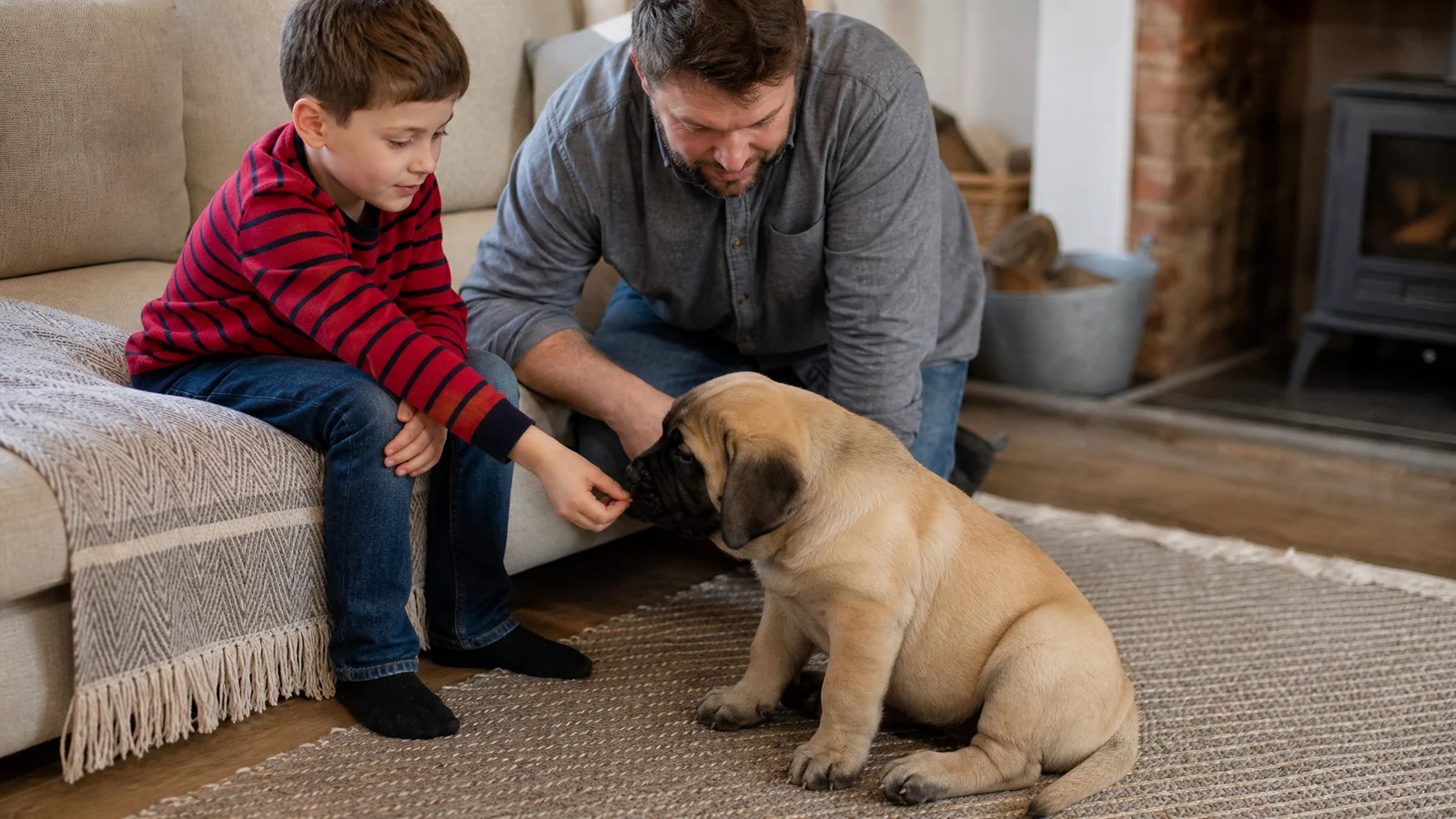
The usual picture of the breed is flattering. Published ratings give the Mastiff 5 of 5 for affection with family and 5 of 5 for good with young children, so many families assume a gentle giant will simply be gentle with kids. The same scale gives only 3 for other dogs (with supervision) and 3 for openness to strangers (ambivalent), and it adds that a natural wariness of strangers makes early socialization essential.
Owners describe the gap between those scores and daily life. A Mastiff is rarely rough on purpose, yet a sweeping tail, a leaning body or a heavy step can topple a small child, because the dog often does not notice anyone that low. Raised well, the breed gives back a calm, affectionate giant. Raised carelessly, you get a huge dog who startles at the wrong moment.
This guide covers raising a Mastiff who is good with kids, dogs and visitors, from the weeks before the puppy arrives to the settled adult years.
Preparing a Mastiff for Socializing With Kids
Preparation matters more for a Mastiff than for most breeds, because the puppy you carry through the door will grow into a dog of 120 to 170 pounds for females or 160 to 230 pounds for males. Every habit allowed at puppy size, such as leaning on visitors or mouthing hands, returns later with that weight behind it. The best time to start socializing is between 3 and 14 weeks, when puppies are most open to learning, so the house needs to be ready on day one.
Setting House Rules for Children
Agree on the rules with every child before the puppy appears. A puppy cannot read a child's intentions, squeals and running excite them, and a fast-growing frame is easily strained by climbing. These rules cover most households:
- Children pet the shoulder or chest and leave the face, ears and tail alone.
- Everyone sits on the floor to say hello, because a standing, bending child invites a big puppy to jump.
- Nobody rides, climbs on or lies across the dog.
- Meals, chews and naps happen behind the gate, so no child has to guess when to back off.
- A child holds the leash only with an adult's hand beside theirs.
Planning the First Introductions
Build the puppy's retreat first. Mastiffs outgrow crates, sometimes before reaching full size, and owners report that a 48-inch crate fits dogs of about 120 to 200 lb with room to stand, turn, stretch and shift bedding. Many go straight to a 52- to 54-inch crate that looks huge around a puppy but saves buying twice. Add a baby gate so puppy and children can take a clean break when things get busy.
Plan the first meetings as short, calm events with one child at a time. Use a marker word, a short sound like yes that tells the puppy the exact instant they earned a treat, and stay with reward-based training from the start. Treats, praise and play teach the puppy that children predict good things.
Socializing Mastiff Puppies With Kids
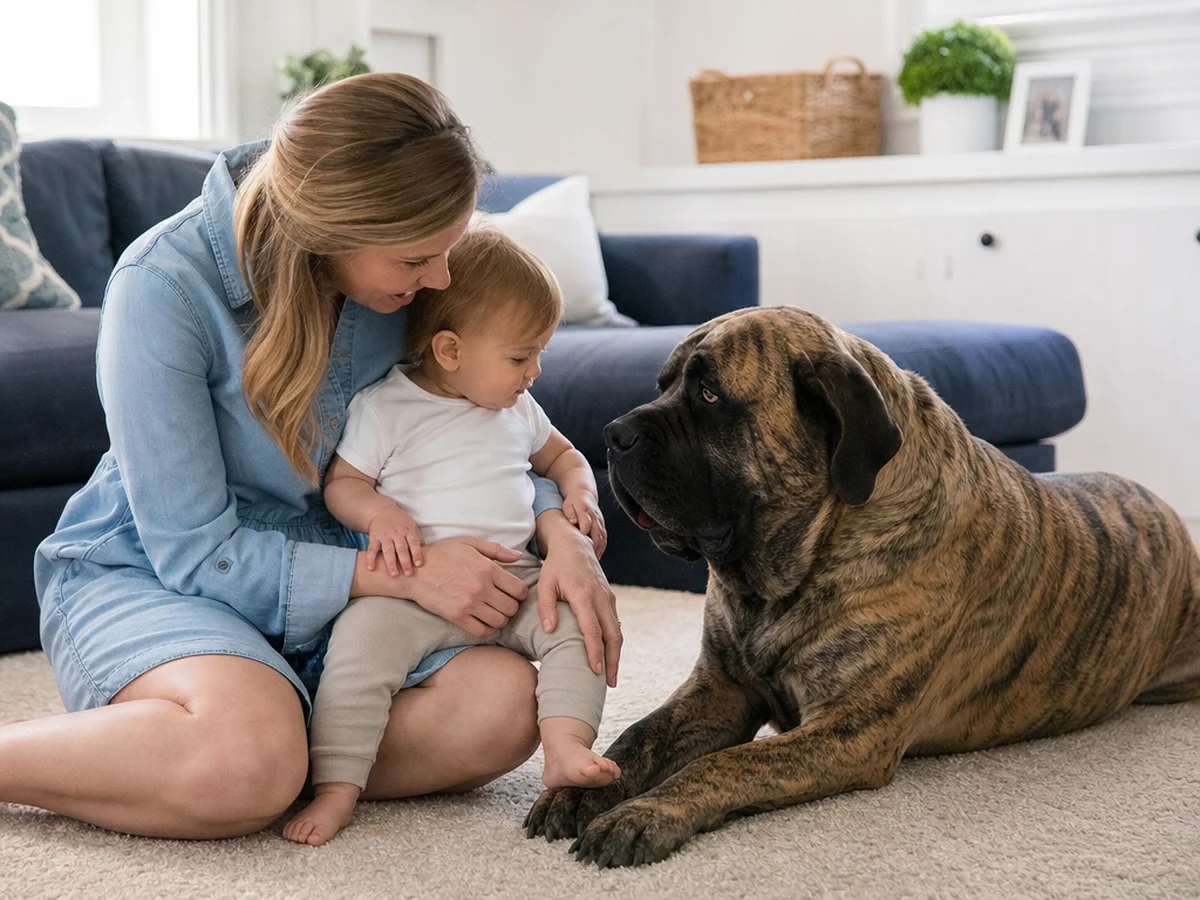
In the first weeks the goal is calm, supervised contact in which the puppy learns that a still body earns treats. Owners report that Mastiffs often knock small children over with a tail or a leaning body without noticing, and a Mastiff can step on feet too. The cause is mostly geometry: a child's head sits at tail height, while a big dog's attention sits far above it. We specialize in Mastiff behavior, and a fall is the accident we worry about most.
Rewarding a Still Body
Teach sit and settle (lying quietly on a mat) before any child is involved. Then let a child sit on the floor and offer a treat on a flat palm while the puppy keeps all four feet down. Reward the stillness most, because a Mastiff who stays put cannot sweep anyone off their feet. Keep sessions short, since Mastiffs learn quickly and then tire of repetition.
Supervision Within Arm's Reach
Supervision means an adult within arm's reach, not in the next room. Common advice says a gentle breed will sort things out with children, and we would push back on that. With a dog this size, barriers and close supervision prevent trouble far better than reacting once it has started, so let the gate and crate do the protecting before anything goes wrong.
Handling Practice for Vet Days
Use these weeks to practice touching ears, face and paws, which makes the routine care that wrinkles, ears and nails need feel familiar. Owners report Mastiffs who panicked with clinic staff, while others learned that the clinic means attention and treats. Book short, happy visits alongside regular veterinary checkups.
Socializing Through the First Year
The first year is the main window for socializing, and pace matters as much as exposure. Mastiffs learn quickly and then tire of repetition, so short, varied sessions beat drilling. Exercise needs are modest, and a common rule says not to walk a Mastiff farther than you could carry them home, since tired or overheated Mastiffs are known for plopping down mid-walk. This table shows how the focus shifts by stage.
| Stage | Socialization focus |
|---|---|
| Before arrival | House rules, crate and gate in place, a plan for first introductions |
| First weeks | One calm child at a time, mat and sit, handling ears, face and paws |
| Through the first year | Dogs one at a time, doorbell and public practice, visiting children |
| Adolescence | Distance and choice with strangers, short rewarded refreshers |
| Adult | Occasional new people and dogs, daily walks of a mile or two, steady supervision |
Meeting Other Dogs
The rating for other dogs is 3 of 5, which means with supervision. Separately, owners report that Mastiffs can be friendly with small dogs yet still a risk to them, because a shoulder bump or a misplaced paw is plenty for a tiny body. Some owners keep their dog apart from a very small dog, and others accept occasional accidental rough moments in play. Choose one calm adult dog at a time over a crowded dog park, and reward gentle, slow play and calm breaks.
Start on leash, walking in parallel several feet apart, and reward glances at you. If both dogs look loose, allow a brief sniff and walk on. Teach loose-leash walking by stopping whenever the dog pulls, calling them to your side and praising compliance, which helps because a tight leash adds tension to a greeting.
Strangers at the Door and in Public
Because the breed is protective of family, a visitor is a bigger event than for many dogs. Teach the doorbell to predict a treat and a trip to the mat. Ask visitors to ignore the puppy, skip leaning over them and let the puppy choose whether to approach, then reward calm sitting or settling.
The breed has a natural wariness of strangers, so reserve with new people is normal and does not mean something has gone wrong. Our article on Mastiff guarding behavior explains where it comes from. In public, keep distance generous and outings brief.
Visiting Children
Visiting children do not know your house rules, so the puppy meets them through the gate first. Explain the rules, have the child sit, and let them offer a treat while an adult stands close. Running and shrieking invite jumping and chasing, so call a calm break before excitement peaks. If the puppy hesitates, give more distance and reward calm looking.
Adolescent Mastiff Wariness
The breed's published description notes a natural wariness of strangers, and that wariness can show up as the dog matures. A puppy who greeted everyone may begin to hold back, stiffen or watch visitors.
We cannot say exactly why, but a larger, more confident body and a breed that is vigilant about family are plausible causes. Watchful Mastiffs may even place themselves between their person and whatever spooked them. That is protective instinct, and forcing greetings only teaches the dog that their worry was justified.
- Let the dog set the distance, close enough to notice the stranger and far enough to keep taking treats.
- Ask the stranger to stand side-on, ignore the dog and never reach over their head.
- Reward calm looking, then reward a step back toward you.
- End the session before the wariness builds again.
Keep your voice calm, since a Mastiff reads your expression closely and is easily hurt by a raised voice. A 2020 study of 92 dogs found that dogs from reward-based schools looked looser in the body, panted less and had smaller rises in cortisol, a stress hormone, after sessions. If wariness turns to growling or snapping, or changes suddenly, call your veterinarian first, since pain can look like fear, then a qualified reward-based behavior professional.
Mastiffs and Other Dogs
An adult Mastiff's tolerance of other dogs rates 3, with supervision, which in practice means most are tolerant but not indiscriminate. Size is the risk, not malice, and the same vigilance seen with strangers can show with dogs too. Your job is to arrange meetings that keep everyone safe and let your adult keep practicing good choices.
Introductions Between Adult Dogs
Meet on neutral ground with both dogs on loose leashes, walking in parallel before any sniffing. Keep greetings to a few seconds, reward your dog for turning back to you, and separate calmly while everyone is still relaxed.
Shared Spaces
With a very tiny dog, owners either keep the pair apart or accept occasional accidental rough moments, and we lean toward separation unless you can step in instantly. Reward gentle, slow play, call calm breaks, and stop play briefly if it turns rough. Check gates and fences too, because a Mastiff rushing to a perceived fight carries a great deal of weight.
Reading Body Language
Mastiffs communicate a great deal with their eyes, so watch for these signs:
- A hard stare, a frozen stance or a stiff tail suggests the dog needs distance right away.
- A loose body, yawning, sniffing the ground or turning away suggests they are coping well.
- Calling the dog to you and rewarding the turn works better than any struggle over the leash.
Keeping a Mastiff Socialized Long Term
Long term, expect a devoted, dignified family dog with modest exercise needs, daily walks of a mile or two, and very little barking. Many adults are patient enough that a child can walk beside them on a leash, but only because an adult holds the other end. The gentleness is real and so is the size gap. Males can reach 230 pounds, and even females are very strong.
Keep the habits that built the dog: sit and settle on cue, a calm greeting, regular handling, short rewarded refreshers and routine veterinary checkups. A little training each day, even with a gentle adult, keeps manners sharp. Reserve with strangers usually persists, so keep arranging calm, rewarded meetings rather than expecting a welcome party.
The result is a loyal, gentle companion who is a joy with the family they know. Their size and watchfulness mean supervision around children and steady habits stay part of life for years.
 Training basicsA Harness and Treat Plan for Walking Your English Mastiff
 Training basicsManners for a Huge Dog: Greetings, Jumping and Door Etiquette
 Exercise and jobsSafe Play and Short Walks for a Growing English Mastiff Puppy