
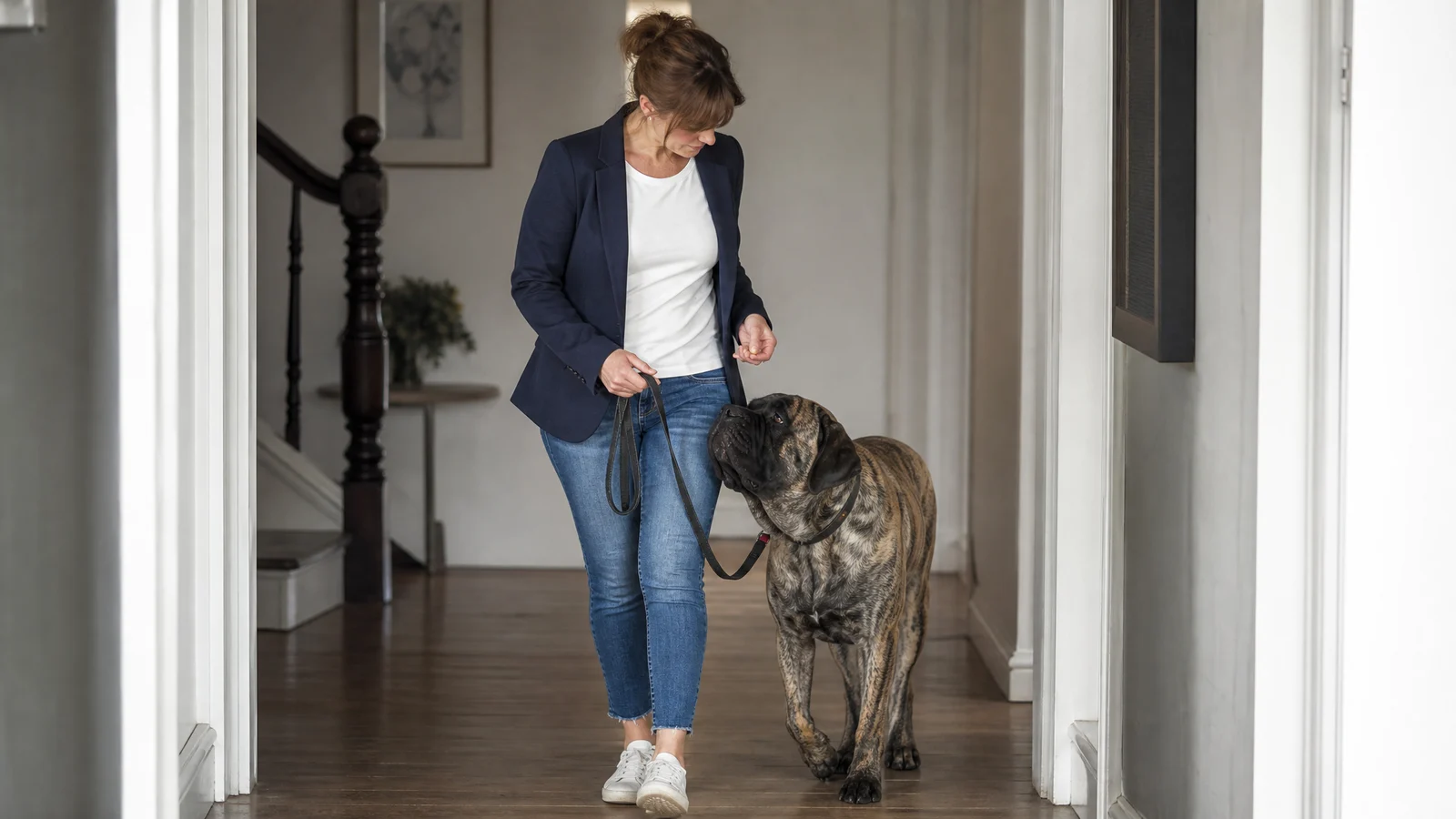
English Mastiff leash training is easiest before pulling begins. A giant dog can make a poor route or a rushed exit difficult to recover from, so the handler's first job is arranging space for good choices. Teach slack indoors, leave through a calm doorway and turn away while distance is still available. The plan protects thinking space before a giant dog's momentum makes every option narrower.
This guide covers equipment, rewarded slack, route decisions, early signs before lunging and the return home. We use only reward-based methods and judge progress by comfort and connection, not by overpowering a dog whose adult size makes strength contests unsafe. Route design carries much of that responsibility.
English Mastiff Leash Training Starts Before the Door
Choose equipment that fits securely and lets the dog move naturally. The brief does not verify a single best product for every Mastiff, so comfort, fit and control matter more than a brand or universal style. Check the fit as a puppy grows and before each outing.
The PDSA loose-leash guide recommends a well-fitting harness and teaches that pulling should not move the walk forward. Prepare rewards where they are easy to deliver, then begin in a quiet room where the leash itself is not competing with the whole neighborhood.
A simple equipment check prevents avoidable confusion. Complete it before asking the dog to practice around distractions.
- The harness or collar sits securely without restricting ordinary movement, and the leash attachment works smoothly.
- The leash is long enough to show visible slack in the chosen practice area without dragging through hazards.
- Rewards are small, easy to reach and valuable enough for the current environment.
- The first route has space to pause or turn away without forcing a close pass beside another dog or person.
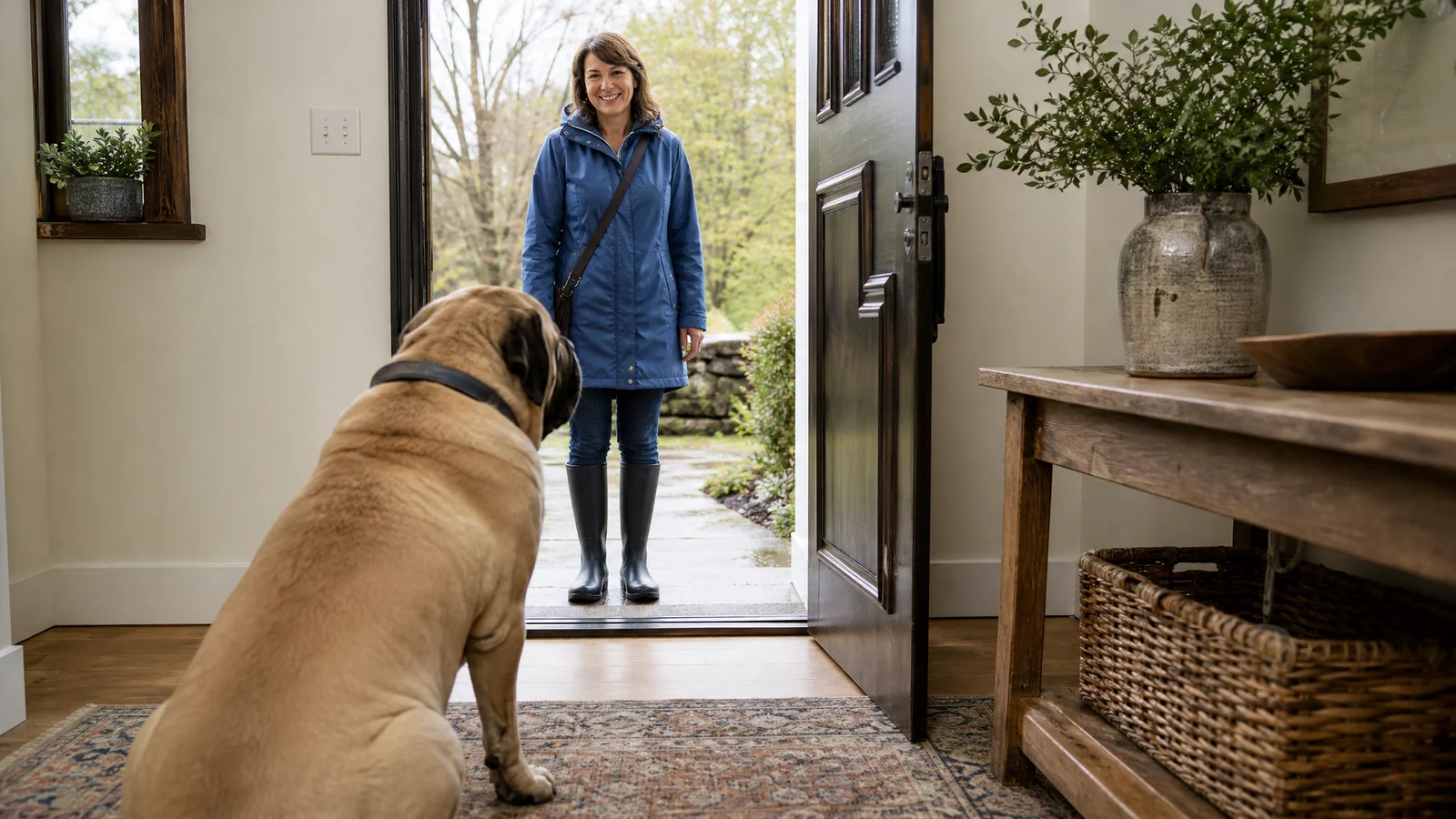
At the door, pay a balanced stance and a brief look toward you before the exit opens. If opening the door creates a surge, ease the door shut, step away from the threshold and ask for a simpler repetition. The doorway is part of leash training, not merely the place where training begins.
Practice putting equipment on as its own calm routine. Present it, reward the dog for approaching, fasten it without rushing and release them again before every repetition predicts a demanding walk. This is especially useful for a puppy whose body and fit change during growth.
Door practice can happen when no walk follows. Open the exit slightly, reward staying with the handler and close it again, then finish with an indoor activity. Removing the guaranteed rush outside lets the doorway become a cue to check in.
Loose-Leash Training Rewards the Walking Zone
Loose-leash walking does not require one fixed shoulder-to-knee position throughout the outing. Decide where you want the dog to move, reward them in that zone and let safe sniffing serve as part of the walk. Clear placement makes the lesson understandable.
Teach Slack Indoors
Take a few steps in a quiet space and reward while the leash hangs loose. Change direction before reaching the end, then pay the dog for turning with you. The dog learns that attention and slack keep shared movement going.
If tension appears, stop rather than adding backward force. Wait for the dog to shift toward you or create slack, mark that choice and continue. The pause should be information, not a contest of patience or strength.
Move the Skill Outside
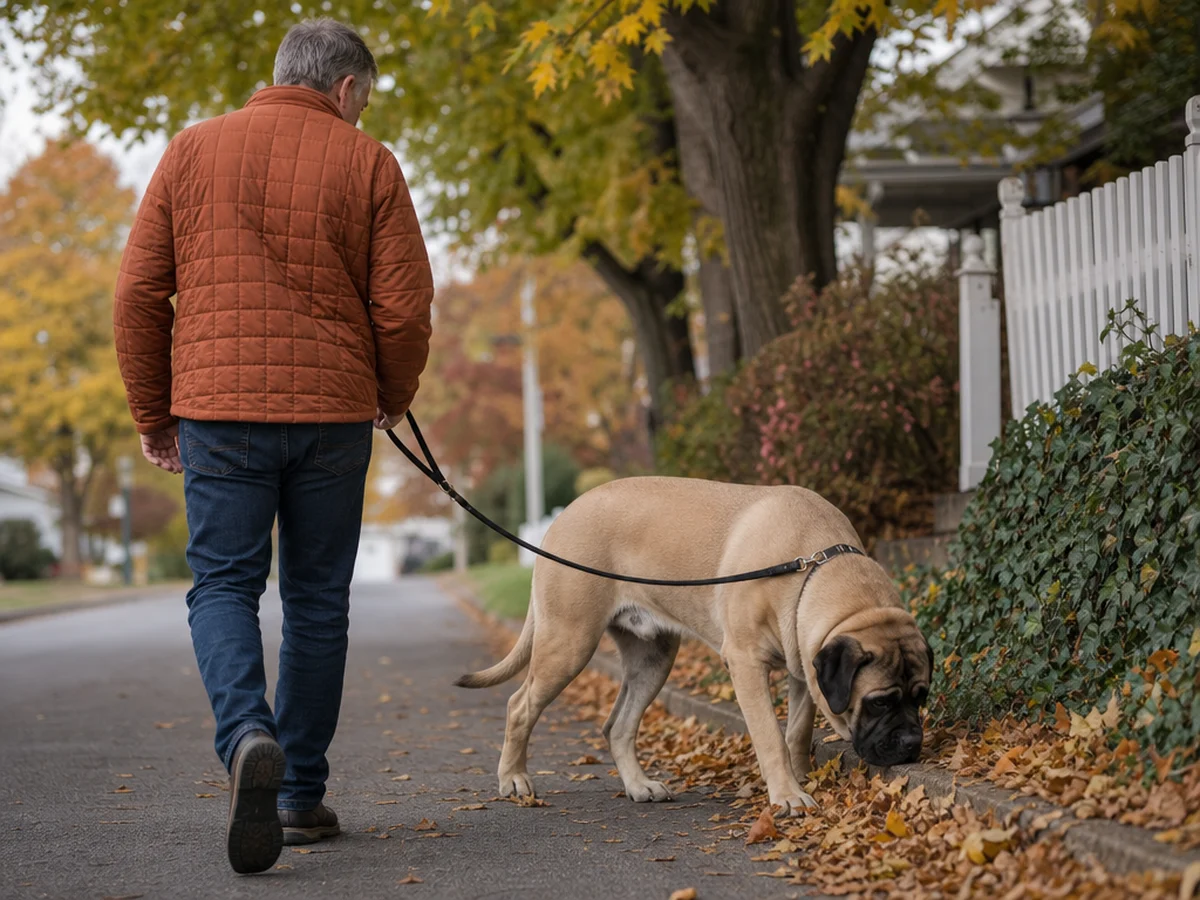
Begin outdoors where the picture is only slightly harder than the room. Reward more often at first, keep the initial route short and use a sniff release after a connected stretch. A Mastiff who can succeed on a quiet path is learning more than one who rehearses pulling through a crowded block.
The Best Friends pulling guide suggests changing direction when pulling continues, then rewarding the dog as they come with you. Make the turn broad and readable. Sudden movement is unnecessary when an early choice can preserve slack.
Reward placement shapes the path. Deliver food beside the leg or slightly behind the dog's forward drive, not out in front where it can pull the body onward. After several connected steps, release the dog toward a safe smell so access to the environment also rewards slack.
Practice stopping without waiting for a mistake. Pause while the leash is already loose, reward the dog for orienting back and move again. This turns a halt into familiar information instead of a surprising consequence that appears only after tension.
The Route Decides How Much Leash Training Is Possible
A route is a training tool. Narrow sidewalks, blind corners and busy entrances remove distance, while a broad quiet path gives the handler options. Select the environment for the lesson you want rather than expecting a new skill to survive every challenge.
The decision table keeps route choices tied to observable behavior. It also prevents a planned distance from becoming more important than the dog's movement and recovery.
| What you observe | Next route choice |
|---|---|
| Slack remains visible and the dog accepts a reward | Continue briefly, then offer a safe sniffing break. |
| The dog forges ahead but can turn with you | Use a broad turn and reward the return to your walking zone. |
| The body stiffens or attention locks ahead | Create distance while slack and turning room still remain. |
| The dog slows, lies down or looks overheated | Choose the shortest comfortable return and end the lesson. |
Practice one feature at a time. A quiet route can teach slack, while a distant view of people can teach turning away. Combining tight space, fatigue and close greetings makes it difficult to know what the dog understands.
Our English Mastiff socialization plan explains how voluntary distance supports calm exposure. A walk does not need to include a greeting in order to be useful social learning.
Time of day changes a route even when the sidewalk is identical. Delivery activity, school traffic or dogs behind fences can remove the quiet version you practiced. Scout patterns without the dog when possible, then select the version that matches the current skill.
Use parked cars, wide driveways or side paths as planned options rather than emergency surprises. A handler who knows where to turn can act at the first stare or weight shift. That earlier decision often preserves a loose leash and a dog who can still eat.
Lunging Changes the English Mastiff Walking Decision
Lunging can come from excitement, worry, frustration or a combination, and the brief does not support deciding on the cause from one event. The immediate plan is safer distance and a simpler behavior. Watch for the first change rather than waiting for the full movement.
Read the Early Change
A closed mouth, forward weight, fixed stare, slower response or refusal of food can show that the current distance is too hard. Turn onto another path, cross where safe or place a visual barrier between the dog and the trigger. Reward the turn and any return of easy attention.
Do not insist on a sit while the trigger keeps approaching. Movement may be the clearer option for a giant dog who needs space. Once the body softens, use an easy known cue or allow quiet sniffing before deciding whether to continue.
Teach an Exit Away From Triggers
Practice the exit cue without a trigger first. Say the cue, make a smooth turn, reward the dog beside you and move away together. Repetition in easy places makes the cue available before a difficult moment.
The Mastiff's natural wariness of strangers is context for thoughtful route management, not a job to develop. The American Kennel Club breed page stresses early socialization and gentle training. Reward calm observation and disengagement without asking the dog to confront what worries them.
Recovery after a trigger matters more than how close the dog came. Once distance is restored, watch whether sniffing returns, the body softens and a familiar cue becomes easy. If recovery is slow, end the exposure instead of seeking another repetition.
Repeated surprise encounters indicate a route problem before they indicate a training problem. Move practice to a broader area, choose a quieter period or work with a professional who can arrange controlled distance. Management keeps the dog from rehearsing full-force lunges while learning catches up.
Tired Mastiffs Need a Return Plan
The breed material notes that Mastiffs may lie down when tired or overheated and advises not walking farther than you could carry the dog back. For a dog of this size, that warning argues for conservative routes with an easy turnaround. The outward walk must leave enough comfort for the return.
Plan loops near home, shaded options and places where you can pause without blocking others. Turn back at the first meaningful slowdown instead of waiting for refusal. Weather and footing may shorten a route that felt easy on another day.
A dog who stops may be tired, warm, uncomfortable or overwhelmed. Check the environment and the whole body rather than labeling the behavior stubborn. Sudden reluctance, limping, breathing difficulty or repeated exercise intolerance needs veterinary attention.
Continue regular veterinary wellness visits and discuss any change in gait or stamina. Leash training cannot solve physical discomfort, and asking for more compliance can hide the information the dog is giving you.
A return can include easy sniffing and familiar loose-leash steps, but it should not become a final test. Choose the shortest comfortable option and let success be uneventful. The dog can practice more on another day when their body and attention are fresh.
At home, note where tension began, what distance restored attention and how the dog moved afterward. Those observations guide the next route. They are more useful than calling the whole outing good or bad.
Questions That Refine English Mastiff Leash Training
Ask whether the dog can stay connected at the current distance, whether the route offers an exit and whether fatigue is changing the picture. If pulling begins in the first steps, return to door and indoor practice. If it appears only near a specific distraction, train farther away from that event.
When lunging is intense, increasing or difficult to manage safely, work with a qualified reward-based trainer who can observe the sequence and design distance. Pair that help with the complete English Mastiff training guide so household cues and walking language match.
The next useful walk may be a quiet turn at the driveway, several rewarded loose steps and a calm return. Progress is not measured only in distance. It is measured in earlier choices, softer recovery and a route that keeps both dog and handler able to think.
 BehaviorEnglish Mastiffs With Kids, Dogs and Strangers: A Socialization Plan
 Training basicsA Harness and Treat Plan for Walking Your English Mastiff
 Training basicsManners for a Huge Dog: Greetings, Jumping and Door Etiquette