
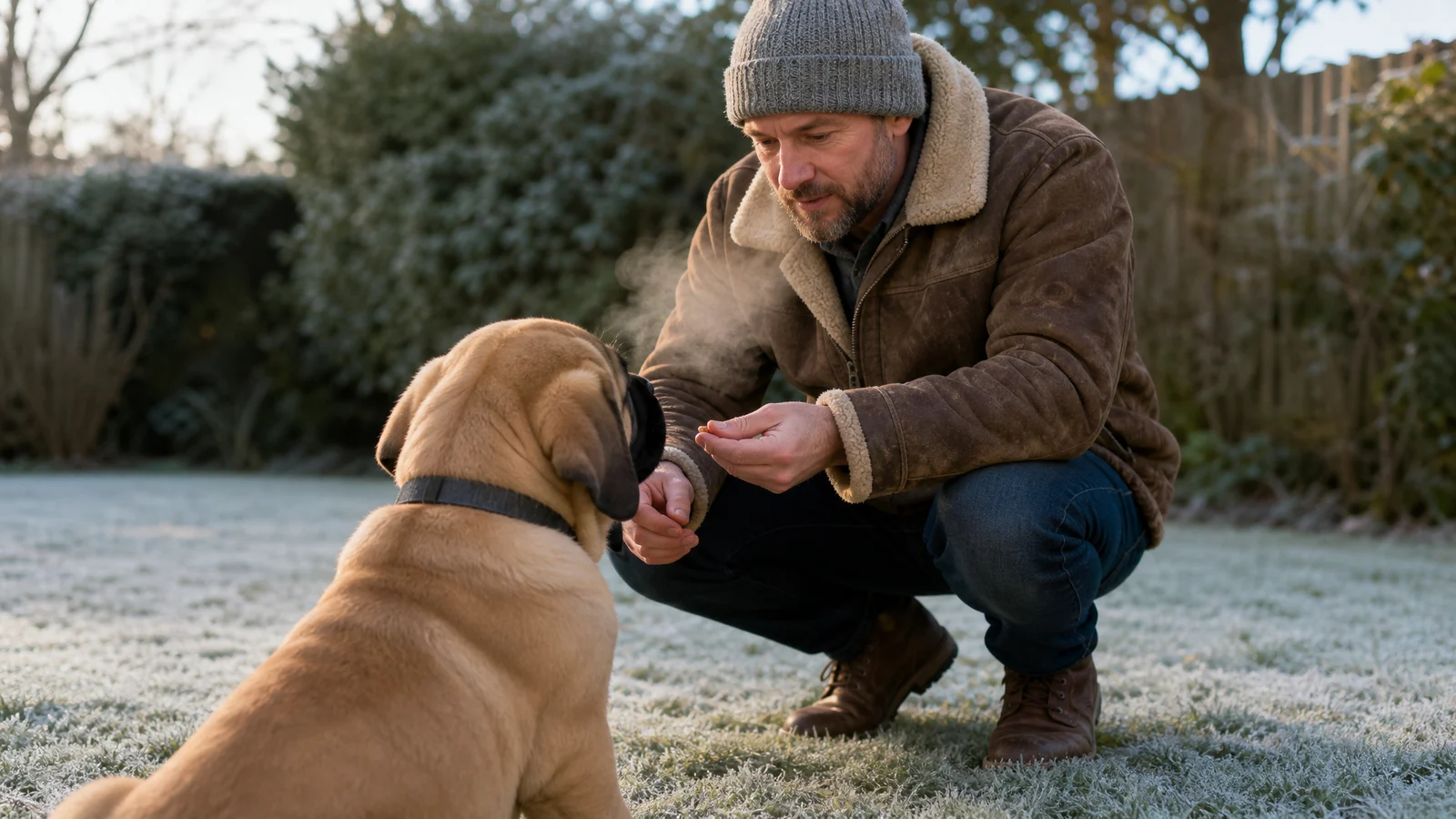
Potty training an English Mastiff puppy works best as a visible household system. Use one practical route to one outdoor area, offer opportunities around predictable transitions, supervise closely indoors and respond to accidents as information. Calm praise at the right place teaches more than frustration after the fact.
This guide reads waking, eating, play, wandering, nighttime needs and accident locations as signals. It turns those observations into decisions about the next outdoor opportunity and the amount of indoor freedom. The result is a plan the whole household can follow. We will build a routine without inventing a breed-specific clock, because the brief supports consistent timing and observation but not a precise Mastiff schedule.
Potty Training Begins With the English Mastiff Route
The route should be easy to repeat when the puppy has just awakened or the weather is poor. Choose one exit and one outdoor destination, clear obstacles and keep the necessary leash and cleanup supplies ready. Preparation removes delays without pretending the puppy already understands the goal.
One Destination
The Humane World potty guide recommends a consistent outdoor spot and a cue used while the dog goes. Walk the puppy there calmly, give them enough space to investigate and say the cue without repeating it as pressure.
When the puppy finishes, mark the event with calm praise before moving on to a little exploration or returning indoors. The sequence helps separate the bathroom destination from general outdoor play. If nothing happens, return to close supervision and try again at the next clear signal.
One Household Script
Everyone should use the same exit, cue and response. A puppy who receives different rules from different people must solve several systems at once. Write the simple sequence near the door if that keeps the household consistent.
English Mastiffs learn quickly and want to please, but repetition can bore them. The American Kennel Club breed page also emphasizes gentle training. Keep each trip purposeful, quiet and free of scolding.
The destination should remain boring enough for the puppy to finish the job. Stand quietly, keep the leash loose and postpone greetings or play until afterward. If the environment is busy, choose the calmest available part of the area rather than repeating the cue over distractions.
Weather changes preparation, not the teaching goal. Have towels or suitable outerwear ready when conditions require them, then keep the same exit and destination. A quicker setup reduces the chance that household delay becomes part of the accident pattern.
Waking and Play Predict Potty Training Needs
Transitions are more reliable prompts than waiting for an obvious accident. Offer an outdoor opportunity when sleep, a meal, a drink or energetic play gives way to the next household activity. The point is to arrive before urgency removes the puppy's ability to choose well.
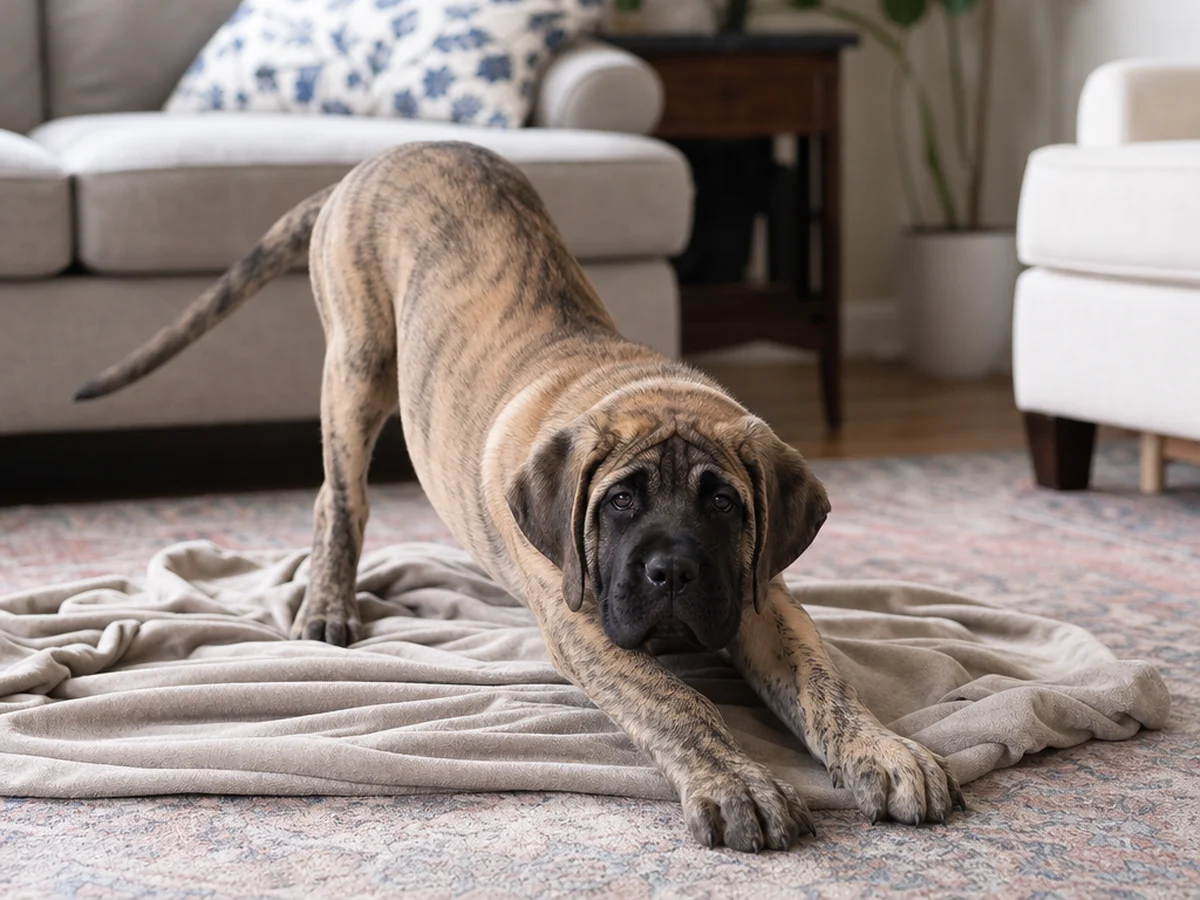
A transition table turns observation into a shared plan. It does not turn a shared transition into an identical interval for every puppy, and the next trip should move earlier when the individual puppy's behavior says it should.
| What just happened | Household response |
|---|---|
| The puppy woke from sleep | Guide them directly along the prepared outdoor route before adding play. |
| A meal, drink or active game ended | Offer the familiar outdoor spot and observe rather than distracting them. |
| The puppy entered a new room | Keep them close and provide an opportunity before granting more freedom. |
| The puppy returned indoors without going | Resume close supervision and repeat the route when another signal appears. |
Keep a simple household record when patterns are unclear. Note the event before the trip, whether the puppy went and where an accident occurred. The record supports better timing without turning normal learning into a claim about exact results.
Different transitions can require different levels of attention. A sleepy puppy leaving a resting area may need a direct trip, while a puppy ending gentle play may show enough warning to walk the route. Carrying should be reserved for safety and practicality, not used to bypass learning the path forever.
Keep the record descriptive. Write that the puppy woke, wandered behind a chair and had an accident, rather than labeling them stubborn. Description points to an earlier opportunity and a smaller supervised zone.
Indoor Wandering Changes the Potty Plan
Sniffing, circling, drifting away from activity or heading toward a previous accident area may signal a need, but no single gesture proves it. Treat the cluster as a reason to offer the outdoor route. Quiet action is more useful than calling the puppy repeatedly across the room.
Supervision Means Seeing the Puppy
Supervision is active enough to notice a change before the puppy disappears. Keep the puppy in the same usable area as an attentive person, or use a safe gated zone when full freedom would exceed what the household can watch. A giant-breed puppy can cross a room quickly, so layout matters.
Freedom should expand after a successful trip and contract when signals are missed. This is management, not a judgment about the puppy. Our English Mastiff crate training guide explains how to build a resting space separately and voluntarily.
Crate Rest Is Not a Holding Test
A crate can support rest between active periods when the puppy already finds it comfortable. It should not be used to discover the longest possible delay. Bring the puppy outside when a normal transition or their behavior indicates a need.
If the puppy repeatedly soils a correctly introduced resting space, review timing, physical fit and health. Do not simply extend confinement or assume defiance. The pattern says the current setup is not working.
Leash supervision can help in a large open room when it is handled safely and continuously by an attentive adult. The purpose is keeping the puppy near enough to observe, not restricting normal resting or play. A gated area may be clearer when hands-on supervision is not practical.
Visitors can disrupt a reliable household rhythm. Offer the outdoor route before greetings, reduce indoor access during the busiest part and return to ordinary supervision as excitement settles. This is planning around a transition, not evidence that social activity causes accidents.
Accident Locations Redirect the English Mastiff Plan
An accident tells you where observation or timing failed. Move the puppy calmly if you notice the event beginning, then clean the area thoroughly without turning your response into a frightening scene. Afterward, identify the preceding transition and adjust the next opportunity.
The Battersea potty guidance favors calm praise and notes that some dogs may offer partial squats when food becomes the payment. For this plan, use quiet social approval at the outdoor spot and let appropriate outdoor access help make the completed sequence worthwhile.
The Location Has Meaning
Repeated accidents near an exit may mean the puppy reached the route too late. Accidents in a distant room may mean freedom expanded beyond supervision. Events immediately after coming inside may mean the outdoor trip became play before the puppy finished.
Change one part of the system and observe the result. Move the opportunity earlier, reduce the indoor area or make the outdoor destination quieter. Several simultaneous changes make it harder to learn what helped.
Regression Needs a Health Check
A sudden loss of reliability, straining, discomfort, unusual thirst or frequent small accidents can have a medical cause. Contact your veterinarian instead of treating those signs as a training dispute. Use routine veterinary wellness visits to raise changes in elimination or development before the pattern becomes urgent.
Cleaning matters because a previously used area can remain attractive even when people no longer notice it. Use an appropriate pet-safe cleaning process for the surface and block access while it dries. Then supervise the area closely when it returns to use.
Do not create a frightening interruption if you discover an accident after it happened. The puppy cannot connect a later reaction to the earlier choice in the way the household intends. Clean, revise the preceding transition and make the next correct destination easier to reach.
Nighttime Potty Training Needs a Quiet Loop
Nighttime should use the same route and destination with less activity. Keep the trip calm, give the puppy a chance to finish and return them to a comfortable resting setup. Bright play and wandering can blur the purpose of the trip.
Young puppies may not be able to wait through the household's entire night, but the brief does not supply an exact capacity formula for this breed. Use the puppy's pattern, sleeping setup and veterinary guidance. Move the opportunity when repeated waking or accidents show that the current plan asks too much.
Morning begins with the outdoor route before the household becomes exciting. That first successful repetition connects the night plan to the daytime system. Consistency comes from the sequence, not from forcing every day onto an identical clock.
Night records can reveal whether waking tends to follow a particular household event or whether the resting setup itself is unsettled. Keep the observation neutral and share persistent patterns with the veterinarian. The aim is to distinguish a teaching gap from a comfort or health concern.
As nights improve, avoid changing the daytime route at the same moment. Stable daytime cues make it easier to see whether the nighttime adjustment worked. Change one part of the system and let the puppy's pattern answer.
Reliable Potty Training Expands Freedom
Reliability should appear across ordinary transitions before the puppy receives a larger indoor map. A clean day in one supervised zone does not automatically transfer to a guest room or another floor. Treat each new area as a small return to close observation.
Use this readiness check before changing access. Each item asks whether the household can preserve success rather than whether the puppy has earned freedom forever.
- The puppy follows the familiar outdoor route without becoming absorbed in unrelated activity every time.
- Household members notice the puppy's common signals and respond with the same cue and destination.
- The current supervised area remains clean through the transitions that usually create urgency.
- A person can actively supervise the new area instead of relying on the puppy to find a distant exit alone.
The English Mastiff puppy timeline can help place this skill beside socialization, handling and manners. Potty training is not a race against those lessons. It is a repeating route that becomes easier as communication and household observation improve.
Prepare the next trip before it is needed: clear the route, watch the transition, use the cue and praise the completed outdoor choice. If an accident occurs, return to the signal map rather than blaming the puppy. That calm loop is the habit that eventually supports broader freedom.
 Training basicsHow to Train an English Mastiff With Gentle, Reward-Based Methods
 Training basicsEnglish Mastiff Leash Training for Pulling and Lunging
 BehaviorEnglish Mastiffs With Kids, Dogs and Strangers: A Socialization Plan